
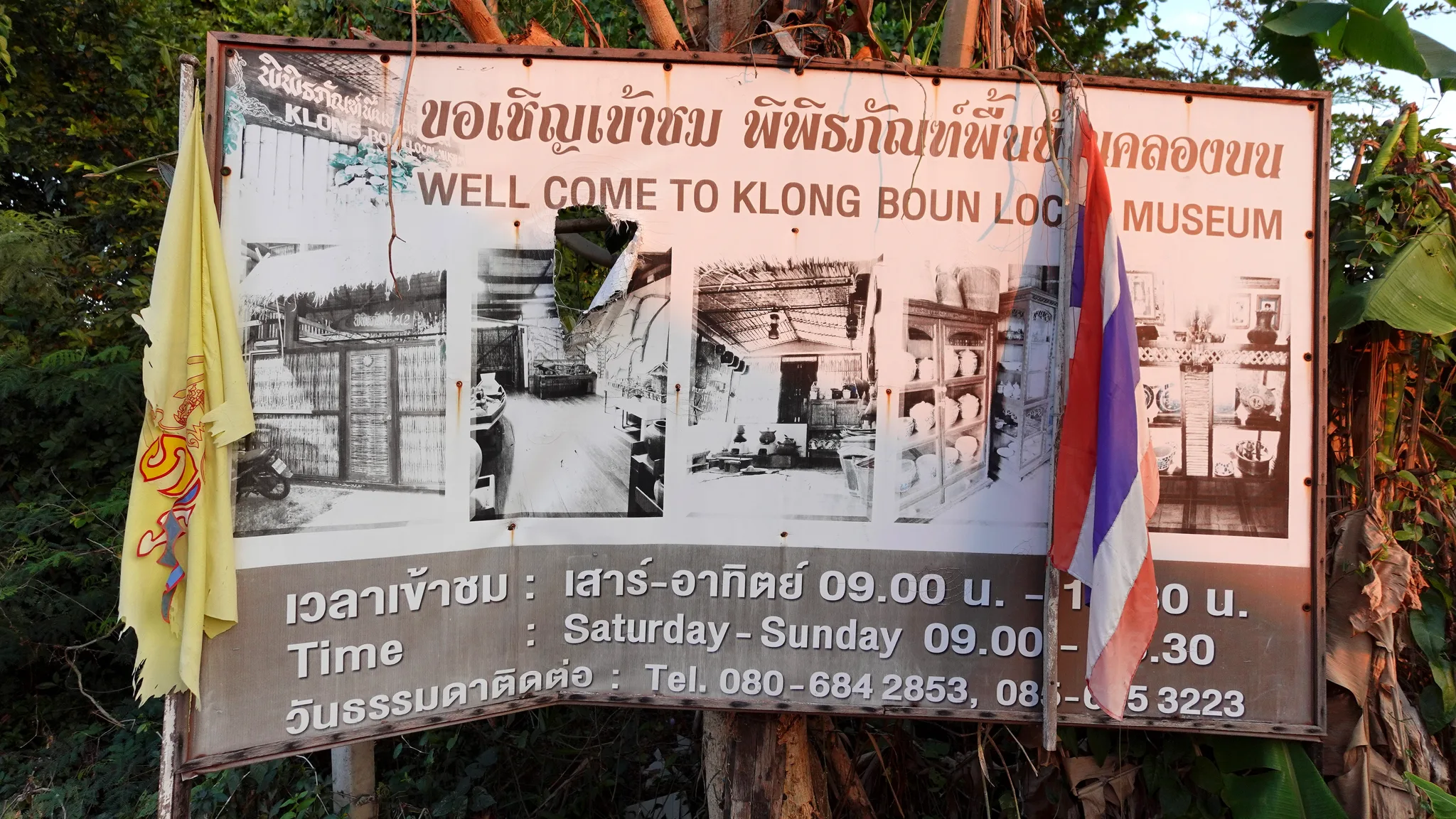
 Bilingual Thai-English welcome sign of the Khlong Bon Folk Museum, showing the rooms and ceramic display cabinets in black and white, with Saturday and Sunday opening hours, between a Thai national flag and a yellow flag.© Eric Monteil
- Destination
- Samut Prakan (Phra Pradaeng)
- Heritage Family
- Peoples, communities and cultural diversity
- Typology
- Museum
- Visit
- Available tours →
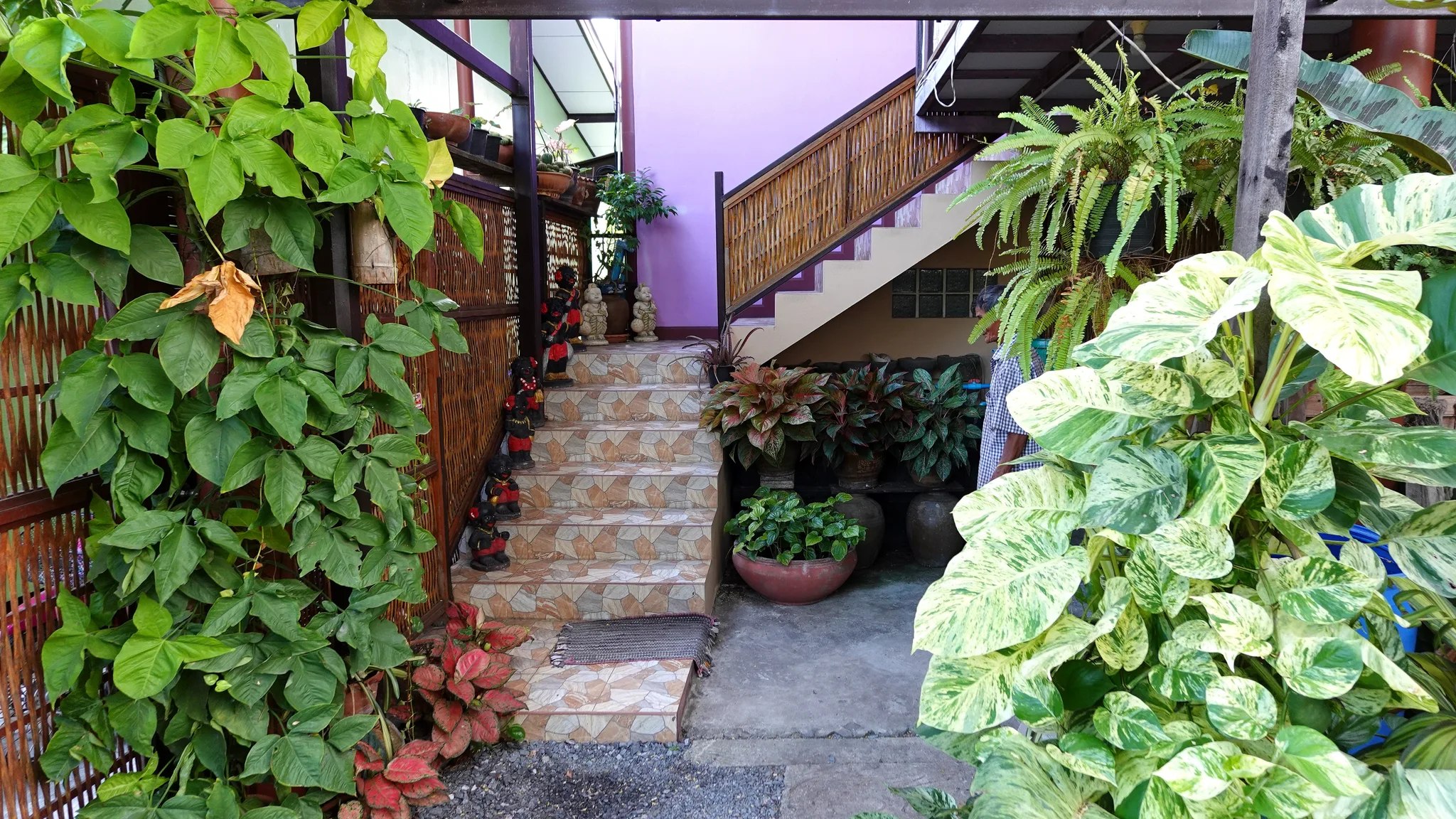
The Khlong Bon Folk Museum is a private, family-run museum, set up by a local couple in their own home at Ban Khlong Bon, in the Bang Kachao loop, south of Bangkok. It matters because it preserves the material memory of a riverside community on the Chao Phraya River, through objects that are now seldom seen. Born of more than thirty years of patient collecting, it exemplifies a way of telling history from the standpoint of ordinary life rather than that of power. Visitors will find silverware, blue-and-white porcelain, pottery, kitchen utensils, farming tools, coins and old boats.
Key facts
- Destination
- Phra Pradaeng
- Heritage Family
- Peoples, communities and cultural diversity
- Typology
- Museum
- Places
- Bang Krachao
- Periods
- —
- People
- Nutchari Kraisomphot
- Sangwuan Kraisomphot
- Communities
- Bang Kobua Community
- Events
- Official opening of the Khlong Bon Folk Museum
- Heritage
- —
- Glossary
- Khlong
- Chao Phraya
- Phraya
- Wat
- Kinnaree Award
- Keywords
- —
- Date
- —
- Collections
- —
Practical info
Practical information about this site is taken from its Google Maps page. We advise you to check it before visiting.
- Address
- Unnamed Road MHWC+XFF, Tambon Bang Kachao, Amphoe Phra Pradaeng, Chang Wat Samut Prakan 10130
A museum born of a home
Ban Khlong Bon, in the heart of the Bang Kachao loop
The Khlong Bon Folk Museum takes its name from the locality in which it stands, Ban Khlong Bon. In Thai, 'khlong' means a canal and 'bon' means 'above' or 'upper'. The locality belongs to the community of Bang Kobua, in Phra Pradaeng District, Samut Prakan Province. The community occupies part of the Bang Kachao loop, the broad meander of the Chao Phraya River that curls round to the south of Bangkok.2
A collecting couple
Behind the museum stands a couple. Sangwuan Kraisomphot, known as 'Lung Daeng', that is, 'Uncle Daeng', is its owner and collector. His wife, Nutchari Kraisomphot, known as 'Pa Nut', 'Auntie Nut', founded the museum with him and runs it at his side. The museum is housed in its founders' own home.2
Everyday objects turned into memory
What the collection brings together
The collection gathers the objects of a domestic and working life. It includes silverware and blue-and-white porcelain, alongside simpler pottery and kitchen utensils. The farming tools recall the working of the land; the old coins, the trade of former times. Finally, the collection also includes old boats.1
Passing it on to younger generations
The couple present these pieces as things that are 'hard to see nowadays', kept so that young people can learn what life was like for their elders. The museum thus takes on a simple educational role: to show, through objects, the way of life of the people of the area.1
From private collection to public museum
Three decades of collecting
Before it became a museum, the Khlong Bon Folk Museum was a collection built up over more than thirty years. The starting point of this undertaking was modest: Sangwuan and Nutchari Kraisomphot, people of humble origins, chose to keep and display these objects rather than throw them away or sell them.4
An official opening
The transition from collection to museum was marked by an official opening ceremony, when Lung Daeng was 67. It was presided over by General Jariya Thongthap, acting in his capacity as president of the alumni association of Phra Khanong Phitthayalai School. The opening was presented as that of a folk museum devoted to the way of life of the Phra Pradaeng community.1
A history told from below
A single model
The founders say they had visited only one other museum before creating their own: the Wat Tha Phut Folk Museum, housed in a wat, that is, a Buddhist monastery. This detail sheds light on the way the Khlong Bon Folk Museum took shape. The couple devised their own way of presenting the objects, with that one museum as their sole point of reference.2
Far from the national museum model
In 2023 this freedom was read as an example of what historians call a history 'from below' and 'for those below' (history from below). National museums tend to tell history as seen from above. The Khlong Bon Folk Museum, by contrast, is made by local people for local people: it foregrounds the objects of ordinary life.2
The museum today
A home that welcomes visitors
The museum remains a family affair to this day. It opens on Saturdays, Sundays and public holidays, from 9 am to 5 pm; admission is free and visitors may leave a donation. Hospitality goes beyond the visit itself: meals can be served if ordered in advance from Lung Daeng. The collection also enjoys a second life beyond its walls. Some objects are lent for exhibitions, while others serve as props for television series.6
A stop on Bang Kobua's community tourism trail
The museum now forms part of Bang Kobua's community tourism offering, organised by the sub-district's community tourism promotion club. It is one of the stops on the cycling routes that wind through the community, which is presented as a 'low-carbon' tourism destination and has received a Gold Kinnaree Award. There the museum offers a halt where visitors discover local life through its objects.3
New visibility
In 2023 the Khlong Bon Folk Museum reached a wider audience. It was the subject of an analysis in the national press, and a television programme devoted a report to it.2
Understanding
The Khlong Bon Folk Museum is neither a monument nor an institution: it is a home in which a couple from Bang Kobua display the objects of bygone life, which they chose to keep rather than throw away or sell. Its significance lies in that gesture. By gathering porcelain, utensils, tools and boats, Lung Daeng and Pa Nut tell the history of a riverside community through its everyday customs, far removed from the narrative of national museums. Today the place is open to the public, lends its objects to exhibitions and series, and serves as a stop on the community-tourism cycling routes of the Bang Kachao loop, while the press and television have given it a new audience. Its strength lies in the distinctive voice of those who founded it, while its place in community tourism sets it within a broader narrative. Can a museum born of one life become the heritage of a whole community without losing what gave it its voice?
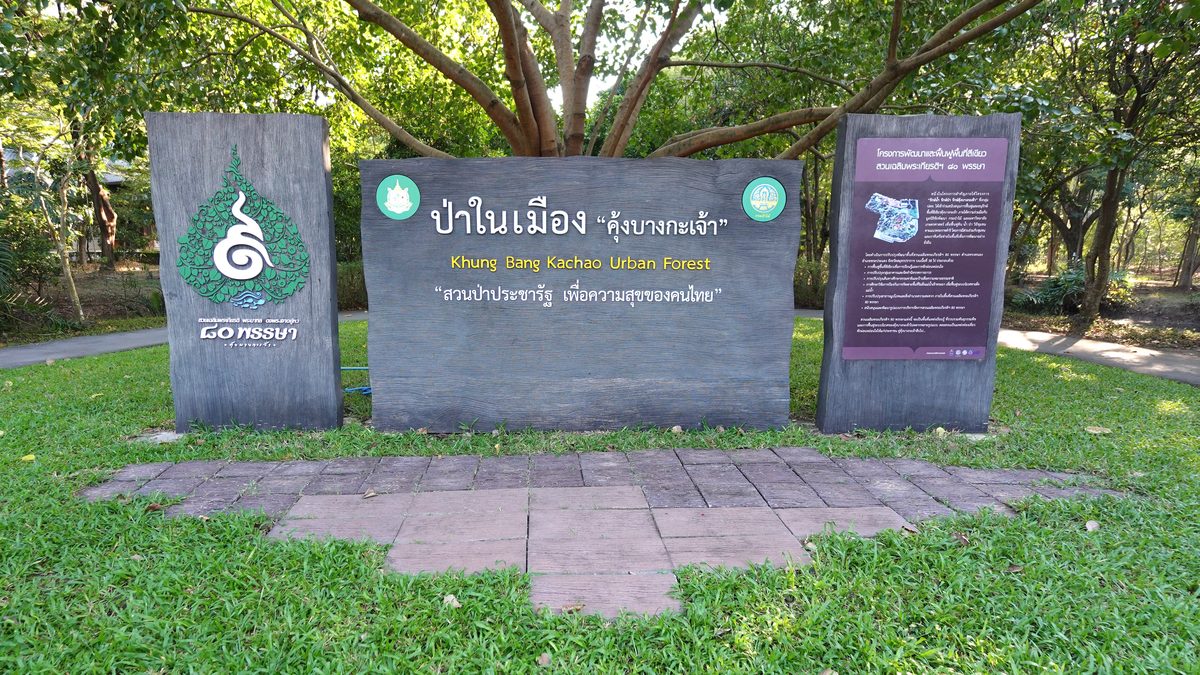
Bang Krachao, the "green lung" of Bangkok, between canals, Mon heritage, temples, biodiversity and sustainable initiatives.
- Khlong
- Canal or waterway, natural or man-made, which long played a major role in transport, irrigation and the organisation of settlements and territories in Thailand.
- Chao Phraya
- Highest title of the Siamese nobility, held by senior dignitaries of the court.
- Phraya
- Rank of the Siamese court nobility, immediately below that of chao phraya; it precedes the dignitary’s title name.
- Wat
- Buddhist monastic complex that brings together, within a single enclosure, several religious buildings, monks’ quarters and ancillary buildings; the word does not refer to a single building.
- Kinnaree Award
- Thai national tourism award, presented by the Tourism Authority of Thailand to tourist sites, communities and businesses. Its trophy depicts a kinnari, a mythical creature that is half woman, half bird.
Studies
- 1เปิดพิพิธภัณฑ์พื้นบ้าน วิถีชุมชนพระประแดง, Thairath ↗
- 2History from / for below เรื่องเล่าในพิพิธภัณฑ์คลองบน ต.บางกอบัว อ.พระประแดง จ.สมุทรปราการ, Matichon (Prachachuen), 2023 ↗
- 3ผู้จัดการออนไลน์, สูดอากาศดีที่ “บางกะเจ้า” ปอดกรุงเทพฯ ตื่นตาอุโมงค์ต้นจาก “บางกอบัว” ชุมชนท่องเที่ยวคาร์บอนต่ำรางวัลกินรีทอง, Manager Online (MGR Online), 2023 ↗
- 4จอย-เต๋อ ชวน ก้อย อรัชพร มาทานร้านอร่อยริมเจ้าพระ เจ้าเด็ด เจ้าดัง (programme TV), Khaosod, 2023 ↗
Contemporary views
Khlong Bon Folk Museum today
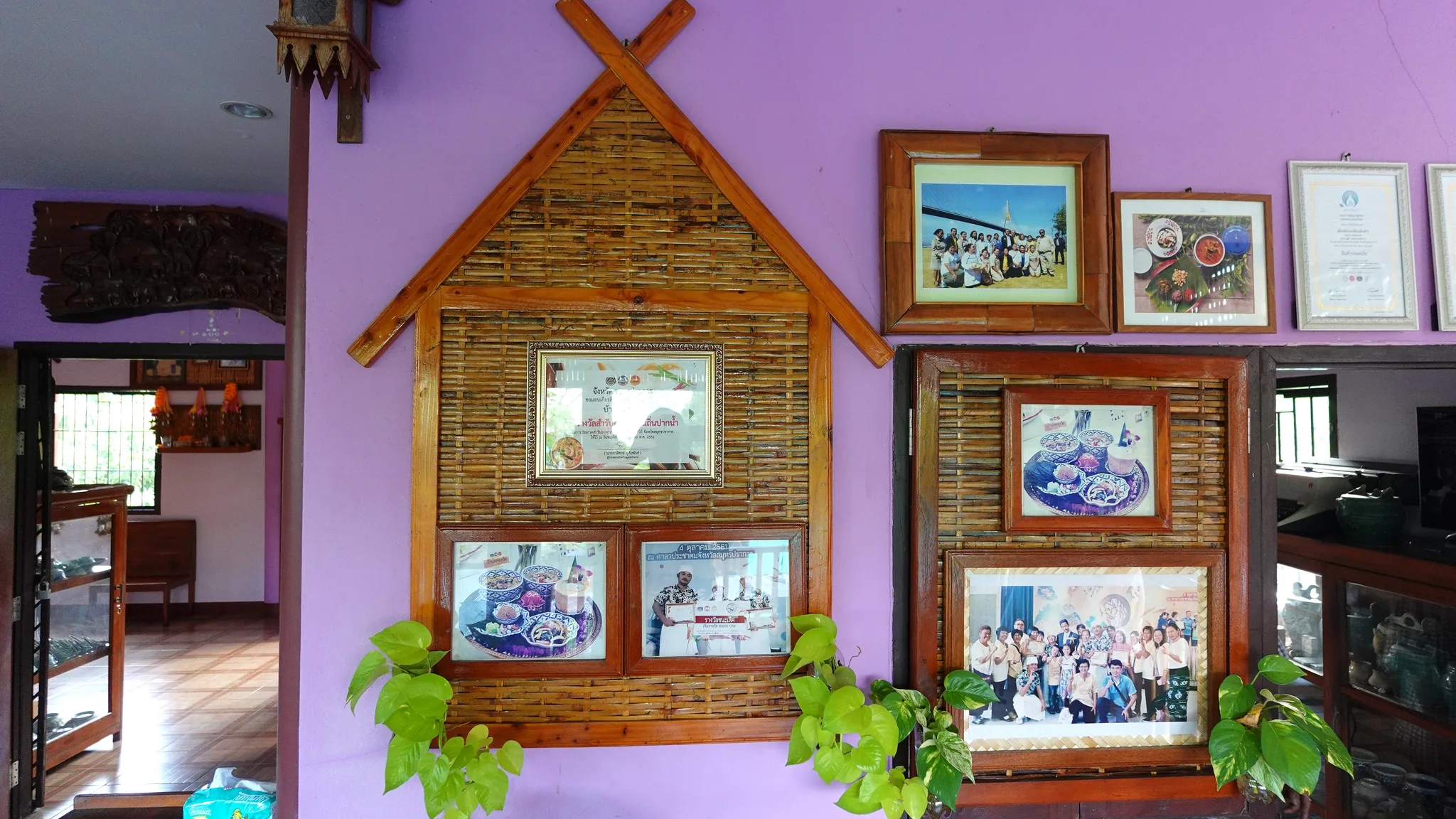
At the Khlong Bon Folk Museum, a purple wall displays framed group photographs, dishes and certificates mounted on woven bamboo panels, one shaped like a house gable; wooden display cabinets stand in the adjoining rooms.© Eric Monteil 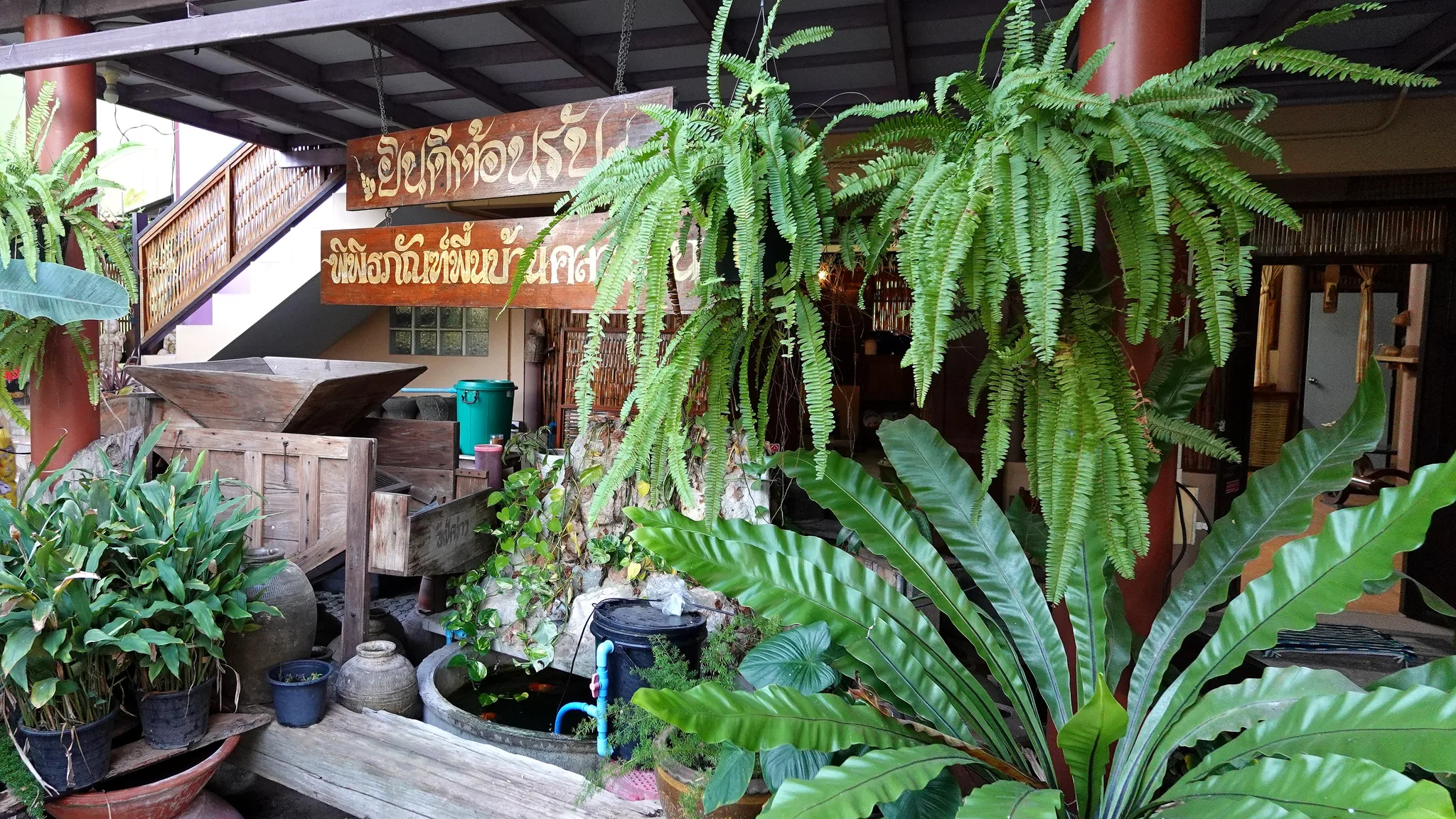
Beneath the canopy of the Khlong Bon Folk Museum, wooden signs with gilded Thai lettering overlook potted plants, hanging ferns, earthenware jars and wooden implements arranged around a small basin.© Eric Monteil
Architecture and decoration
Explore the heritage
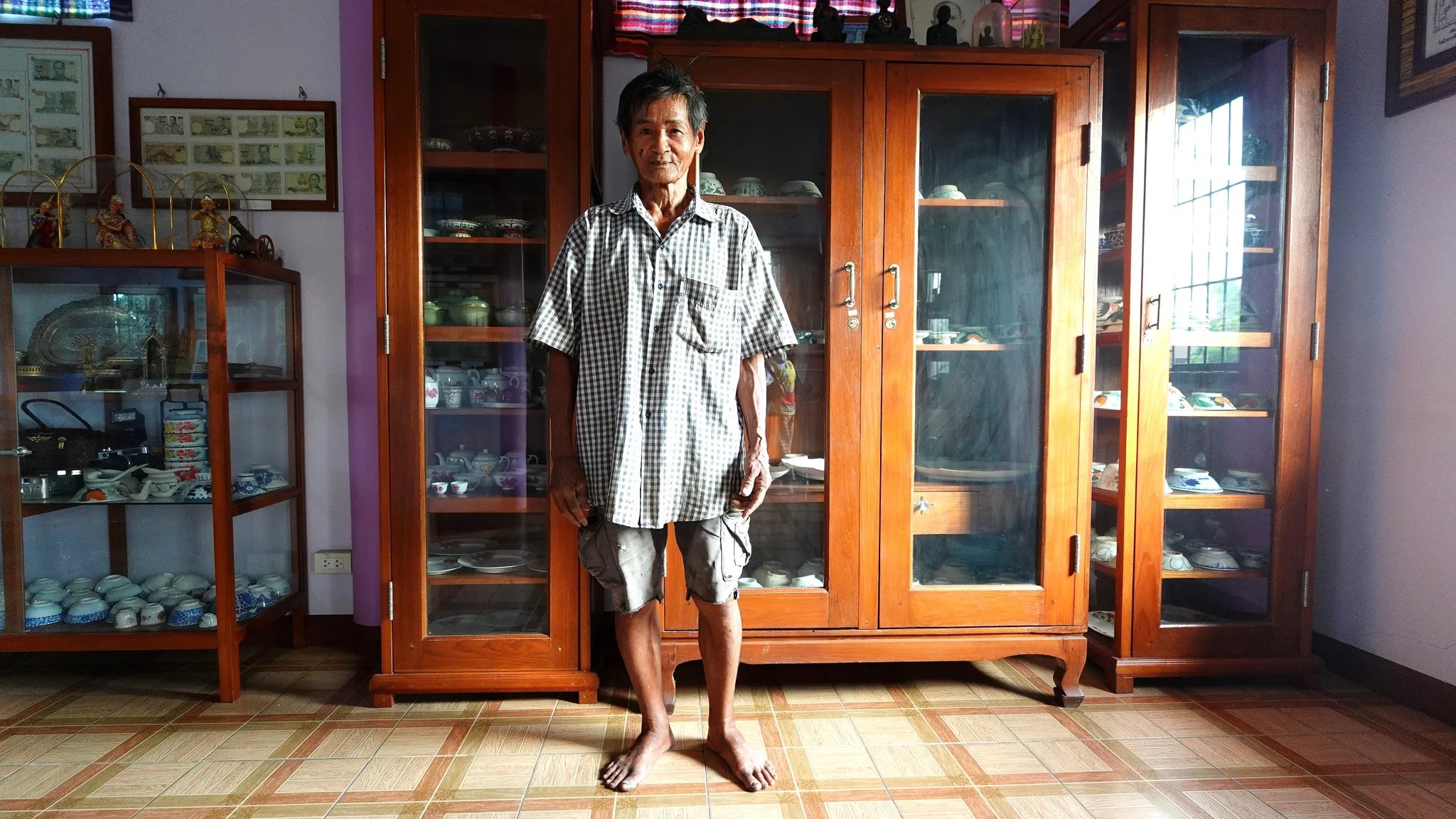
At the Khlong Bon Folk Museum, glazed wooden display cabinets hold ceramic bowls, teapots and plates, while framed banknotes hang on the walls; an elderly man stands in the centre of the tiled room.© Eric Monteil 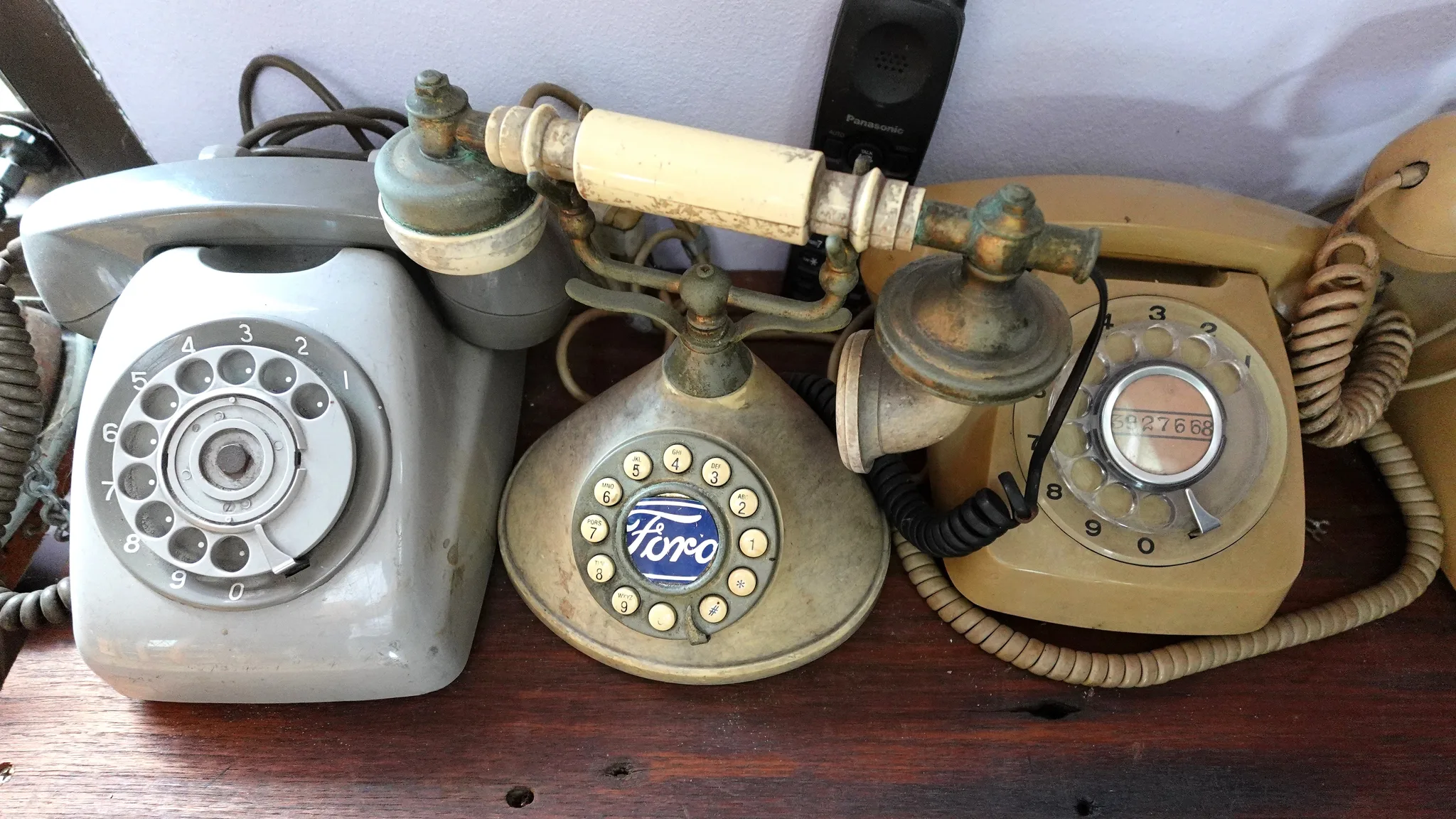
At the Khlong Bon Folk Museum, old telephones are lined up on a shelf: a grey and a beige rotary-dial set flank a retro-style model with a swan-neck handset cradle and a push-button keypad.© Eric Monteil