
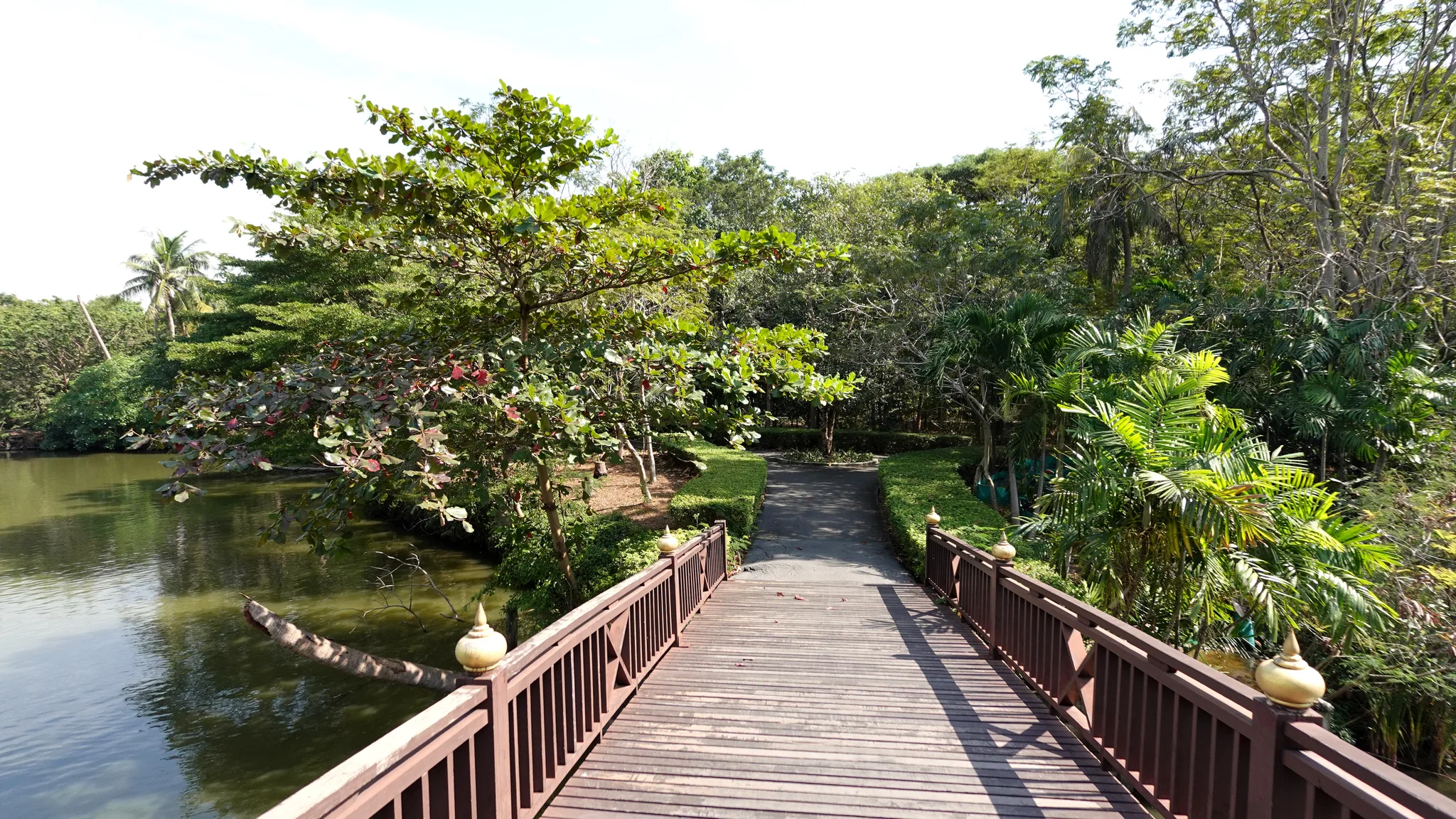
 At Sri Nakhon Khuean Khan Park, a wooden footbridge with gilded finials on its posts crosses a pond and leads to a path lined with clipped hedges, palms and broadleaf trees.© Eric Monteil
Forest & terrestrial ecosystem
Sri Nakhon Khuean Khan Park
On the Bang Kachao peninsula, Sri Nakhon Khuean Khan Park and Botanical Garden preserves former orchards and a restored forest, at the heart of the last great green space on the outskirts of Bangkok.
Heritage family · Nature, biodiversity and ecosystems
- Destination
- Samut Prakan (Phra Pradaeng)
- Heritage Family
- Nature, biodiversity and ecosystems
- Typology
- Forest & terrestrial ecosystem
- Visit
- Available tours →
Sri Nakhon Khuean Khan Park and Botanical Garden is a public park that doubles as a botanical garden. It occupies the north of Bang Kachao, a peninsula in Samut Prakan Province, opposite Bangkok. It embodies a policy begun in 1977: to preserve this ‘green lung’ of the capital from urbanisation by buying back land from local residents. Named by King Bhumibol Adulyadej and closely followed by Princess Maha Chakri Sirindhorn, it is now managed by the state forestry services. Its former orchards on raised beds, its restored forest and its wooden walkways make it a place for walking, birdwatching and environmental education.15
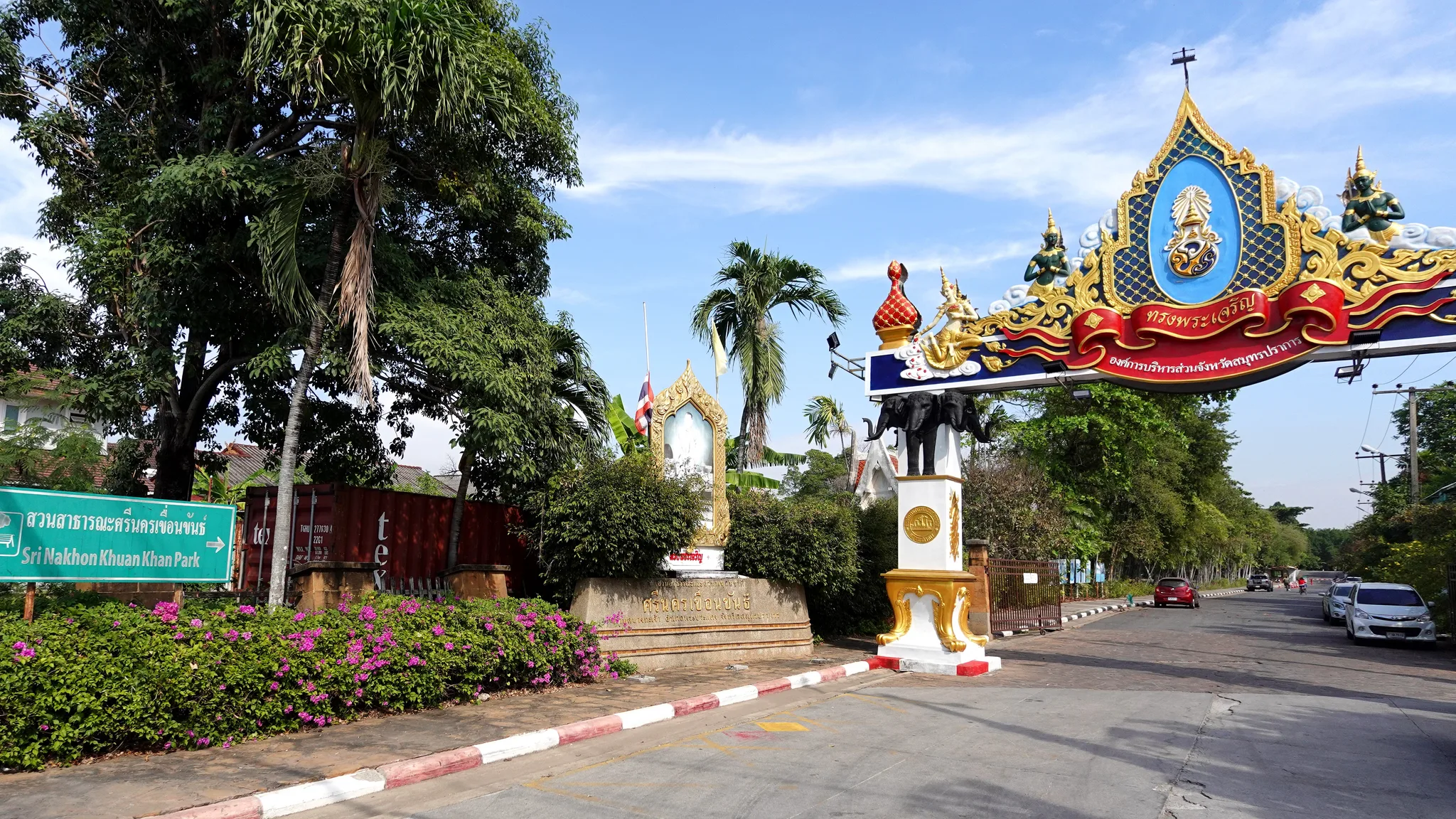
Key facts
- Destination
- Bang Krachao
- Heritage Family
- Nature, biodiversity and ecosystems
- Typology
- Forest & terrestrial ecosystem
- Places
- Si Nakhon Khuean Khan Bird Tower
- Phra Pradaeng
- Samut Prakan
- Periods
- —
- People
- Bhumibol Adulyadej
- Princess Maha Chakri Sirindhorn
- Communities
- Bang Kachao community
- Events
- Designation of Bang Kachao as a protected green area (1977)
- Suan Klang Mahanakhon programme (1991-1999)
- Restauration forestière du jardin botanique Sri Nakhon Khuean Khan (2013)
- Transfert du parc Sri Nakhon Khuean Khan au Département royal des forêts (2005)
- Heritage
- —
- Glossary
- Khlong
- Tambon
- Rai
- Sala
- Thong rong
- Keywords
- —
- Date
- —
- Collections
- —
Practical info
Practical information about this site is taken from its Google Maps page. We advise you to check it before visiting.
- Address
- 73 Soi Wat Rat Rangsan, Tambon Bang Kachao, Amphoe Phra Pradaeng, Chang Wat Samut Prakan 10130
- Phone
- Website
A garden at the heart of Bang Kachao
A peninsula facing the capital
Sri Nakhon Khuean Khan Park and Botanical Garden occupies the north of Bang Kachao, a peninsula in Phra Pradaeng District, Samut Prakan Province. On the opposite bank lie the Bangkok districts of Khlong Toei and Yannawa. The area is divided into six tambons, or sub-districts: Bang Namphueng, Bang Kachao, Bang Yo, Bang Krasop, Bang Ko Bua and Song Khanong. Its inhabitants call it Krapho Mu, ‘the pig’s stomach’, because of its shape. It is also nicknamed Bangkok’s ‘green lung’.16
Bang Kachao is the last remnant of the green belt that once encircled Bangkok. It is not, for all that, untouched nature. More than 13,000 families live there. The park was born of this situation: an inhabited, cultivated area that the state sought to shield from urbanisation by buying back part of the land. It preserves the traces of this former agricultural use and showcases them rather than erasing them.1
Public park and botanical garden
Accounts of its size differ: about 148 rai – the Thai unit of agrarian land area – or nearly 24 hectares, or more than 200 rai. It combines two purposes, which its official name brings together. As a public park, it offers residents of the peninsula and visitors from the capital a place to relax, walk and exercise. As a botanical garden, it gathers and displays plants, conserves natural habitats and supports the study of ecosystems. The functions assigned to it can be summed up in three ideas: producing cleaner air, welcoming the public and fostering an understanding of the living world.12
Admission is free. The site is managed by the Nakhon Khuean Khan Ecological Green Space Management Centre, which comes under the Royal Forest Department.13
A name bestowed by the King
The park’s name was bestowed by King Bhumibol Adulyadej, known as Rama IX. It links the park to Nakhon Khuean Khan, a name also borne by the centre responsible for its management, and may be understood, in essence, as ‘the possession of Nakhon Khuean Khan’. In Thai, the full name combines the words ‘public park’ and ‘botanical garden’, which common usage often shortens to Suan Sri Nakhon Khuean Khan, ‘Sri Nakhon Khuean Khan garden’.13
This royal patronage goes beyond the name. It places the park among the projects that enjoy the attention of the royal family, which Princess Maha Chakri Sirindhorn would follow closely from the 2000s onwards. The park thus stands at the crossroads of two histories: that of a public policy to protect green spaces, and that of the royal commitment to the environment and to rural communities.
Saving the orchards from the metropolis
1977: a green zone for Bangkok
The park’s history begins long before its creation. In 1977, the Cabinet designated Bang Kachao a protected green zone. The decision aimed to conserve the farmland facing Khlong Toei and Yannawa so that it could serve as the city’s ‘lung’. It came with strict building regulations.1
In its wake, a ‘city garden’ project was launched covering 1,276 rai, just over 200 hectares. Yet it remained in abeyance for many years and was approved only in 1991, fourteen years later. This delay reveals how difficult the undertaking was: protecting an inhabited territory meant reaching agreement with those who owned and farmed it.2
Purchase rather than expropriation
In 1991, the project took shape in a programme entitled ‘Garden in the Middle of the Metropolis’ (Suan Klang Mahanakhon). As expropriation had failed, the state changed its approach and invited landowners to sell their plots voluntarily. The first phase of the programme ran from 1991 to 1999. The Office of Natural Resources and Environmental Policy and Planning, which was in charge of the operation, bought fallow land from local residents.5
The park and botanical garden were laid out on 148 rai of this acquired land in the tambon of Bang Kachao. In a second phase, from 2000 to 2004, the Office of Natural Resources and Environmental Policy and Planning drew up a master plan for managing the peninsula’s green spaces.10
From one administration to another
Management of the site changed hands several times. It passed first from the Office of Natural Resources and Environmental Policy and Planning to the Department of National Parks, Wildlife and Plant Conservation, which set up the Nakhon Khuean Khan Ecological Green Space Management Centre. In January 2005, the site was handed over to the Royal Forest Department.13
The Nakhon Khuean Khan Ecological Green Space Management Centre now comes under the Royal Forest Department’s Bureau of Royal Initiatives and Special Projects, within the Ministry of Natural Resources and Environment. The park has thus moved from a planning body, which bought land, to foresters tasked with bringing it to life.13
Reading the park’s landscape
Lawns, pond and pavilions
Visitors first encounter the front section of the park, designed as a landscaped garden. Lawns, flower beds and ornamental plants are arranged around a large pond. At the water’s edge stand sala, open pavilions offering shelter from sun and rain.11
An exhibition building traces the history of the site. It helps visitors understand that what they are walking through is not a garden created from scratch, but the outcome of a long policy of buying back and protecting the land of Bang Kachao.12
The orchards on raised beds
The inner part of the park retains the layout of the former orchards. The thong rong – raised earth beds separated by ditches – have been preserved there. Wooden walkways on stilts cross this network. Here, walkers rediscover the landscape that Bang Kachao presented before the park was laid out.11
A demonstration farming area extends this memory. It preserves a coconut grove and a plantation of areca palms inherited from the former orchard, to which plants grouped for educational purposes have been added.11
Forest, wetlands and birds
Beyond the orchards, the park protects three ecosystems, including the wetlands characteristic of Bang Kachao. A forest plot of some forty rai has been restored within the botanical garden since 2013. These habitats, where ponds, ditches and woodland intermingle, provide shelter for varied wildlife.14
The park is also popular with birdwatchers. A bird-observation tower has been installed there. From walkways to ponds, from restored forest to orchards, a visit thus leads from a public garden to a space where nature regains a freer place, in close contact with a metropolis lying just across the river.15
Princess Sirindhorn’s guidance
Visits followed by instructions
Princess Maha Chakri Sirindhorn visited the site on four occasions, notably at the end of 2006 and in 2008. She set out guidelines that have since shaped the Royal Forest Department’s management of the park.6
She asked that the park be restored in a way that would serve tourism and the education of young people, on the model of a ‘nature classroom’. She wished for more seedlings to be produced and distributed, for villagers to be involved in the project, for the felling of large trees to be prohibited and for fruit trees to be encouraged. Following a suggestion from the Princess, Bunchob Sutthamanaswong, then Director-General of the Royal Forest Department, also advocated that residents themselves maintain the green spaces lying outside the project area.7
A restored forest for learning
In 2013, the oil company PTTEP, the exploration and production subsidiary of the PTT Group, funded a forest restoration project in the botanical garden. It covers some forty rai of forest and aims to make the park a ‘nature classroom’, a place of environmental education where pupils learn in direct contact with the habitats themselves.14
Surveys carried out under this programme show increasing plant diversity: the number of plant species rose from about ninety in 2014 to more than one hundred and ten in 2017. Over a hundred native animal species have also been recorded there.14
Renovating with local residents
Relations between the park and the neighbouring population remain central to the project. After Princess Sirindhorn visited residents living on state land – that is, land belonging to the state – within the project area, the Chaipattana Foundation took charge of overseeing a project to renovate the park and botanical garden.8
A second project concerns the surrounding area, in the zone known as Krapho Mu. The Royal Forest Department and Samut Prakan Province are its designated authorities. This approach extends the idea, present from the outset in the Princess’s guidelines, that the park cannot be conceived without the families who live around it and who shape the rest of the peninsula’s landscape.8
The park today
Walkers, cyclists and local produce
Sri Nakhon Khuean Khan Park and Botanical Garden now welcomes a varied public. It is one of the favourite stops on the cycling routes that criss-cross Bang Kachao. Birdwatchers and school groups mingle there, each finding a use of their own in its different sections.4
A market selling products from the Bang Kachao community is held within the site. In 2024, the Prime Minister visited the park, welcomed by Surachai Ajalaboon, Director-General of the Royal Forest Department: he toured the exhibition building and the market, then planted a kan krao tree.9
Bang Kachao under pressure
Rising land prices and property development are hampering the acquisition of the 9,000 or so rai that the state was still seeking, and residents’ cooperation has deteriorated. In addition, the land tax levied on plots deemed unused is pushing some owners to sell or build.2
In response to this pressure, Bang Kachao has been designated an environmental protection zone, exempt from land and property tax, on the instructions of Prime Minister Srettha Thavisin. There are also plans to plant more native species there, and the Designated Areas for Sustainable Tourism Administration has been tasked with drawing up an ecotourism plan for the peninsula.4
Understanding
Sri Nakhon Khuean Khan Park and Botanical Garden is not wild nature kept under glass, but a former orchard landscape bought back from its inhabitants, then transformed into a park, a botanical garden and a place of learning. Its significance lies in this dual heritage: it bears witness to a public policy launched as early as 1977 to save the last great green space on the outskirts of Bangkok, and it keeps alive the raised beds, ditches and fruit trees of Bang Kachao’s old orchards. Placed under royal patronage and entrusted to foresters, it has become a place where people walk, watch birds and learn. Yet its future will be decided beyond its boundaries, on a peninsula where rising land prices encourage selling and building, and which the state is now trying to protect through tax exemptions and an ecotourism project. Will this garden remain the witness to an inhabited countryside, or will it become an island of nature set aside in the midst of a city that will have caught up with it?
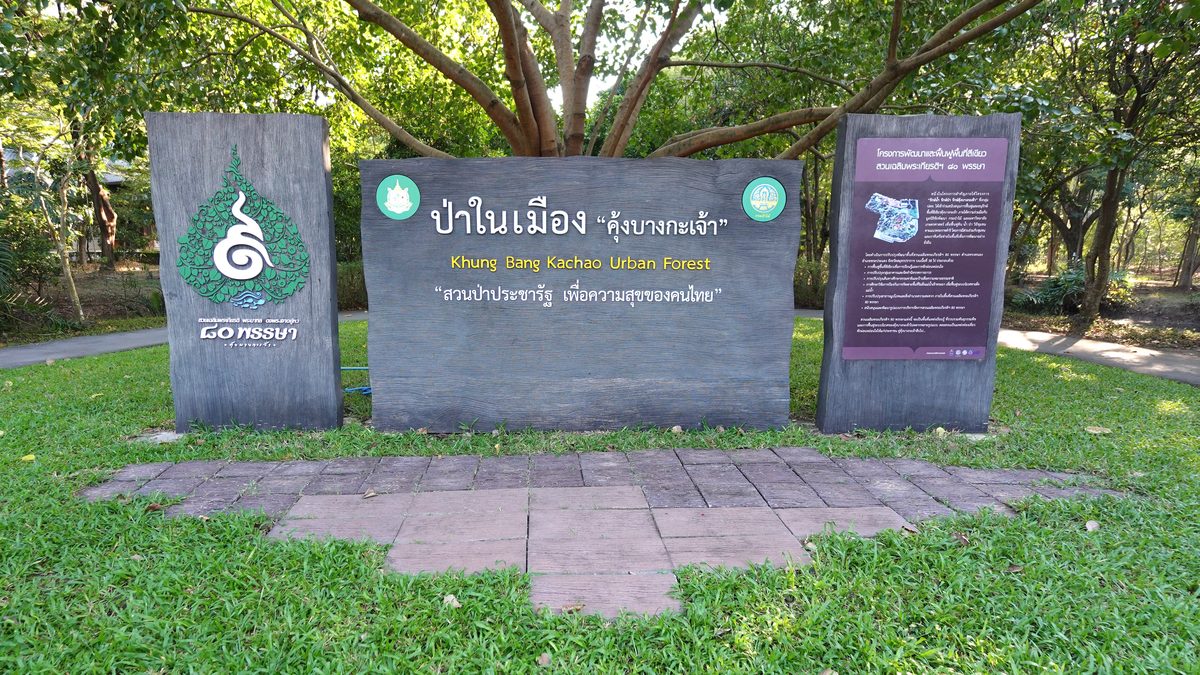
Bang Krachao, the "green lung" of Bangkok, between canals, Mon heritage, temples, biodiversity and sustainable initiatives.
- Khlong
- Canal or waterway, natural or man-made, which long played a major role in transport, irrigation and the organisation of settlements and territories in Thailand.
- Tambon
- A Thai administrative subdivision grouping several villages, ranking below the district.
- Rai
- Thai unit of land area, equivalent to 1,600 square metres.
- Sala
- A pavilion for communal use, often open-sided, where people gather, rest or listen to sermons, particularly within monastery grounds.
- Thong rong
- A cultivated raised earth bed, separated from neighbouring beds by water-filled ditches, typical of traditional Thai orchards; this arrangement allows fruit trees to be irrigated and the soil to be drained.
Studies
Reference works
- 5Overview – Sri Nakhon Khuean Khan Park Bang Kachao, suansri-bangkachao.com (site consacré au parc) ↗
- 6ศูนย์จัดการพื้นที่สีเขียวเชิงนิเวศนครเขื่อนขันธ์ _ความเป็นมา, Royal Forest Department (Office of Royal Initiative and Special Projects) ↗
- 7ปอดเมืองใหญ่ – พระราชดำริ, Office of the Royal Development Projects Board (RDPB) ↗
- 8โครงการสวนสาธารณะและสวนพฤกษชาติ "ศรีนครเขื่อนขันธ์" และโครงการปรับปรุงพื้นที่ (บางกะเจ้า) สมุทรปราการ, Chaipattana Foundation ↗
- 9นายกรัฐมนตรี ตรวจเยี่ยมสวนศรีนครเขื่อนขันธ์ ชื่นชมการทำงานและผลผลิตจากชุมชน, Royal Forest Department, 2024 ↗
- 10สวนศรีนครเขื่อนขันธ์ (Srinakorn Khuaenkhan Park), Ministry of Tourism and Sports – Samut Prakan Provincial Office ↗
- 11สวนสาธารณะและสวนพฤกษชาติ ศรีนครเขื่อนขันธ์, Public Relations Department – Samut Prakan ↗
- 12สวนสาธารณะและสวนพฤกษชาติศรีนครเขื่อนขันธ์ – SMART DASTA, Designated Areas for Sustainable Tourism Administration (DASTA) ↗
- 13Sitta Kongsasana; Phornphan Roopklom, The Park Facilities Management Strategies for Sri Nakhon Khuankhan Park, Silpakorn University, Graduate School (travail de doctorat), 2013 ↗
- 14The Forest Restoration for Eco-learning at Sri Nakhon Khuean Khan Park Project, PTTEP (PTT Exploration and Production) ↗
- 15Si Nakhon Khuean Khan Park and Botanical Garden, Wikipedia ↗
- 16Bang Kachao, Wikipedia ↗
- 17Sri Nakhon Khuean Khan Park, Atlas Obscura ↗
- 18Sri Nakhon Khuean Khan Park, Birdingplaces.eu ↗
- 19สวนศรีนครเขื่อนขันธ์ สวนสาธารณะบางกะเจ้า สมุทรปราการ, Ceediz ↗
Contemporary views
Sri Nakhon Khuean Khan Park today
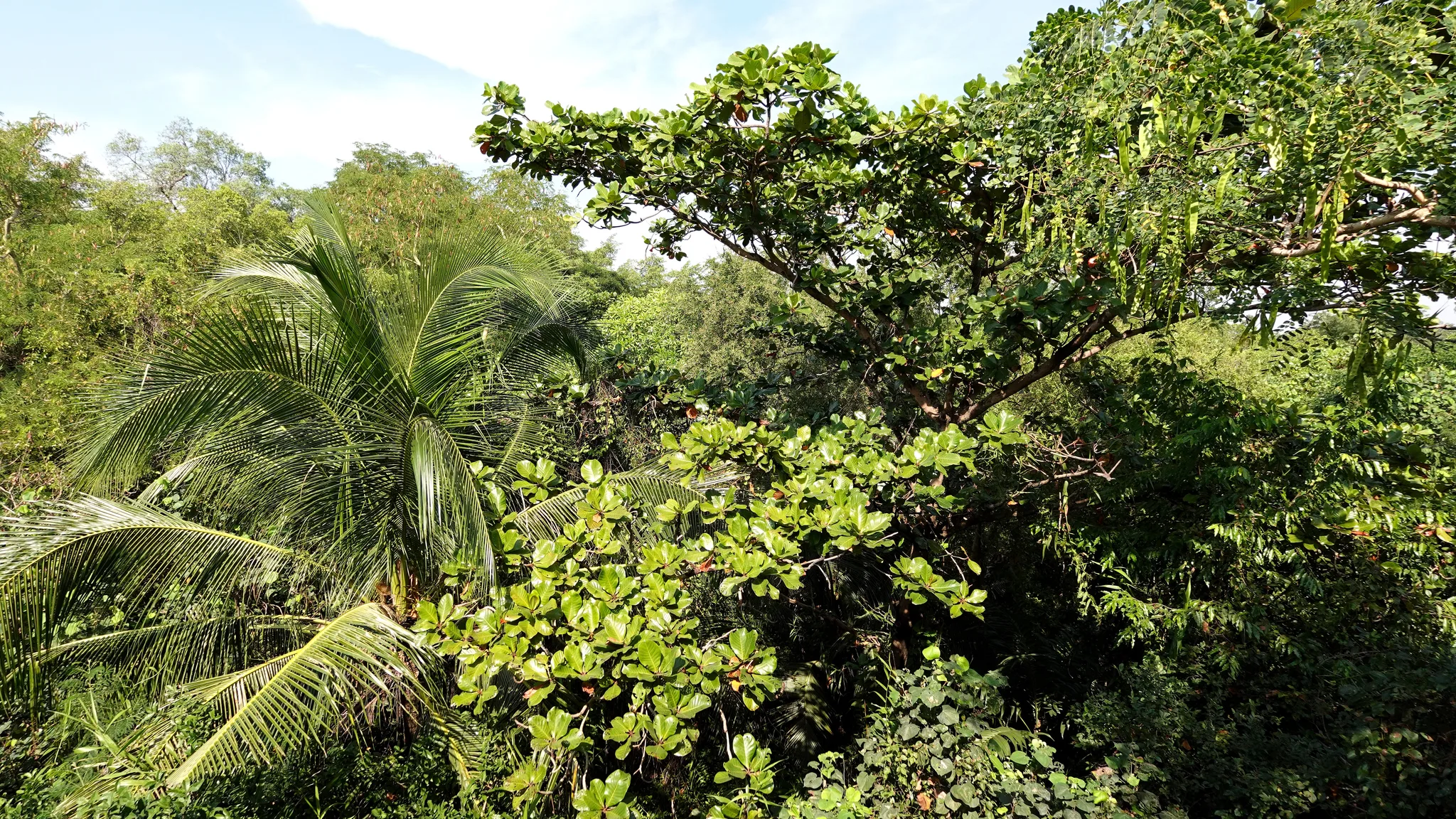
At Sri Nakhon Khuean Khan Park, the vegetation forms a continuous canopy mixing palms, broadleaf trees and trees with hanging pods, in daylight.© Eric Monteil 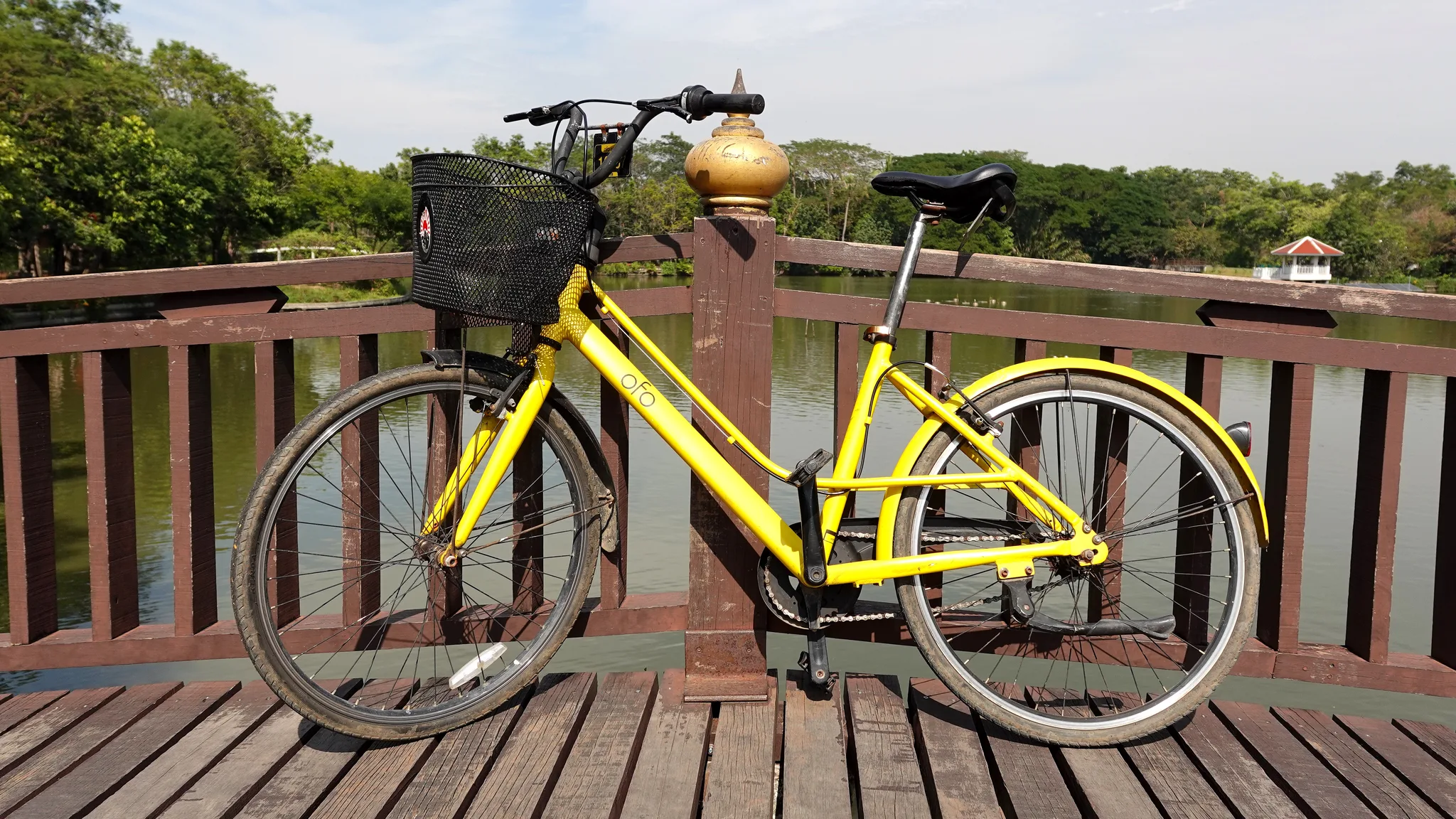
At Sri Nakhon Khuean Khan Park, a yellow bicycle rests against the railing of a wooden boardwalk overlooking a stretch of water lined with trees and a small pavilion, reflecting visits made by bicycle.© Eric Monteil
Architecture and decoration
Explore the heritage
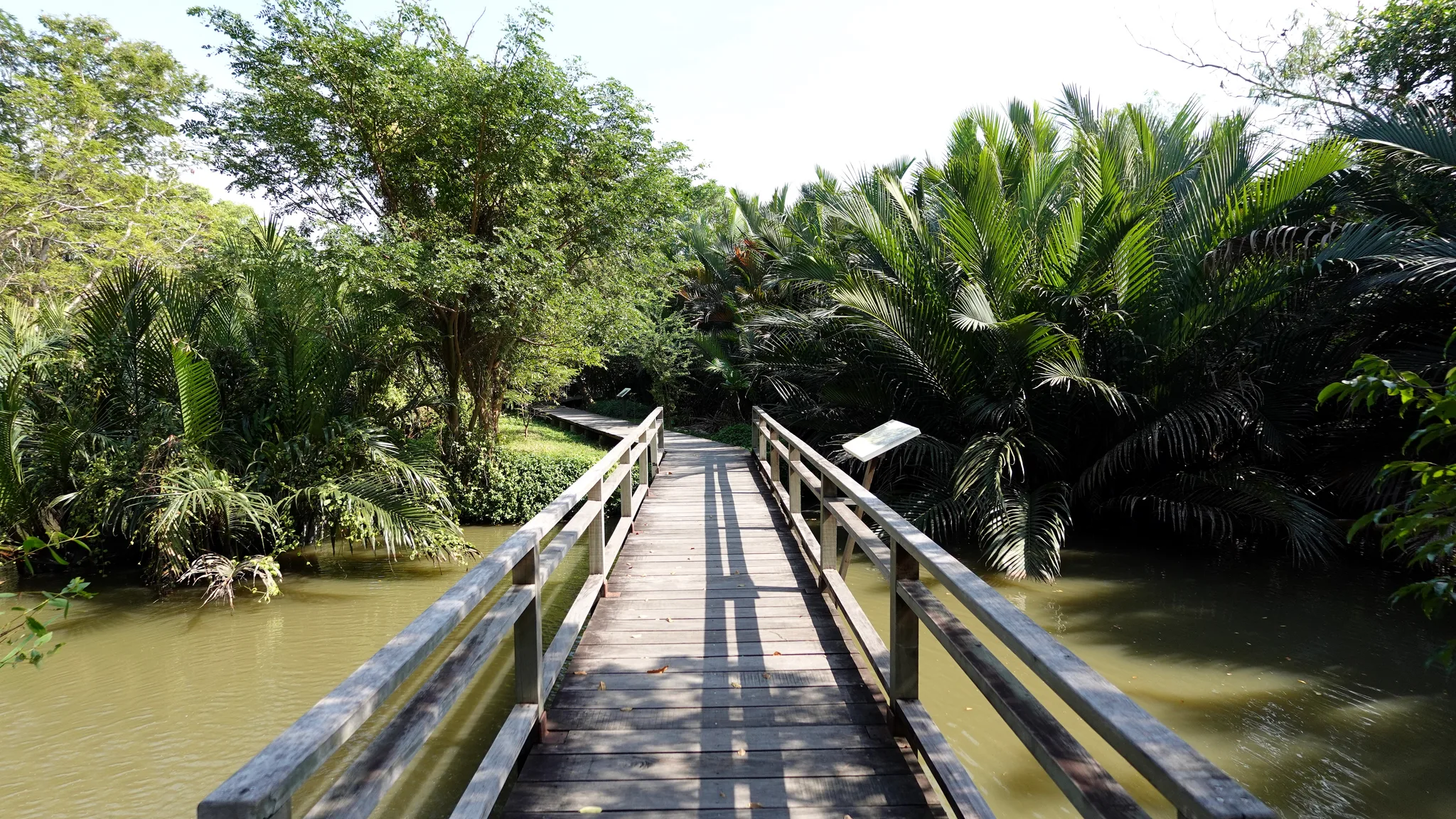
At Sri Nakhon Khuean Khan Park, a wooden plank footbridge crosses brown water and leads into the vegetation, between nipa palms and trees; an information panel is fixed to the handrail.© Eric Monteil 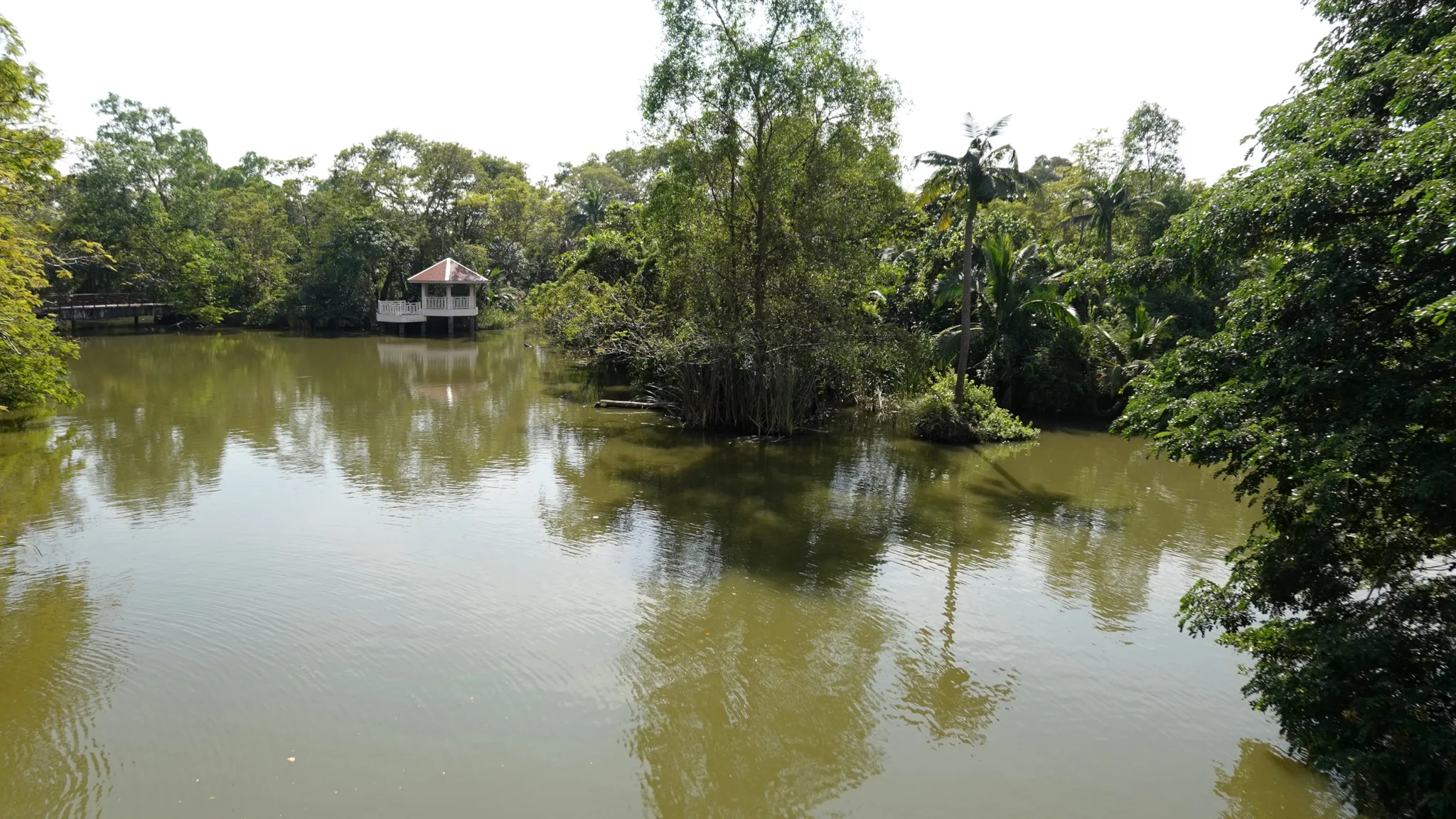
At Sri Nakhon Khuean Khan Park, a white pavilion on stilts and a wooden footbridge border a pond reflecting the trees and palms of dense vegetation, with a wooded islet at its centre.© Eric Monteil