Translated from the validated French presentation.
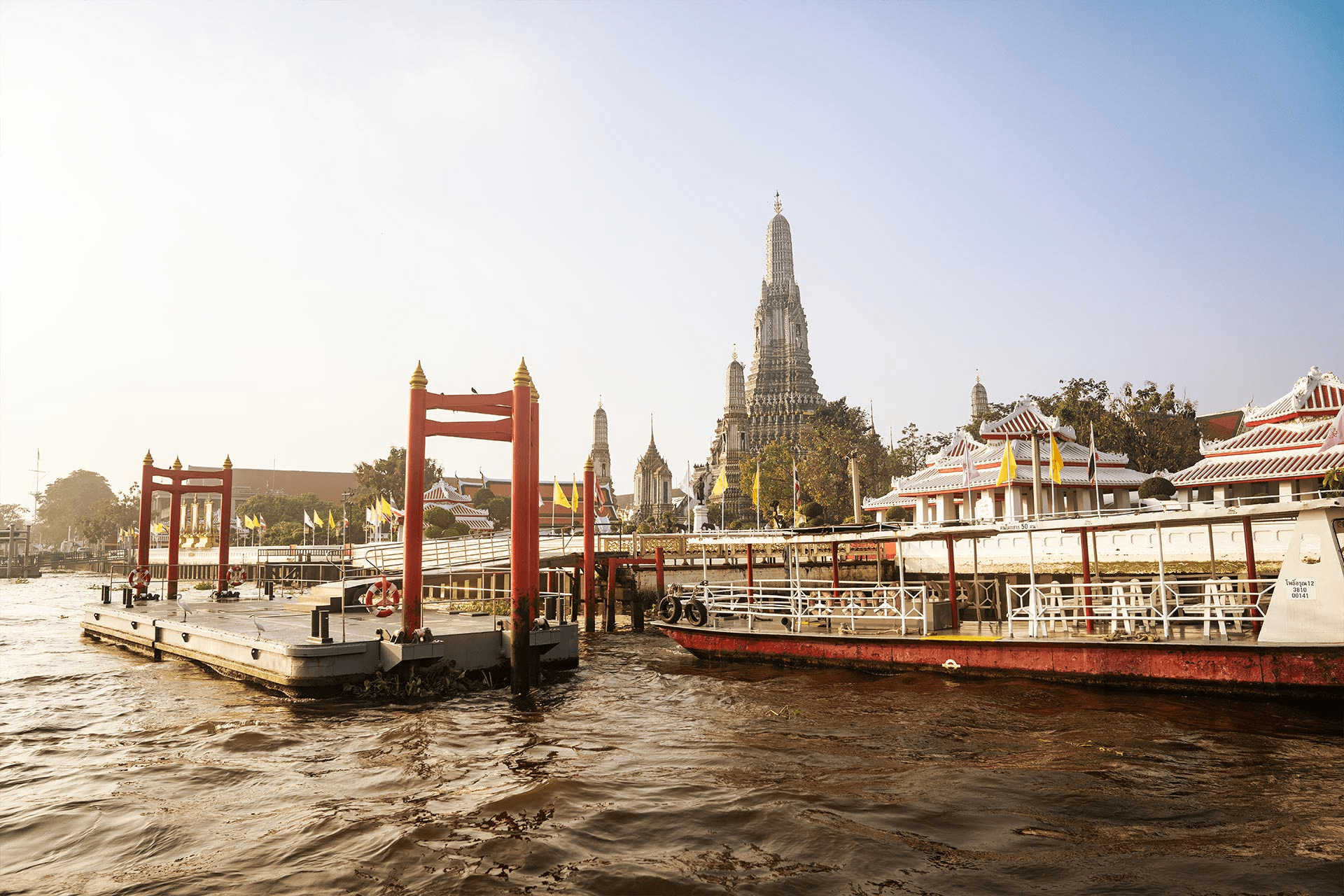
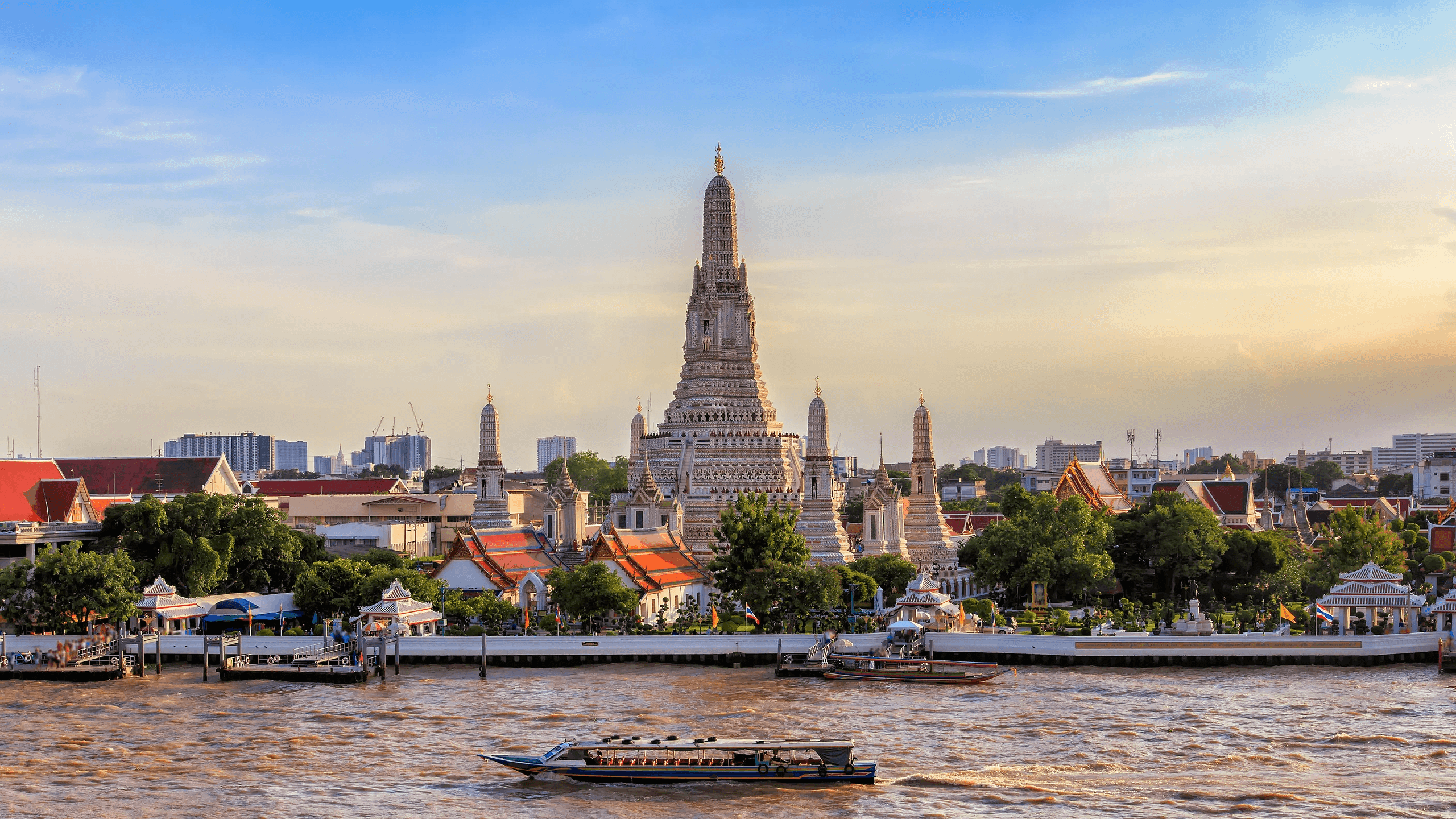
Wat Arun Ratchawararam is a Buddhist monastic complex on the west bank of the Chao Phraya, traditionally known as Wat Chaeng, the ‘Temple of Dawn’. This ancient temple was already in use in the Ayutthaya period. When King Taksin established his capital at Thonburi, the walls of his new palace were extended as far as Khlong Wat Jaeng: the temple found itself within the royal precinct, and monks could no longer reside there. From 1779 to 1784 it housed the Emerald Buddha and the Phra Bang, brought from Vientiane.
In 1785 the future Rama II planned its restoration: new quarters were built first, and the monks were able to return. Having become king in 1809, he had the principal Buddha image of the Ubosot Noi cast, modelling the mould of its face himself. Judging the old prang, 16 metres high, too small, he wished a new prang to be raised over it to become the Maha That, the great reliquary of the capital.
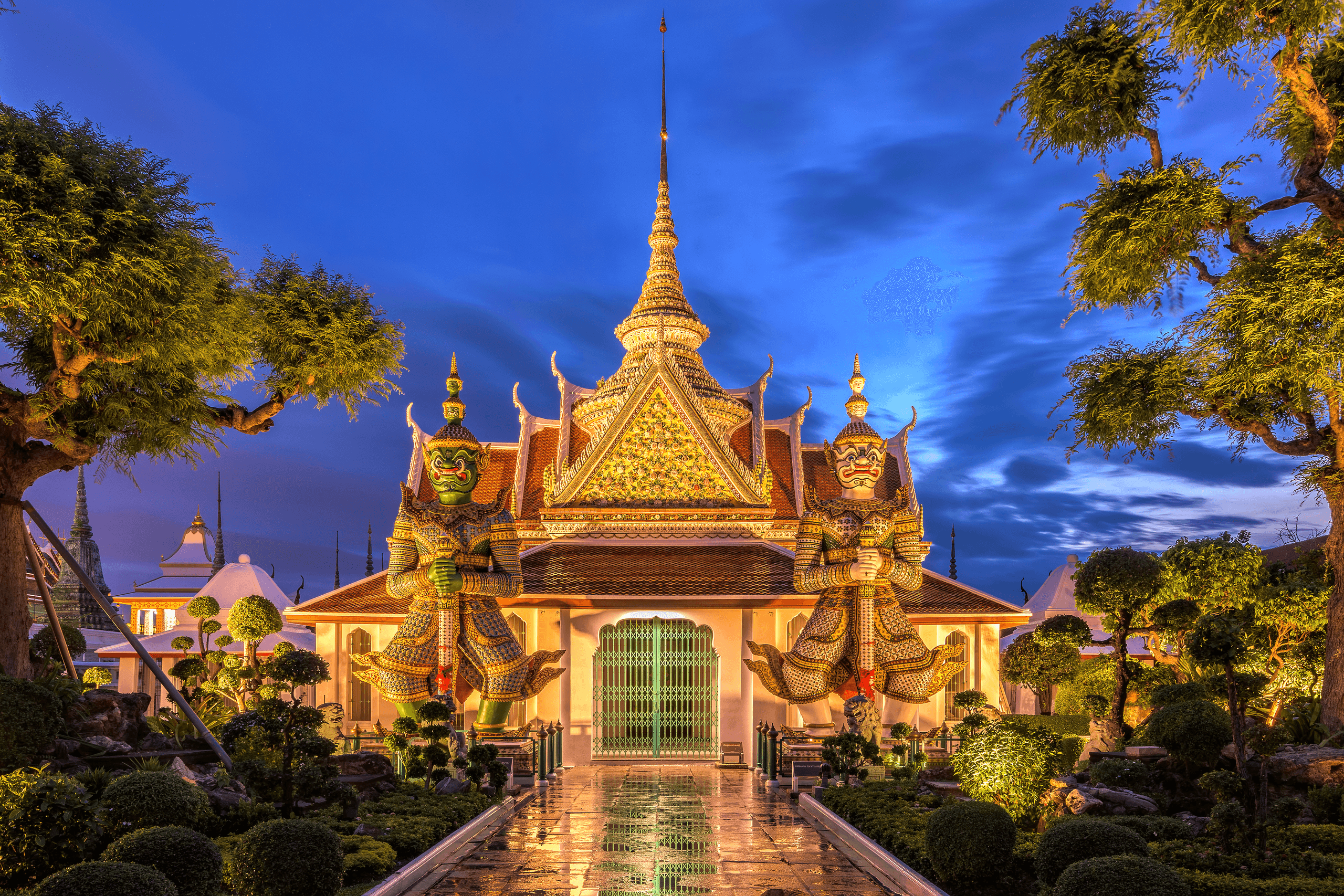
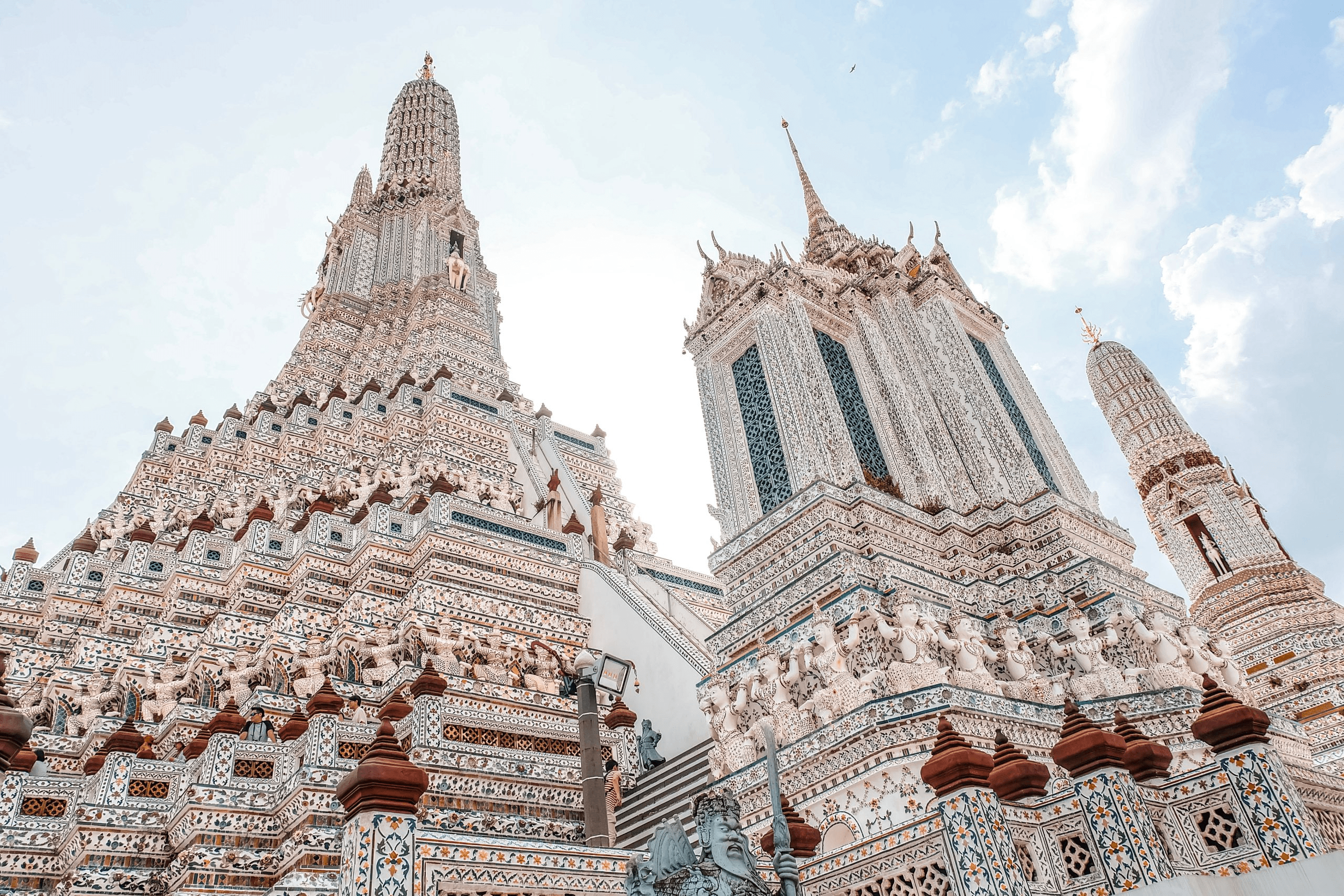
The work was carried out under Rama III, although the exact date on which it began is still debated. The new prang enclosed the old one and, together with four corner prangs and four mandapas set on a shared base, forms a sacred precinct completed in 1842. The Ubosot Noi and the Vihara Noi stand side by side on the other side, with no axis in common with this group: lack of space and the royal wish for a great prang dictated this unusual plan. Rama III died in 1851, before the temple’s dedication ceremony, and King Mongkut later gave it its present name.
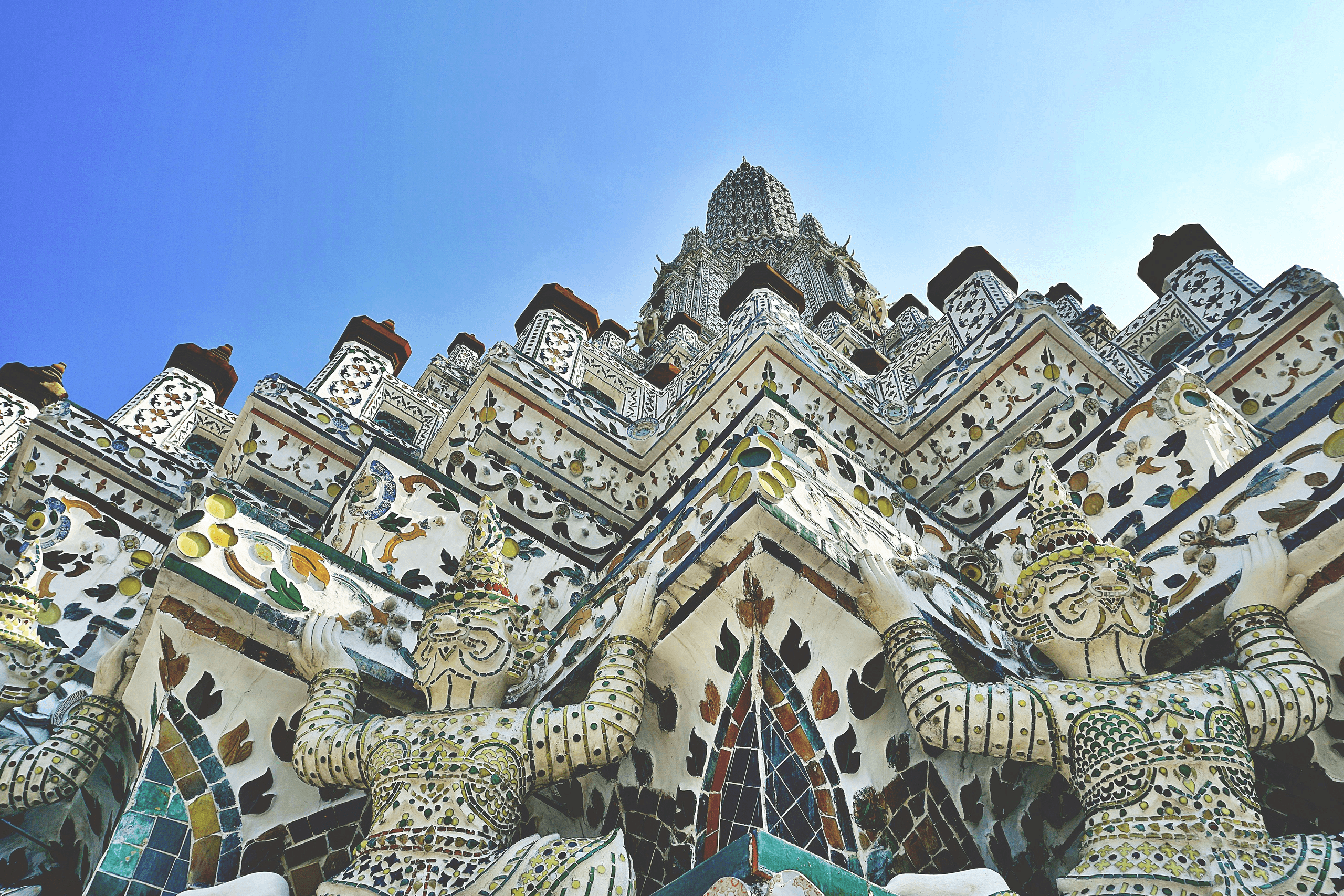
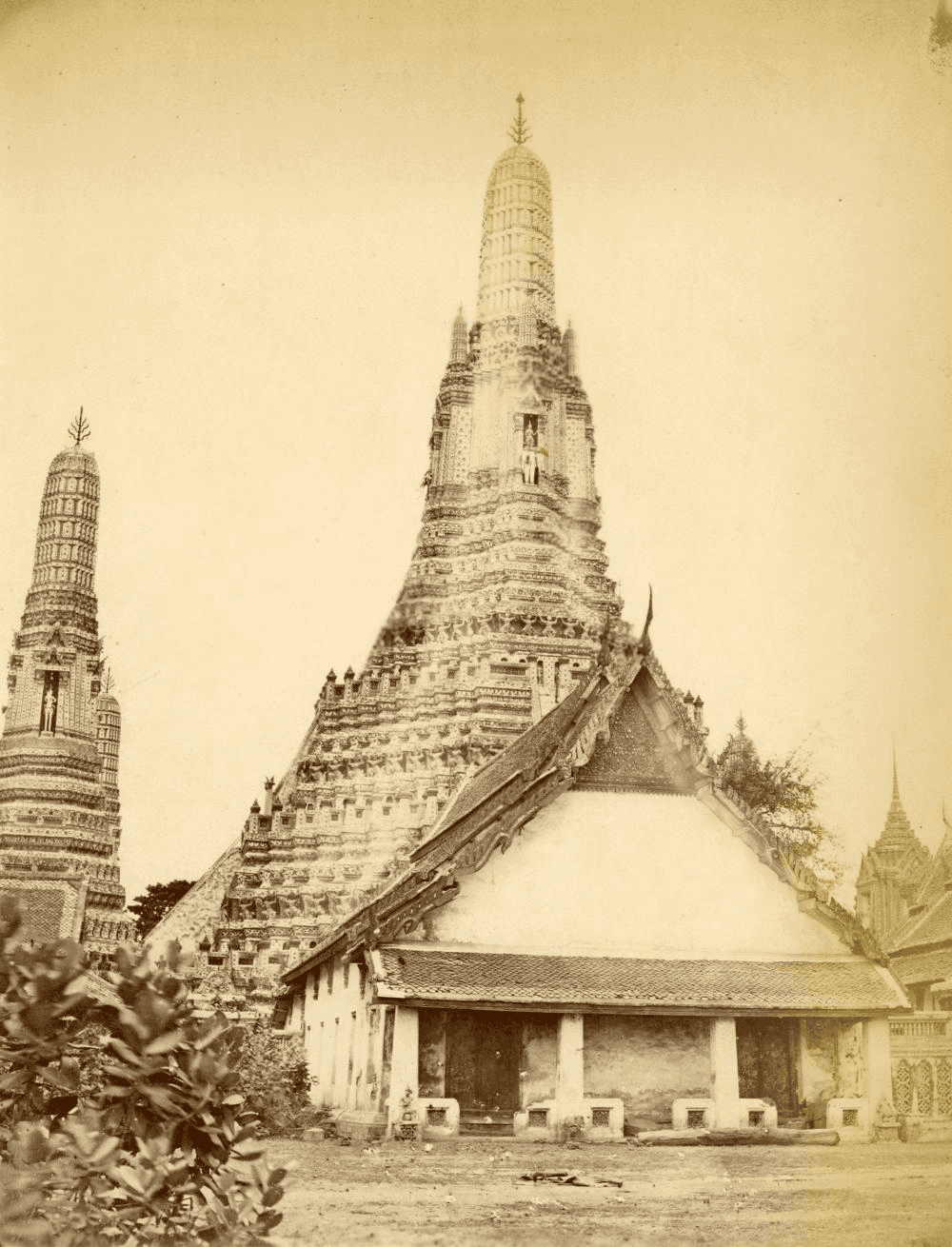
The principal prang is the most fully developed form of the prang-shaped chedi, characteristic of the Rattanakosin period. Its three terraces carry supporting figures of asuras, monkeys and devatas. On the level of the relic chamber, Indra mounted on the elephant Erawan occupies niches traditionally reserved for images of the Buddha. The spire, lengthened by superimposed tiers, evokes the trunk of a mangrove tree, and the entire prang is clad in multicoloured glazed porcelain.
The ensemble expresses Buddhist cosmology: the principal prang represents Mount Meru, the centre of the universe, and the corner prangs the four continents. Built to enshrine relics of the Buddha, it is flanked by mandapas adorned with carvings depicting his life.
Wat Arun remains a working Theravada monastery, where sacred spaces are kept distinct from those of the monastic community. Each year, the kings of Rattanakosin travelled there in a royal barge procession to preside over the royal Kathina ceremony.
From 2013 to 2017, a major restoration of the principal prang and the corner prangs, carried out in close collaboration with the Fine Arts Department, sparked debate. An engineer criticised the work for having whitened the prang and removed coloured tiles and old glazed plates. The temple’s deputy abbot, who led the project, replied that the tiles replaced elements that had fallen away and that the white came from cleaning off moss and from a lime wash, in his view the original colour. Since 2025 the prang has been on Thailand’s Tentative List for World Heritage.