
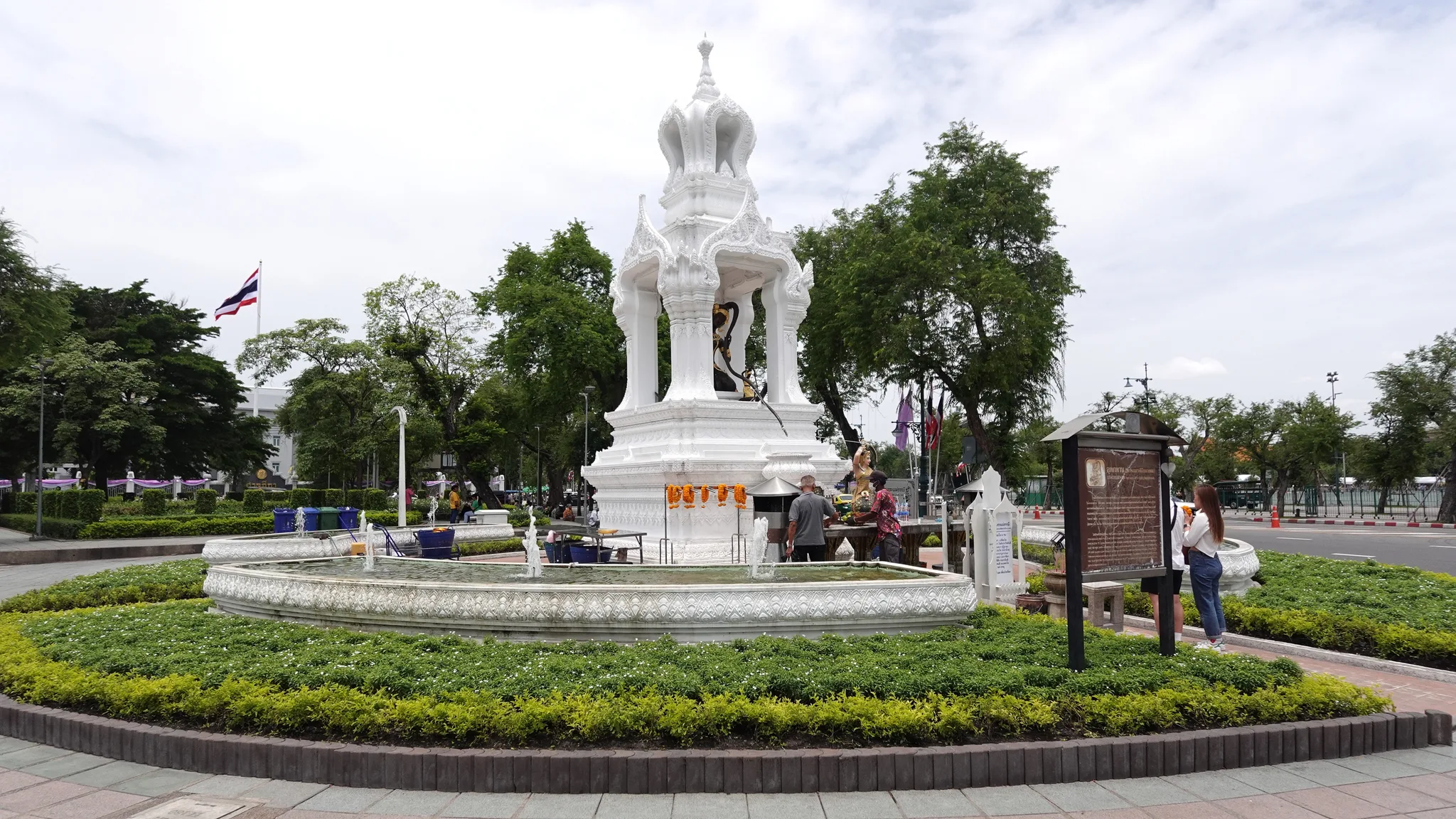
 Le Sanctuaire de Phra Mae Thorani : un pavillon blanc ajouré abrite la statue dorée, au-dessus d’un bassin circulaire à jets d’eau, entouré de massifs, de guirlandes d’offrandes et de visiteurs en prière.© Eric Monteil
Sacred site & object
Phra Mae Thorani Shrine
Given in 1917 by Queen Saovabha Phongsri, this small shrine on Sanam Luang, set beneath the image of the Earth Goddess wringing her hair, was also a public drinking fountain; a place of prayer, it is the subject of a restoration launched in 2023.
Heritage family · Buddhism, religions and spiritualities
- Destination
- Bangkok (Phra Nakhon)
- Heritage Family
- Buddhism, religions and spiritualities
- Typology
- Sacred site & object
- Visit
- Available tours →
Phra Mae Thorani Sanctuary (Uthokthan) is a small public shrine in Bangkok, on the edge of the open ground of Sanam Luang. It was originally also a fountain where anyone could drink free of charge. Commissioned by Queen Saovabha Phongsri, mother of King Rama VI, and inaugurated in 1917, it provided water as an act of merit. Its statue of the Earth Goddess, a figure from the account of the Buddha’s Enlightenment, is among the oldest of its kind in the country and has served as a model for many others. Still a well-frequented place of devotion, it is the subject of a restoration launched in 2023.11
Key facts
- Destination
- Phra Nakhon
- Heritage Family
- Buddhism, religions and spiritualities
- Typology
- Sacred site & object
- Places
- Ratchadamnoen Avenue
- Sanam Luang
- Periods
- People
- Chao Phraya Yommarat (Pan Sukhum)
- Phraya Chindarangsan (Phlap)
- Prince Naris
- Vajiravudh (Rama VI)
- Queen Saovabha Phongsri
- Communities
- —
- Events
- Inauguration of the Phra Mae Thorani fountain shrine (1917)
- Restoration of the Phra Mae Thorani shrine (2023)
- Heritage
- —
- Glossary
- San
- Chao Phraya
- Mara
- Bodhisattva
- Awakening
- Wat
- Keywords
- —
- Date
- —
- Collections
- —
Practical info
Practical information about this site is taken from its Google Maps page. We advise you to check it before visiting.
- Address
- QF4V+JWM, Thanon Rachini, Khwaeng Phra Borom Maha Ratchawang, Khet Phra Nakhon, Krung Thep Maha Nakhon 10200
A gift of water to the city
Giving water as an act of merit
At the corner of Sanam Luang, along Ratchadamnoen Nai Avenue, a small building houses a statue of Phra Mae Thorani, the Earth Goddess. She is shown at the moment she wrings out her hair bun. The building is a san, a shrine for worship open to all. When it was created, it also served as a fountain: clean drinking water flowed from the goddess’s hair, and passers-by and worshippers alike could drink it free of charge.11
Its official name, Uthokkathan (อุทกทาน), expresses this function. It means ‘giving water as an act of merit’, or ‘offering water as alms’. The word joins water to than, the gift through which merit is acquired. Offering drink to all, in a public place, was therefore a form of offering. In everyday speech, another name is more commonly used: Phra Mae Thorani Bip Muay Phom, ‘Mother Earth Wringing Her Hair Bun’. It refers to the image rather than to the act of giving. The two names correspond to the two sides of the place: a charitable fountain and a sacred figure, brought together in a single monument.5
Queen Saovabha Phongsri and the gift of 1917
Queen Saovabha Phongsri was behind the project. Consort of King Chulalongkorn, known as Rama V, she had become Queen Mother during the reign of her son, Rama VI. It was she who conceived the idea of the fountain and paid for it, in order to provide drinking water for the population. On the eve of the inauguration, she wrote to Chao Phraya Yommarat (Pan Sukhum), Minister of the Capital and the official in charge of construction. The shrine was inaugurated on 27 December 1917.5
The gift accompanied celebrations of one of the Queen’s birthdays, held at Bang Pa-in Palace. There she made an offering to have the statue made as an uthokkathan, so that the people could drink from it. Accounts differ as to which birthday it was: her fiftieth, her fifty-fourth, or simply her birthday itself. All of them link the fountain to a celebration for the Queen, turned into an act of merit for the benefit of the public. The project emerged at the time when Bangkok was beginning to receive piped water. Providing clean water in the heart of the city, on one of its great squares, then carried a very concrete meaning.3
A work conceived by the court
Several leading figures of the court took part in the project. Vajiravudh, the Queen’s son, suggested depicting the goddess wringing her hair. Prince Narisara Nuvadtivongs created the statue. Phraya Chindarangsan (Phlap), an architect, designed the niche that shelters it. Lastly, Chao Phraya Yommarat directed the works on behalf of the Ministry of the Capital.10
A monument of modest size thus brought together the Queen Mother, her son Vajiravudh, an artist prince and a minister. This involvement shows the importance attached to the gift. The fountain was not merely a piece of urban infrastructure: it was an act of royal merit, displayed on a central square.
Phra Mae Thorani, witness to the Enlightenment
The story of the victory over Mara
The chosen motif comes from the life of the Buddha as told in Buddhist narratives. As the Bodhisattva, that is, the future Buddha, is about to attain Enlightenment, Mara, a hostile power seeking to prevent him, launches his armies against him. The Earth Goddess then intervenes. She wrings her hair, and an immense flood pours from it: the water that the future Buddha had poured, over the course of his lives, at each act of giving he performed. This flood sweeps away and drowns Mara’s armies.7
In Thailand, this story is known above all through the Pathamasambodhi, or Pathomsomphot, the standard text on the life of the Buddha. In the story, the water flowing from the goddess’s hair is the water of the future Buddha’s gifts. At Sanam Luang, the same image let flow the water offered by the Queen to the city’s inhabitants. The motif proposed by Vajiravudh thus links the goddess’s gesture with the function of the fountain.10
A gesture with no Indian model
The figure of the goddess wringing her hair belongs to South-East Asia. The gesture has no precedent in India, the birthplace of Buddhism. Its earliest known images appear in Cambodia around the 12th century. In Thailand, the earliest representation identified is a wooden panel from Wat Phra Rup in Suphanburi, attributed to the 15th century.10
This history sheds light on the place of the Sanam Luang statue. In Bangkok, in 1917, she becomes a standalone figure, presented alone in her niche and open to the gaze of all.
A statue that set a pattern
The statue of Phra Mae Thorani Sanctuary (Uthokthan) is one of the oldest free-standing statues of its kind in Thailand. It has served as a model for many later representations, in the central, northern and north-eastern regions of the country. The work created for a fountain in the capital thus contributed greatly to fixing the image of the goddess across the country.10
The figure of Phra Mae Thorani now extends beyond the religious sphere. She appears on the logo of the Metropolitan Waterworks Authority, the body that supplies water to Bangkok. There is no indication, however, that this logo is directly inspired by the Sanam Luang statue.13
Reading the shrine
The goddess in her niche
The goddess is seated in a sum ruean kaeo, an ornamental niche that frames her like a small pavilion. This niche is the work of Phraya Chindarangsan. The goddess holds her hair bun and wrings it. The arrangement was designed so that the water would seem to spring from this gesture: the image from the story thus became the source of the fountain, and the visitor who drank received the water at the very point where the goddess releases it in the scene of the Enlightenment.1
The original statue is in stucco, a modelled plaster. In 2023, it is a statue in black-patinated bronze that the restoration project plans to replace. The goddess wears a sabai, a sash draped across the upper body, which the restoration also plans to replace.8
A fountain deprived of its water
The fountain’s function was interrupted in the 20th century. During the Second World War, the pipes that supplied the statue were stolen. For many years afterwards, water no longer flowed from the goddess’s hair. The monument had been created to give people drink; it now retained only its image.10
The shrine stands in a highly visible spot, at the corner of Sanam Luang, near Phan Phiphop Lila Bridge and the Rattanakosin Hotel, in Phra Nakhon district, the historic heart of Bangkok. The everyday name of ‘Mother Earth Wringing Her Hair Bun’ has, moreover, prevailed in common usage over the official name, which recalled the gift of water.11
A place of prayer on the edge of Sanam Luang
From fountain to altar
Phra Mae Thorani Sanctuary (Uthokthan) is today an active shrine. Worshippers come to pray and make their devotions before the statue.8
The shrine has always combined an act of merit, the gift of water, with a sacred image. When the water stopped flowing, it was the image that sustained the life of the place.
The Earth Goddess in Thai practice
This devotion reflects the place Phra Mae Thorani holds in the religious life of Thailand, far beyond Sanam Luang. Offerings are made to her when the foundations of a house are dug. Herders, for their part, pour milk onto the ground as a libation, that is, a liquid offering.9
These everyday gestures show that the goddess is not merely a character in the story of the Buddha. She is also a presence bound up with the earth itself, honoured in ordinary acts. Queen Saovabha’s shrine gives this familiar figure a fixed, monumental and public place at the centre of the capital.
The 2023 restoration
Rites before the works
On 27 September 2023, a ceremony launched the restoration of the shrine. It included a buang suang, a ritual offering made before touching a sacred place, and a chaloen phra phutthamon, a recitation of Buddhist texts. The Bangkok Metropolitan Administration and the Fine Arts Department, which is responsible for the national heritage, organised the ceremony together with other public bodies. It was presided over by General Domsak Khamsaisaeng, in the presence of civil and military officials, including Phanombut Chantharachot, Director-General of the Fine Arts Department.1
These rites show that the authorities treat the place as a living shrine, not merely as a monument. The ceremony brings together, around the statue, the city administration, the heritage institution and religious practice.
From black bronze to gold
The works, scheduled to last one hundred and twenty days, were to transform the goddess’s appearance. The black-patinated bronze statue was to be replaced by an effigy in lacquered and gilded bronze, and her sash by a new one.1
This restoration opens a new chapter in the history of the place. Created in 1917 as a shrine that doubled as a fountain given by a queen, and long deprived of its water, Phra Mae Thorani Sanctuary (Uthokthan) is to receive, according to the project launched in 2023, a new, gilded image.
Understanding
Phra Mae Thorani Sanctuary (Uthokthan) unites two things: a gift and an image. Here a queen offered drinking water to the people of Bangkok, as an act of merit, beneath the figure of the Earth Goddess who, in the story of the Enlightenment, releases the water of the future Buddha’s gifts. Created by court artists, the statue served as a model for many representations of the goddess in Thailand. Over time the water ceased to flow, but devotion endured, and the place remains a shrine where people come to pray on the edge of Sanam Luang. The restoration launched in 2023 plans to replace the black bronze statue with a gilded one. The charitable fountain of 1917 nonetheless keeps its official name, which recalls the gift of water.
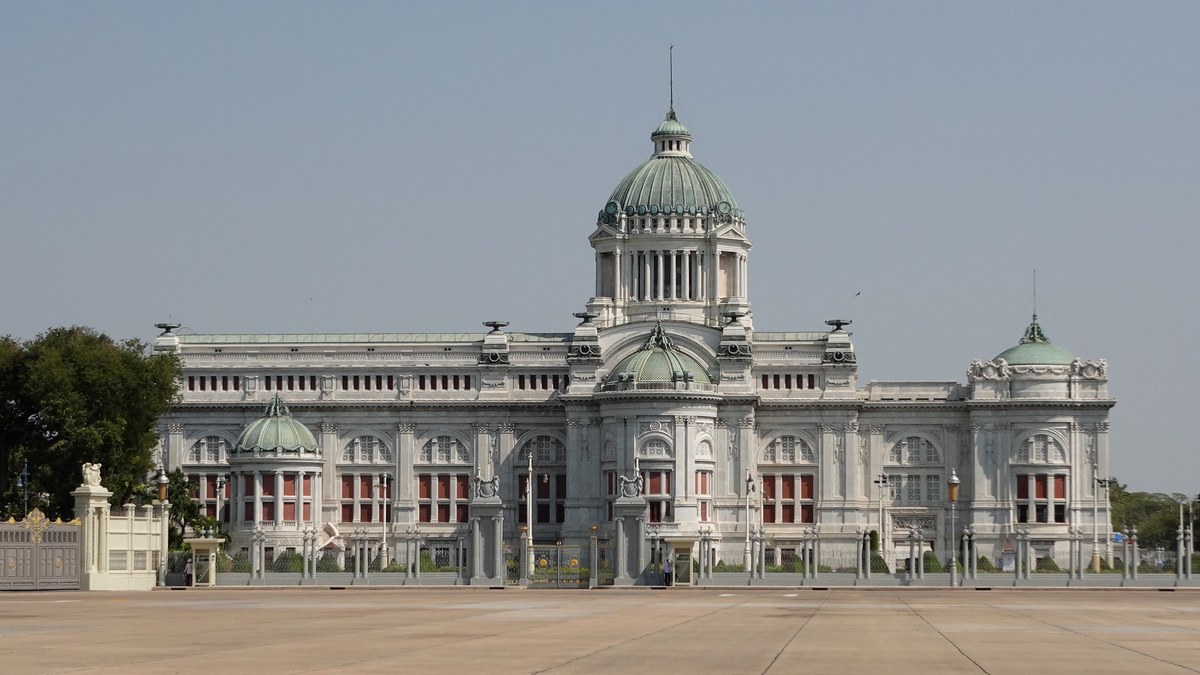
Rattanakosin, from the royal citadel of 1782 to the historic districts that shaped contemporary Bangkok.
- San
- In Thailand, a small shrine where worship is offered to a deity, a spirit or a protective figure.
- Chao Phraya
- Highest title of the Siamese nobility, held by senior dignitaries of the court.
- Mara
- In Buddhism, the demon of illusion and desire who tried to prevent the Buddha from attaining Enlightenment.
- Bodhisattva
- In Buddhism, a being destined to become a Buddha, who pursues the path to Awakening over the course of successive lives.
- Awakening
- In Buddhism, the state of understanding and clarity reached at the end of the spiritual path, which frees one from ignorance and suffering.
- Wat
- Buddhist monastic complex that brings together, within a single enclosure, several religious buildings, monks’ quarters and ancillary buildings; the word does not refer to a single building.
- Sum
- Ornamental entrance gateway set in the enclosure wall of a Thai monastery, often topped by a decorated crowning element.
- Merit
- In Buddhism, the benefit accumulated through virtuous acts, which structures the religious practice of lay people.
- Phra Mae Thorani
- Earth goddess in Southeast Asian Buddhism. At the Buddha’s Awakening, she wrings out her hair, releasing the water of the future Buddha’s gifts, which drowns Mara’s armies.
- Than
- Thai word for giving, the act of generosity through which merit is acquired in Buddhist practice.
- Sum ruean kaeo
- Ornamental niche shaped like a small pavilion, framing a sacred image.
- Buang suang
- Ritual offering made to sacred powers before work is undertaken on a sacred site, to ask their permission.
- Chaloen phra phutthamon
- Recitation of Buddhist texts performed during a Thai ceremony.
- Uthokkathan
- Thai term for the gift of water made as an act of merit, particularly drinking water offered free of charge to the public.
- Pathamasambodhi
- Reference text on the life of the Buddha in Thailand, recounting in particular the episode of the Awakening.
- Sabai
- Scarf draped across the upper body, a garment of Thai women’s dress, also offered to adorn images of deities.
Studies
- 1กทม.ร่วมพิธีบวงสรวง เตรียมบูรณะ 'พระแม่ธรณีบีบมวยผม' 120 วัน, Matichon, 2023 ↗
- 2ปิดซ่อม 'พระแม่ธรณีบีบมวยผม', Khaosod, 2023 ↗
- 3คอลัมน์ พันธุ์แท้พระเครื่อง : ศาลพระแม่ธรณีบีบมวยผม, Khaosod ↗
- 4Rom Bunnag (โรม บุนนาค), ศาลแม่พระธรณีบีบมวยผม! แบบฉบับของพระเมตตาและธรรมเนียมอันดีงามของสังคมไทย!!, MGR Online (Manager Online), 2019 ↗
- 5Mother of us all, Bangkok Post ↗
- 6จัดพิธีบวงสรวงบูรณปฏิสังขรณ์พระแม่ธรณีบีบมวยผม ใช้เวลา 120 วัน เปลี่ยนองค์, The Better, 2023 ↗
- 7พลังแห่งแผ่นดิน เปิดเหตุผลที่ "พระแม่ธรณี" ต้องบีบมวยผม, Thai PBS ↗
- 8'แม่พระธรณี' มงคลสัญลักษณ์กับความเชื่อในสังคมไทย, Naew Na ↗
- 9แม่พระธรณีบีบมวยผม พลังศรัทธาแห่งผืนปฐพี, Thairath, 2023 ↗
Contemporary views
Phra Mae Thorani Shrine today
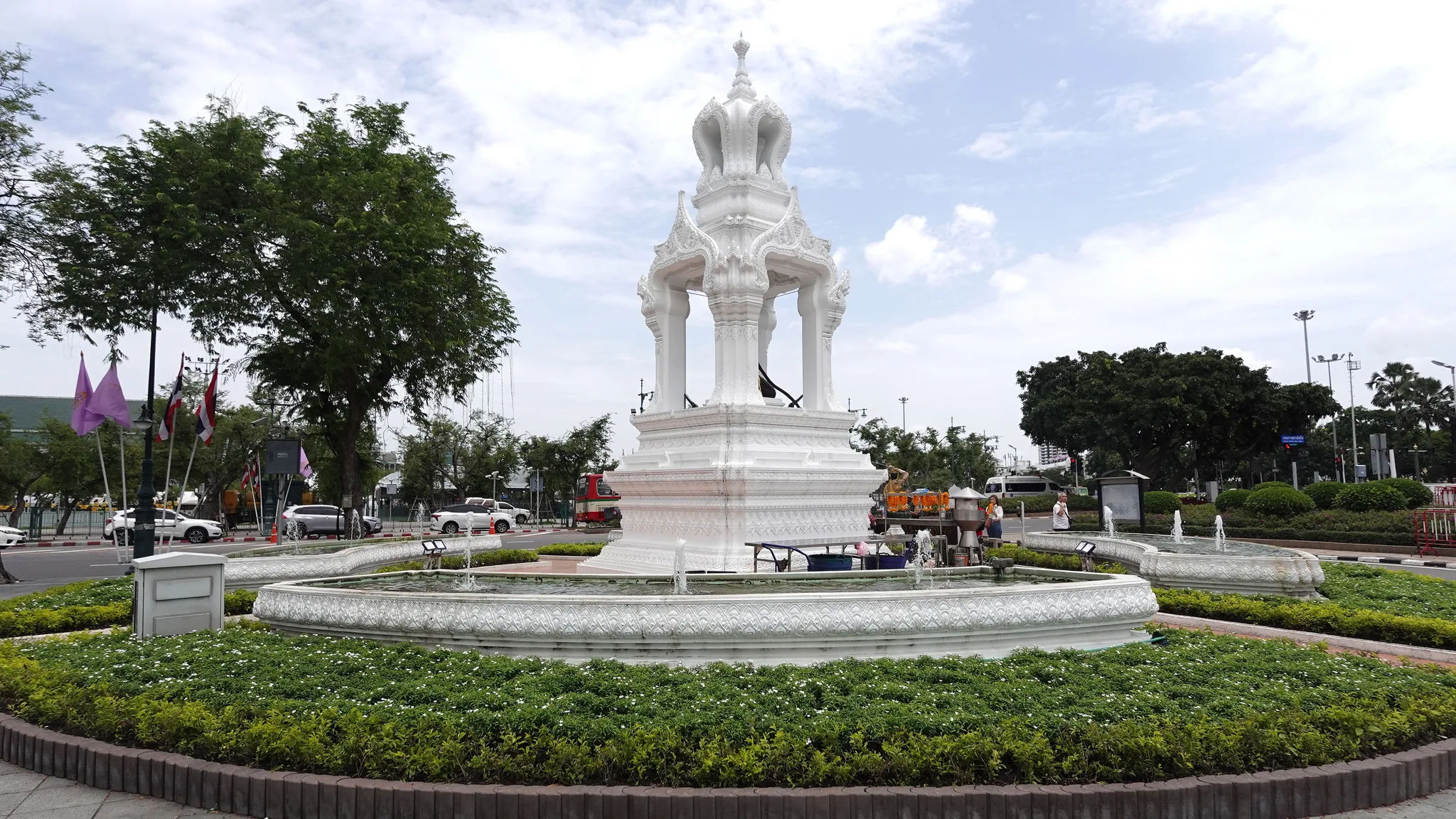
Le Sanctuaire de Phra Mae Thorani occupe un rond-point : pavillon blanc à flèche ouvragée sur haut socle, au centre d’un bassin à jets d’eau bordé de massifs, avec des guirlandes orange en offrande près du socle.© Eric Monteil 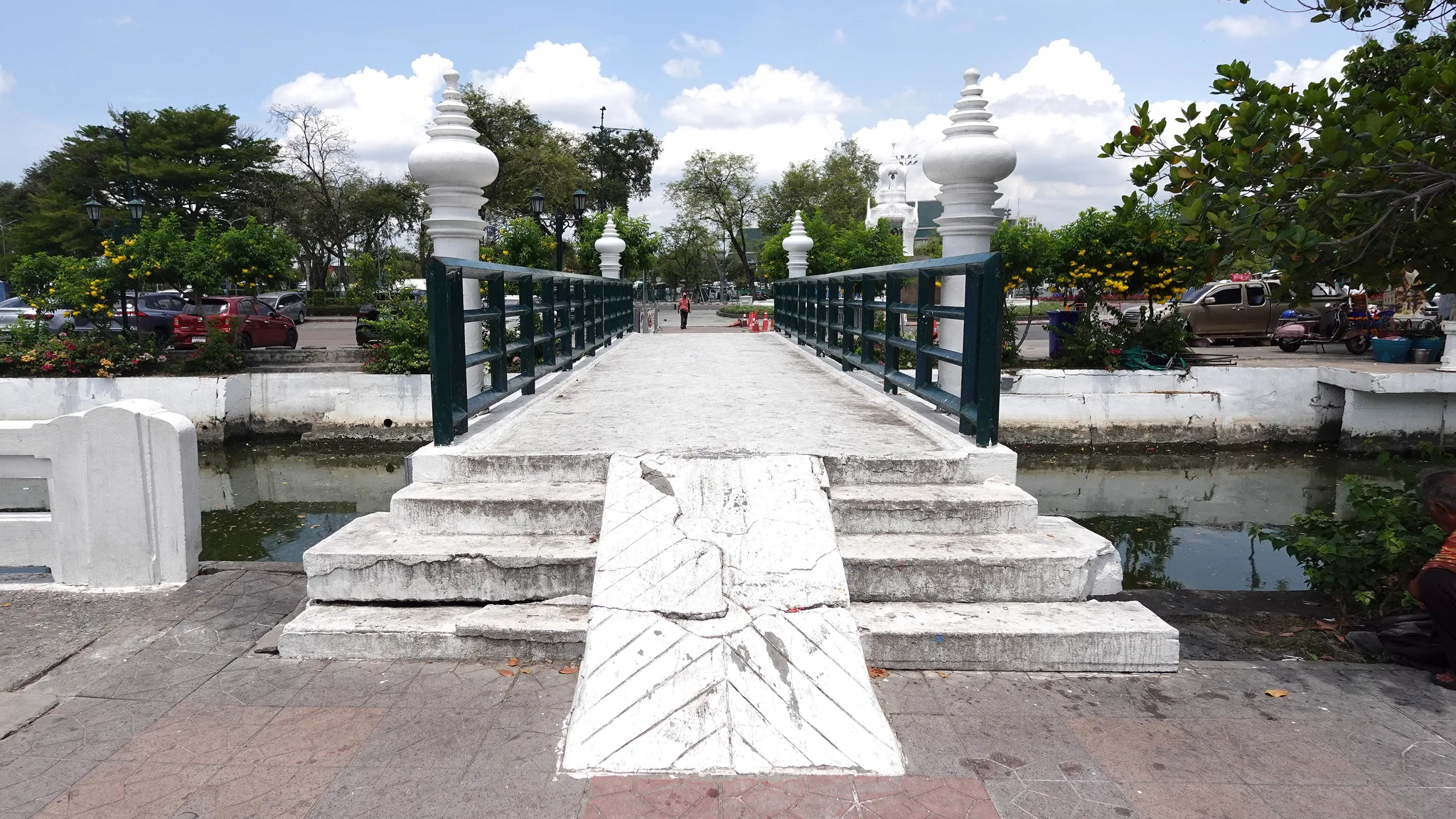
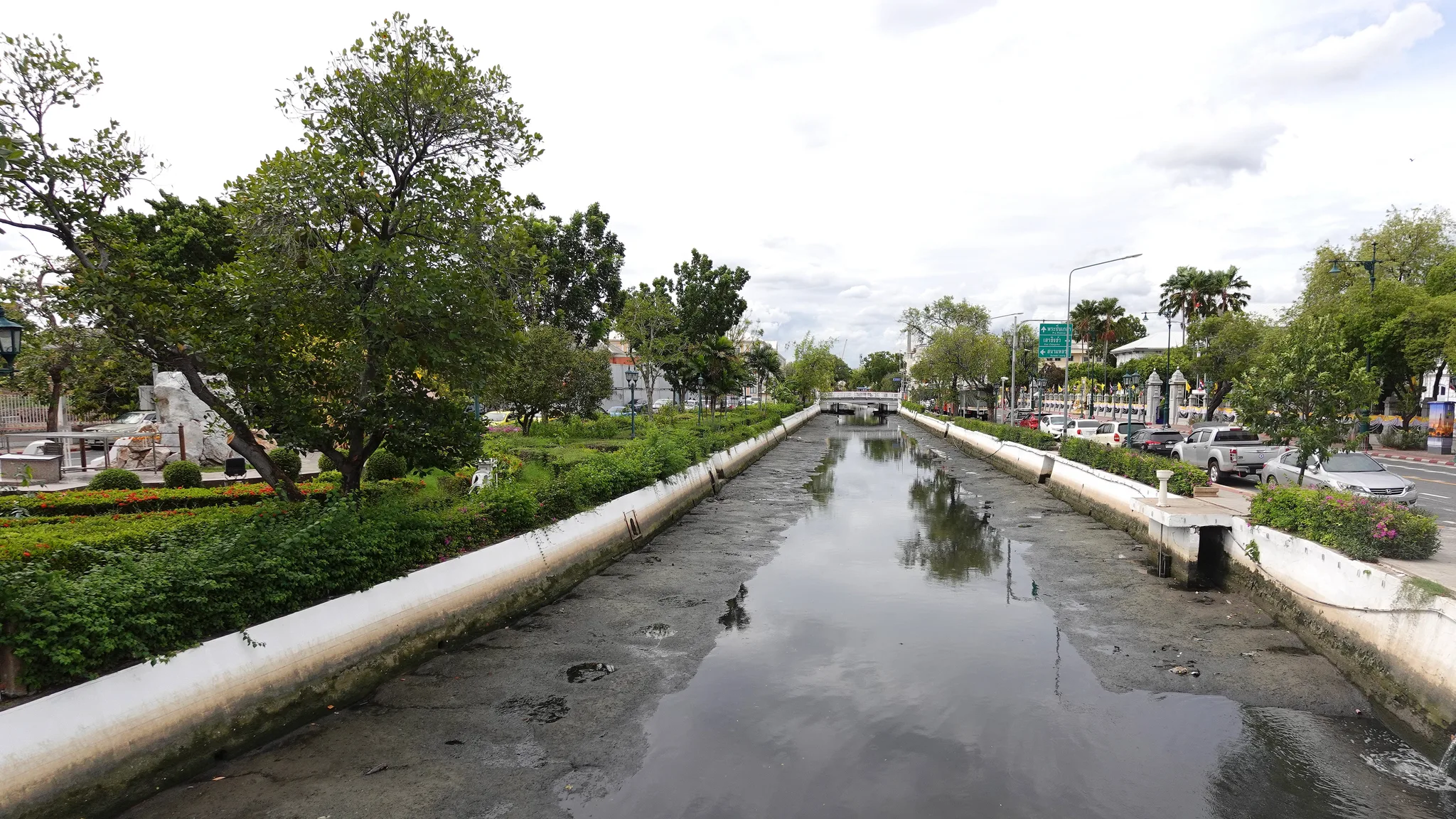
Passerelle maçonnée blanche aux garde-corps métalliques verts, encadrée de piliers à sommet bulbeux, franchissant un canal aux abords du Sanctuaire de Phra Mae Thorani ; une rampe centrale coupe les marches d’accès.© Eric Monteil
Architecture and decoration
Explore the heritage
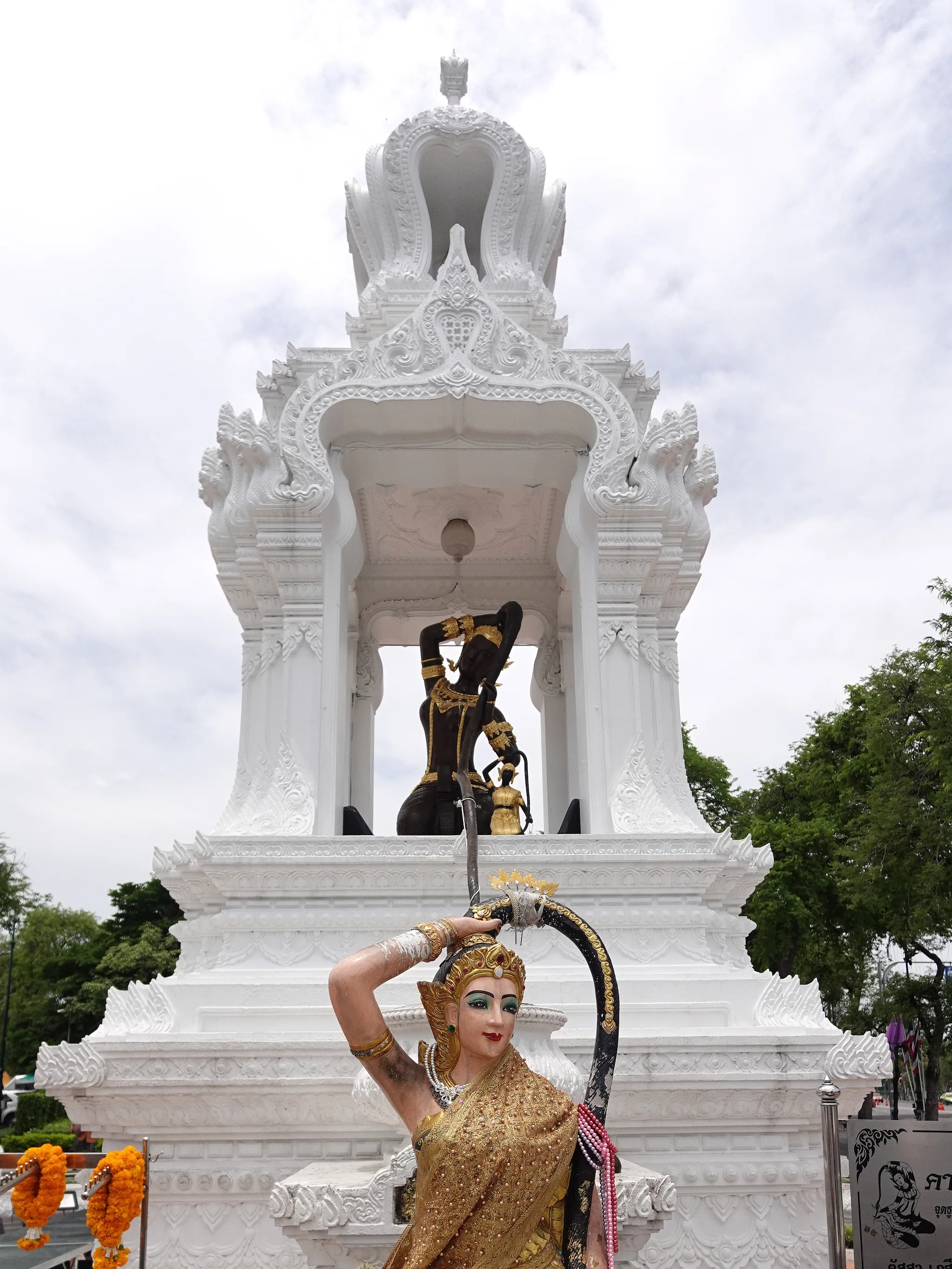
Au Sanctuaire de Phra Mae Thorani, un pavillon blanc à toit étagé orné de nagas abrite la déesse tordant sa chevelure ; devant, une statue peinte et parée de colliers reprend le même geste, près de guirlandes de soucis.© Eric Monteil 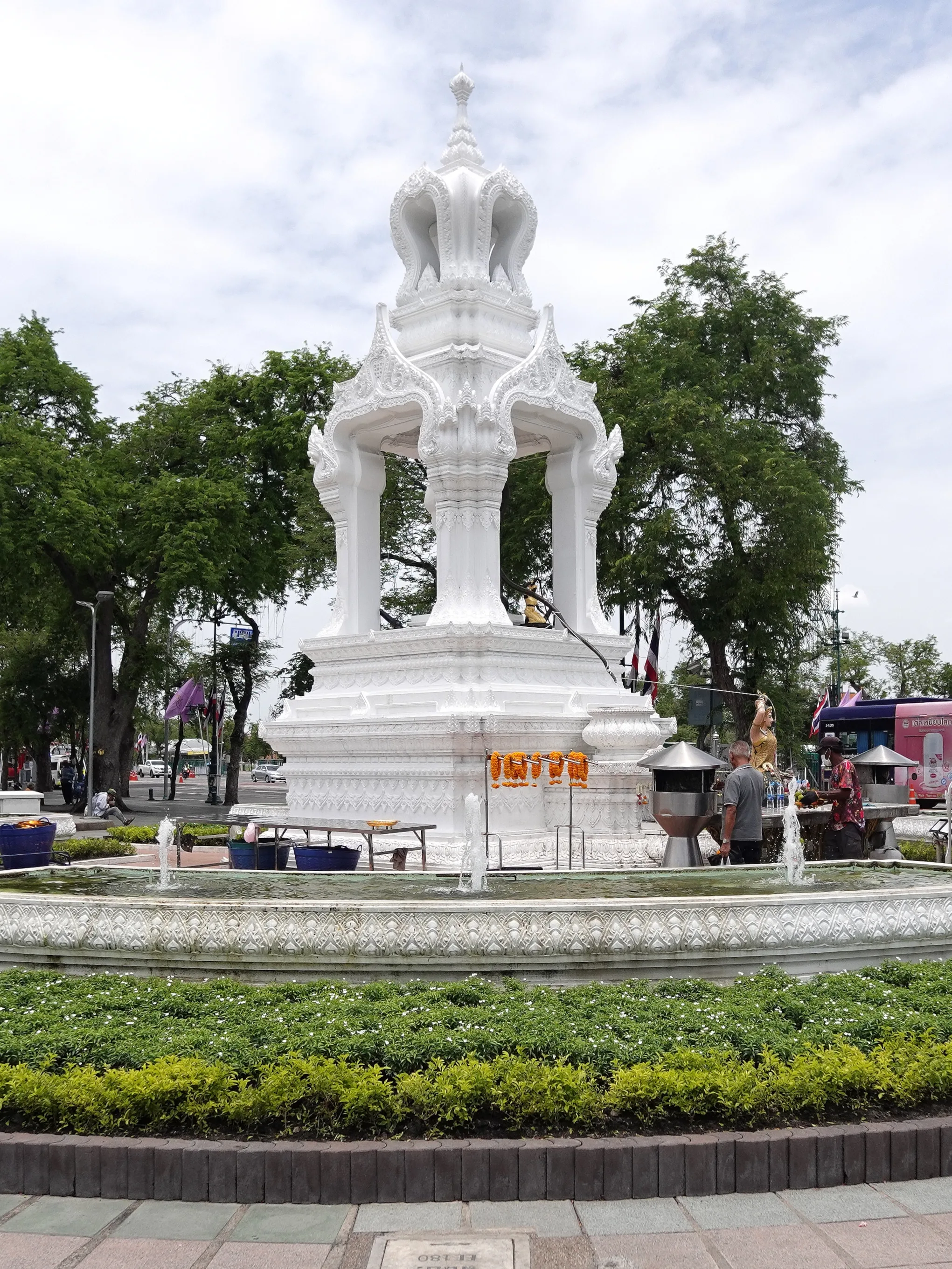
Pavillon blanc à quatre piliers et flèche ajourée du Sanctuaire de Phra Mae Thorani, abritant une statue dorée, derrière un bassin circulaire à décor en relief ; des fidèles déposent des offrandes près de guirlandes orange.© Eric Monteil