
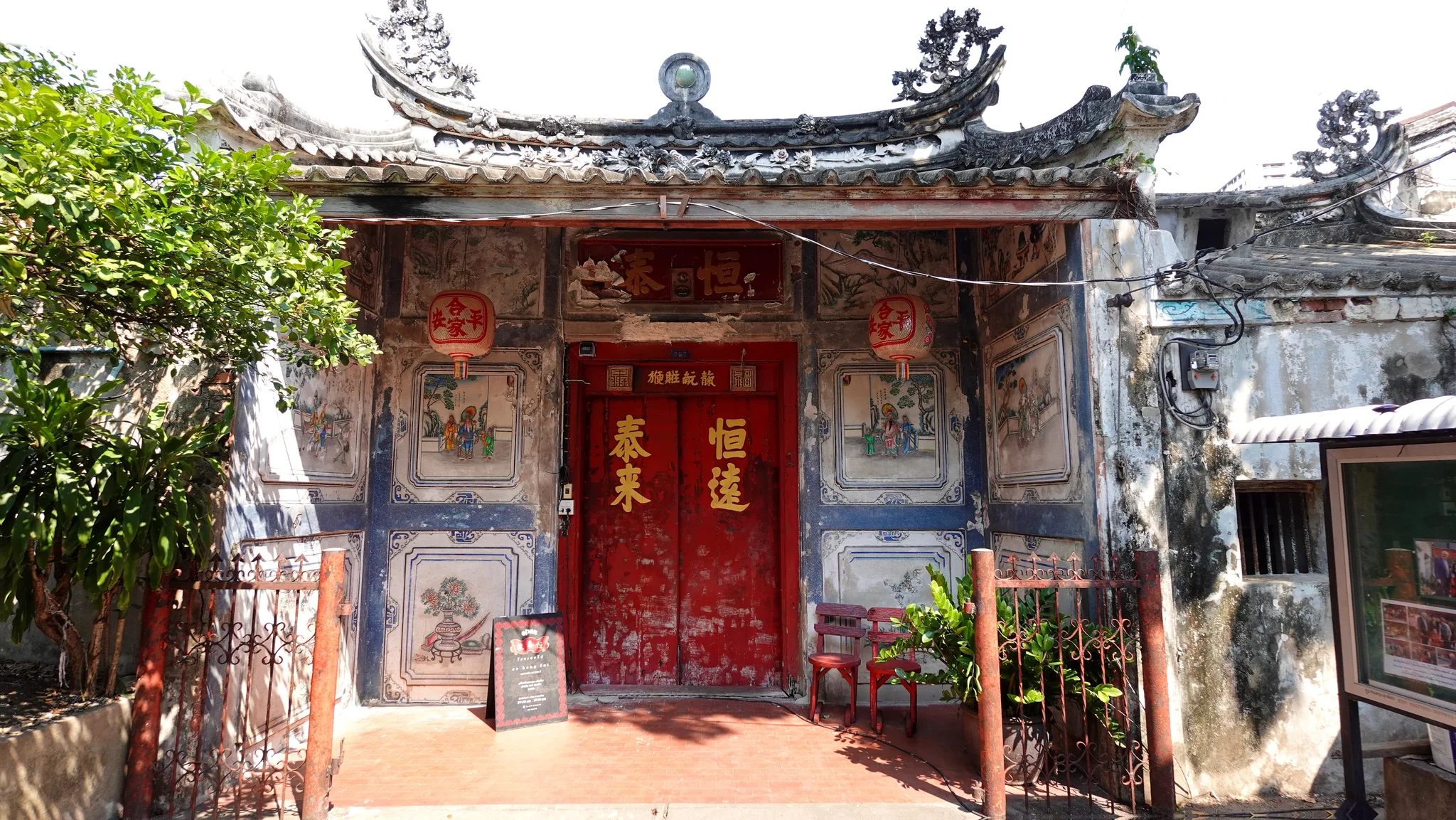
 Entrance of So Heng Tai House: beneath a roof with curved, carved ridges, a red door with gilded Chinese inscriptions is framed by panels painted with figures and vases, and by two red lanterns.© Eric Monteil
Historic house & domestic architecture
So Heng Tai House
In Talat Noi, the home of a Hokkien family enriched by the trade in edible birds' nests is still lived in by its descendants, who keep it alive through a diving school set up in the courtyard.
Heritage family · Architecture and built heritage
- Destination
- Bangkok (Samphanthawong)
- Heritage Family
- Architecture and built heritage
- Visit
- Available tours →
So Heng Tai House is a Chinese courtyard house in the Talat Noi quarter of Bangkok, on the east bank of the Chao Phraya River. It was built by a family of Hokkien merchants who grew rich in the trade in edible birds' nests with China, and their descendants still live there. It is one of the last traditional Chinese mansions in the city and tells the story of a merchant clan's rise, from a tax monopoly granted by the court to elevation to the nobility. Its teak wings surround a courtyard that now holds a diving pool, the sign of a conversion that helps the family maintain the house.11
Key facts
- Destination
- Samphanthawong
- Heritage Family
- Architecture and built heritage
- Typology
- Historic house & domestic architecture
- Places
- Chao Phraya River
- Periods
- People
- Phra Aphaiwanit (Chat)
- Poosak Posayachinda
- Rama III
- Communities
- Talat Noi community
- Events
- Partial collapse (2022)
- Opening of the So Heng Tai House diving school (2004)
- Heritage
- —
- Glossary
- Hokkien
- Rattanakosin period
- Thon Buri period
- Siheyuan
- Khunying
- Sakhu sai mu
- Keywords
- —
- Date
- —
- Collections
- —
Practical info
Practical information about this site is taken from its Google Maps page. We advise you to check it before visiting.
- Address
- 282 Soi Wanit 2, Khwaeng Talat Noi, Khet Samphanthawong, Krung Thep Maha Nakhon 10100
A merchants' house by the river
Talat Noi, a Chao Phraya neighbourhood
So Heng Tai House stands in Talat Noi, a neighbourhood on the east bank of the Chao Phraya, on the southern edge of Samphanthawong district. The house is today the best-known building in the neighbourhood. It belongs to a group of places linked to the Hokkien, the Chinese from Fujian province, on the south-east coast of China.13
A narrow alley links the house to the Hokkien shrine of Chow Sue Kong, built in 1804.2
The Po Seng pier and the nest trade
The story of the house begins with a Hokkien merchant named Chat. By the reign of Rama II at the latest, he was operating the Po Seng pier in Talat Noi. He was later granted royal land on the riverbank and had a group of Chinese buildings put up there, among them the residence that would become So Heng Tai House. The neighbouring pier was then an important point in the trade with China, through which rice and edible birds' nests passed.13
Chat's fortune rested on the second of these goods. He held the tax monopoly on birds' nests: he was what is called in Thai a nai akon, a tax farmer. The house served both as a home and as an office for the family business, which exported the nests to China. Under the reign of Rama III, the merchant was ennobled and received the title of Phra Aphaiwanit.9
The name of a clan
The name of the house is written 蘇恒泰 in Chinese and บ้านโซวเฮงไถ่ in Thai. The first character, 蘇, is the name of the So clan, sometimes transcribed Sou. For Poosak Posayachinda, the current owner, the name means that the members of the So clan who settled in Thailand have been favoured by fortune.9
In the neighbourhood, other names have been added over time. It is known as the 'diving house', the 'red-door house' or the 'two-hundred-year-old house'.8
A foundation hard to date
Two possible chronologies
The construction date of So Heng Tai House remains difficult to establish, and estimates span nearly a century. A first chronology places its construction around 1797, at the beginning of the Rattanakosin period, the era that opens with the establishment of the capital at Bangkok. It even contemplates an older origin, in the Thonburi period, but only as a hypothesis.12
The second chronology attributes the house to Phra Aphaiwanit (Chat) and places it in the 19th century, more towards the middle of the century. In 2014 the house was said to be 167 years old, which points to the 1840s. Since then, the ages put forward have ranged from 230 to 260 years, in line with the earlier chronology. There is nothing to decide between these two versions.1
A claimed antiquity
What is at stake in this date goes beyond scholarly curiosity. So Heng Tai House is presented as one of the last traditional Chinese houses in Bangkok, and it claims the title of the city's oldest private residence. That title remains a claim, one that the debates over the date do not allow to be confirmed. Yet the nickname 'two-hundred-year-old house' shows that this antiquity is now part of the identity of the place, in the eyes of the family and of the neighbourhood alike.11
Whatever its exact date, the house belongs to the first generations of Bangkok as capital. It shows how Chinese merchants shaped the banks of the Chao Phraya while the city was being built around the royal palace.
Reading the house
Four wings around a courtyard
So Heng Tai House follows the plan of the siheyuan, the traditional Chinese house whose buildings enclose a square courtyard. In Thai it is described as a house of 'four buildings around a courtyard': four wooden wings frame a central courtyard. According to family tradition, its style is Hokkien, which links it to the home region of its founders.12
The house served both as a home and as an office for the family business. Even today, the courtyard remains the heart of the house, although its use has changed profoundly.3
Teak, roofs and the entrance
The house appears as a series of square buildings in golden teak, topped with traditional Chinese roofs. The walls are of teak, and some parts combine concrete with wood.2
Two Chinese lanterns, the teng lung, flank the door, and a decorative relief crowns another door of the house. In the centre of the courtyard, visitors today discover a deep pool, a reminder that the old merchants' house has had to find other uses in order to endure.2
A home handed down from generation to generation
From the founders to the Posayachinda family
The house has never left the family of its founder, and his descendants have lived in it without interruption. Seven owners have succeeded one another. After Phra Aphaiwanit (Chat), the house passed to his son Son, who in turn bore the title of Phra Aphaiwanit, and then to Khunying Phisan Sombat Boriboon (Sin).8
Under the reign of Rama VI, the descendants received the surname Posayachinda. A Posayachinda woman, Poosak's grandmother, had no direct heir: she left the house to Poosak's father, who became its sole heir.9
Today's generations
The seventh generation is represented by Duangtawan Posayachinda, owner of the house, who in 2017 shared its ownership with her children Poosak, Jariya and Sermsak. Her son Poosak Posayachinda, of the eighth generation, is a diving instructor. In 2014 he lived in the house with his wife, his son and his mother. So Heng Tai House is therefore not a family museum: it is a house that is lived in.1
The So clan extends well beyond this house. Several well-known families in Thai society descend from it, such as the Chatikavanij, Srivikorn, Panyarachun, Bhirombhakdi, Settabut and Posayachinda families. Among the descendants is, notably, Korn Chatikavanij.1
The courtyard repurposed
A diving school in an old house
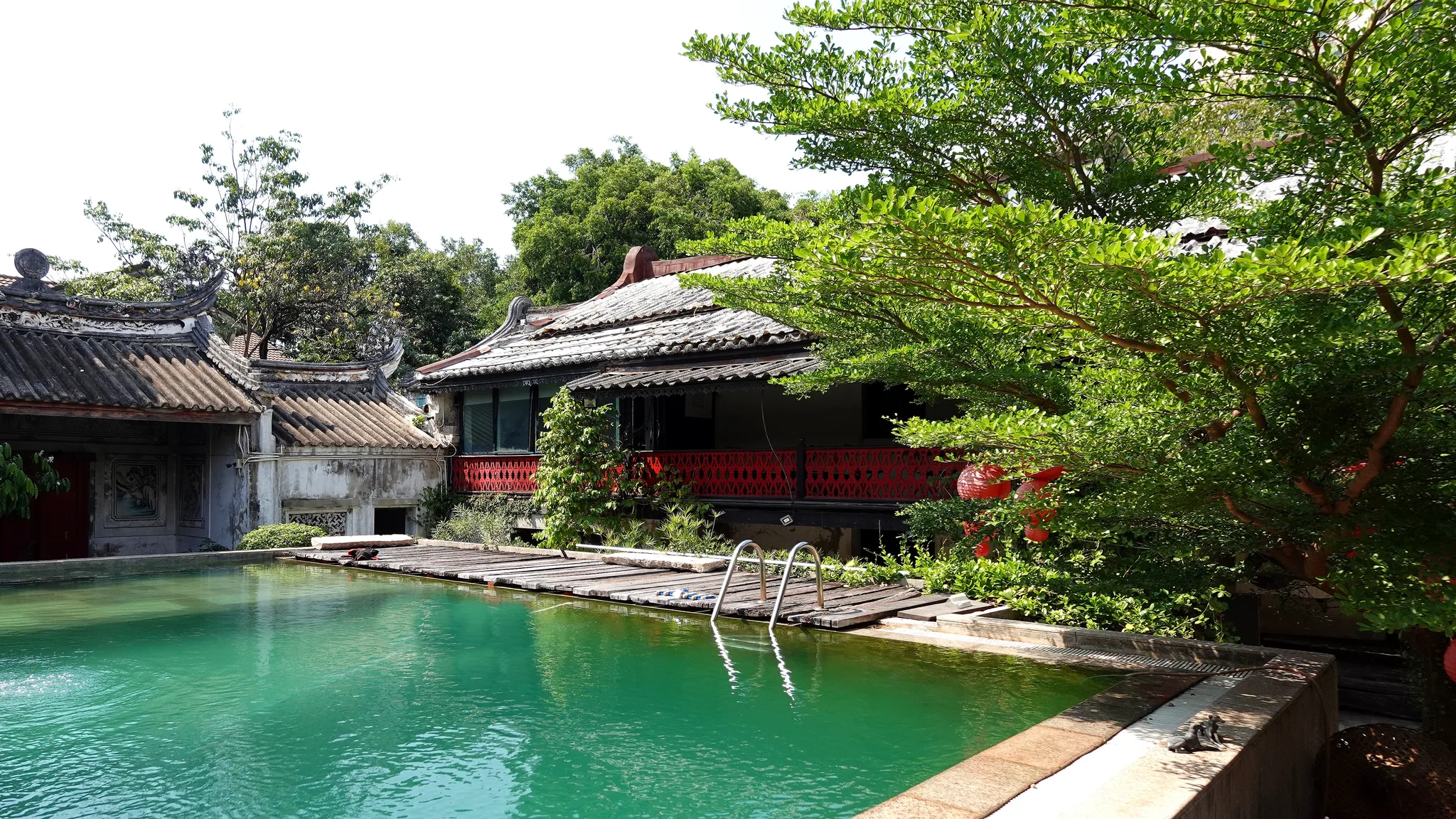
In 2004 a pool four metres deep was installed in the courtyard, and the house became a diving school. This choice is linked to Poosak Posayachinda, a diving instructor. It has enabled the family to find an income for a home whose upkeep costs it a great deal. Several thousand students have been trained there since.3
The contrast strikes the visitor: the diving pool occupies the centre of a siheyuan. Yet the transformation does not erase the old plan. The four wings remain in place around the courtyard, and the pool sits within the space that was already its centre. The diving school has given the house a new nickname, and it helps the family to maintain it.
Café, visits and the rediscovery of Talat Noi
From 2014 onwards, the house opened to the public more often, just as Talat Noi was being promoted as a cultural tourism destination. A café welcomes visitors there. Duangtawan Posayachinda serves, among other things, sakhu sai mu. The house is both a private residence and a place to visit. It illustrates what is known as adaptive reuse, which consists in giving an old building a new function in order to preserve it.11
For Poosak Posayachinda, So Heng Tai House made possible the 'rediscovery' of Talat Noi: visitors came for the house, and then the neighbourhood saw the arrival of street art and cafés. Since the 2010s Talat Noi has become a heritage destination, while its resident population is ageing and shrinking. The house thus stands at the centre of a change larger than itself: a merchants' quarter is becoming a place for strolling and sightseeing.5
A fragile house
The collapse of June 2022
On 30 June 2022, at around two in the morning, part of the house collapsed, in the area of the kitchen and bathrooms. No one was injured. An outer wall fell onto neighbouring rented dwellings, and Samphanthawong district declared the site a danger zone.7
Repairs are not a matter for the family alone. The owner must obtain the approval of the Fine Arts Department, the Thai government body responsible for heritage, under the 1992 law on ancient monuments. The authorities then said they were ready to work with the Fine Arts Department to consider registering the house as an ancient site.10
Public recognition, private responsibility
The 2022 collapse brought to light an older contradiction. So Heng Tai House is publicly recognised, and it contributes to Bangkok's image and to Talat Noi's appeal to tourists. But its conservation remains the responsibility of the family, which alone pays for very costly upkeep. The historian and archaeologist Phacha Phanomvan stresses the burden this upkeep places on families who own old houses, in a city that gives its architectural heritage little protection in law.10
In 2014 the family saw grounds for hope in the proposal to inscribe Bangkok's Chinatown on the World Heritage List. The 2022 accident exposed the limits of a model in which a property regarded as heritage depends chiefly on one family and a diving school.1
Understanding
So Heng Tai House is first and foremost the home of a clan. Hokkien merchants built it on the banks of the Chao Phraya on the proceeds of the trade in edible birds' nests, and their descendants have never ceased to live there. Its square courtyard plan, its teak buildings and its red door recall the Bangkok in which Chinese families brought the piers to life and were gradually drawn into the royal court. Its significance lies in this continuity: one lineage, on one site, since it was built. Today the house stays standing thanks to a diving school, a café and its visitors. The neighbourhood around it is changing, its population is ageing, and the collapse of 2022 revealed the fragility of a property recognised by all but maintained by a single family. Talat Noi is becoming a place to visit and the house is opening to the public. If the city eventually makes it a monument, will So Heng Tai House still be able to remain, above all, a family home?
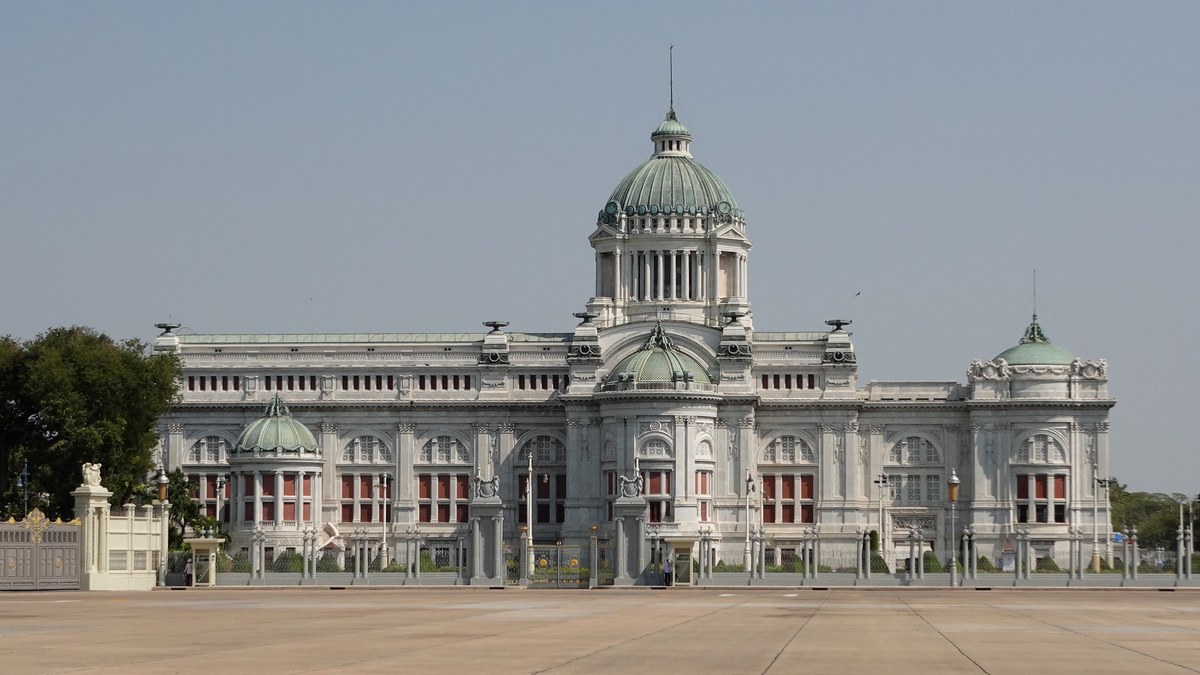
Rattanakosin, from the royal citadel of 1782 to the historic districts that shaped contemporary Bangkok.
- Hokkien
- Chinese group originating from the south of Fujian province, many of whose members emigrated to Southeast Asia, notably as merchants.
- Rattanakosin period
- Period of Thai history that began with the founding of Bangkok as the capital by King Rama I at the end of the eighteenth century. It takes its name from Rattanakosin Island, the heart of the royal city.
- Thon Buri period
- Period of Thai history (1767–1782) during which the capital of Siam was established at Thon Buri, on the west bank of the Chao Phraya, before the founding of Bangkok.
- Siheyuan
- Traditional Chinese house whose four wings enclose a square, open-air central courtyard onto which the living rooms open.
- Khunying
- Thai honorific title borne by ladies of the nobility.
- Sakhu sai mu
- Thai dish consisting of small tapioca dumplings filled with a pork stuffing.
- Nai akon
- In Siam, a tax farmer to whom the Crown granted, in return for a fee, the right to collect a tax or to control a trade.
- Teng lung
- Traditional Chinese lantern, often placed on either side of an entrance.
Studies
- 1Supoj Wancharoen, A beautiful family history, Bangkok Post, 2014 ↗
- 2Bangkok's hidden gem, Bangkok Post, 2019 ↗
- 3AFP, 'The bottom line': Scuba divers help preserve historic Bangkok mansion, Bangkok Post, 2022 ↗
- 4AFP, Historic Chinese mansion in Bangkok survives as scuba school, Daily Sabah, 2022 ↗
- 5So Heng Tai Mansion and the History of Talat Noi, Thai Enquirer ↗
- 6โซว เฮง ไถ่ ลูกไม้ใต้ต้นรุ่น 9, Khaosod ↗
- 7"โซวเฮงไถ่" บ้านจีนอายุกว่า 260 ปีกลางตลาดน้อย ทรุดตัวถล่ม โชคดีไร้คนบาดเจ็บ, MGR Online (Manager), 2022 ↗
- 8รู้จัก โซวเฮงไถ่ บ้านโบราณที่ไม่ใช่แค่บ้านโบราณ, MCOT, 2022 ↗
- 9ภู่ศักดิ์ โปษยะจินดา : 'โซวเฮงไถ่' บ้านจีนที่ซ่อนชีวิตและความคาดหวังของลูกชายคนโต, The People ↗
- 10Chinese Diasporic Heritage Houses in Bangkok: Between Recognition and Responsibility, Taylor & Francis, 2026 ↗
Contemporary views
So Heng Tai House today
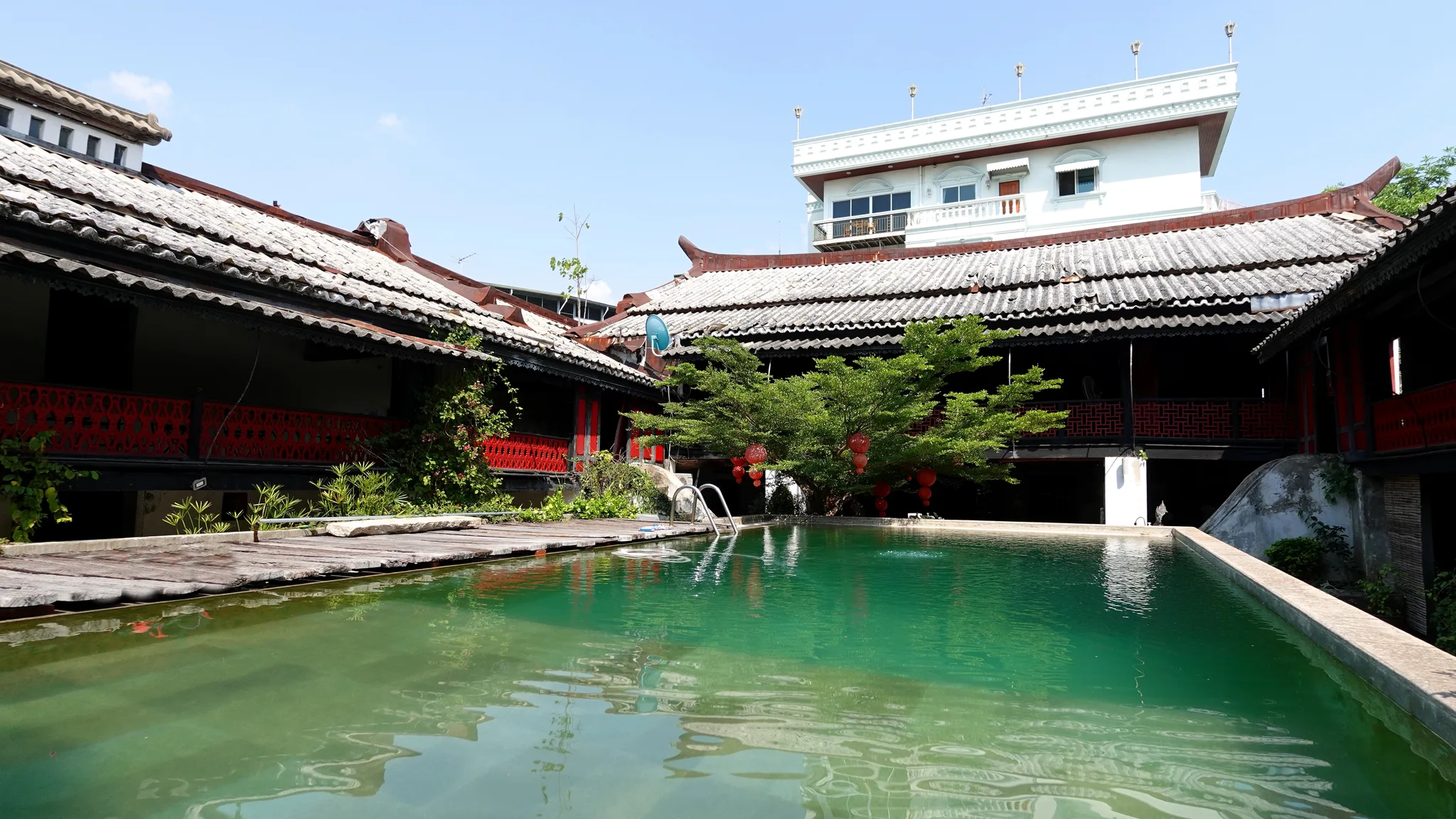
The courtyard of So Heng Tai House is arranged around a green-watered pool, flanked by timber pavilions with tiled roofs and red pierced balustrades; a tree hung with red lanterns and a modern white building complete the view.© Eric Monteil 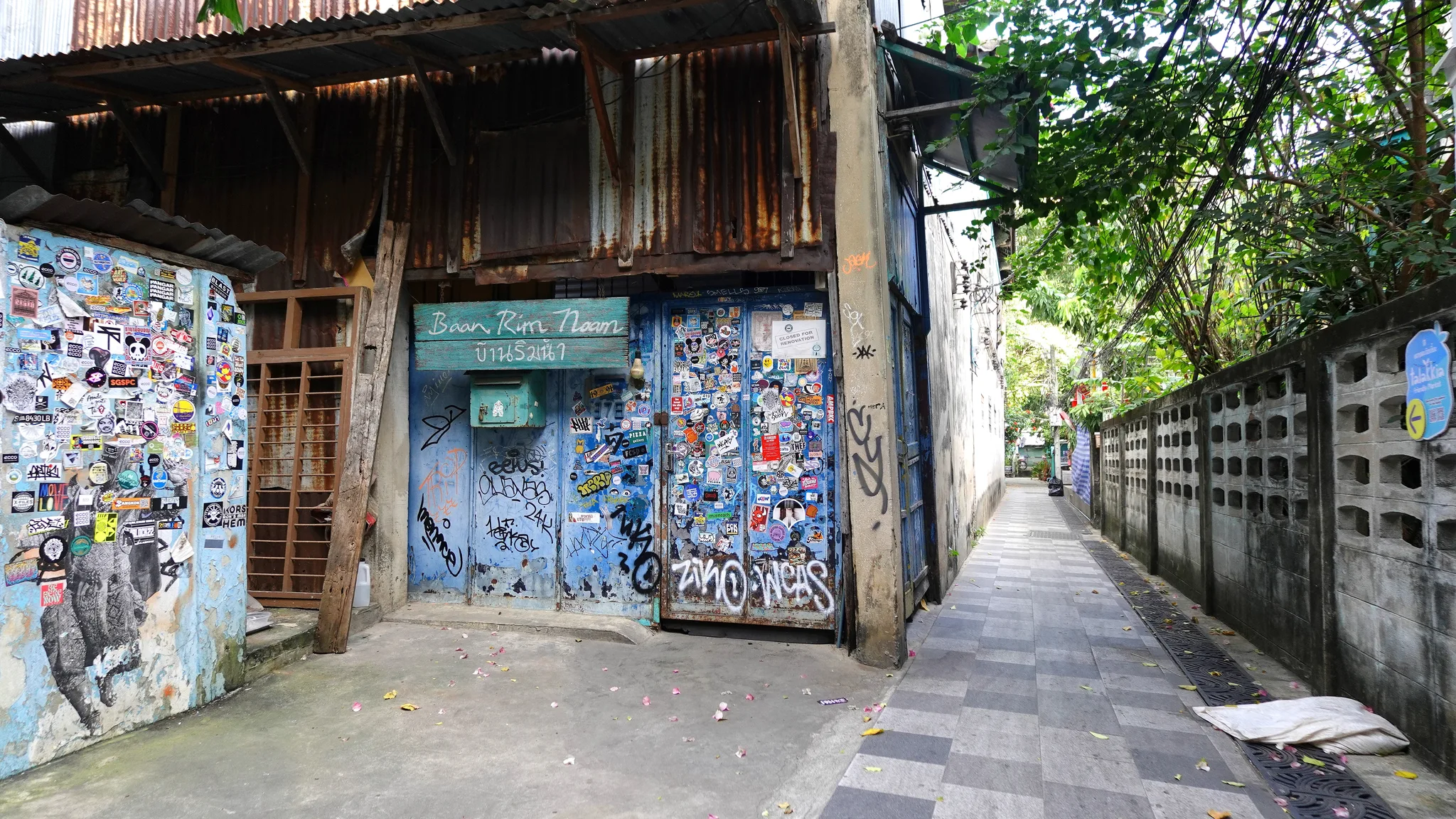
Near So Heng Tai House, a ‘Baan Rim Naam’ sign tops blue wooden doors covered in stickers and graffiti, beside a paved alley lined with a pierced concrete wall and greenery.© Eric Monteil
Architecture and decoration
Explore the heritage
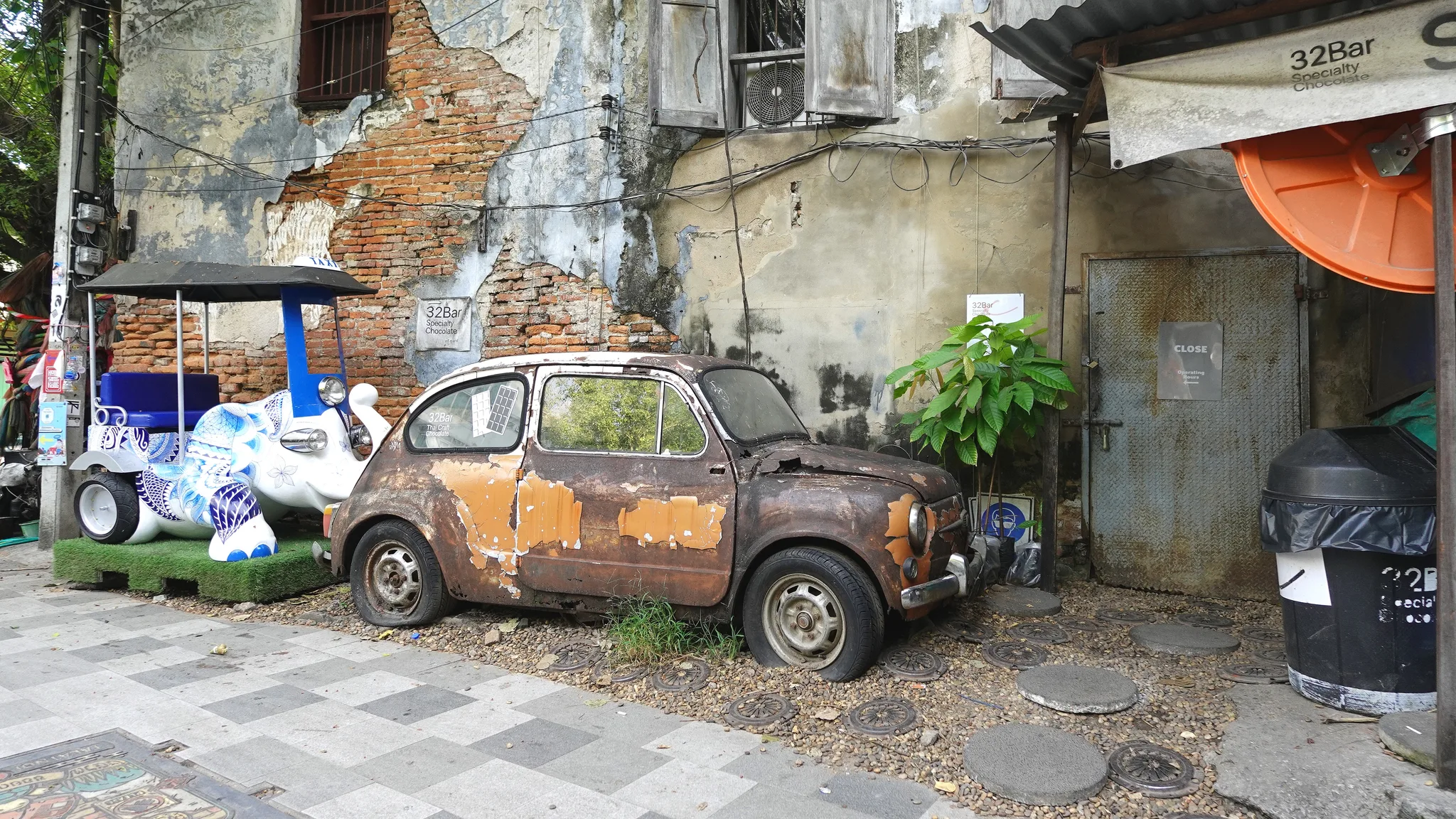
At So Heng Tai House, a wall with flaking plaster reveals red brick beneath wooden shutters; in front, a small rusted vintage car and a decorative white and blue tuk-tuk stand on a gravel floor.© Eric Monteil 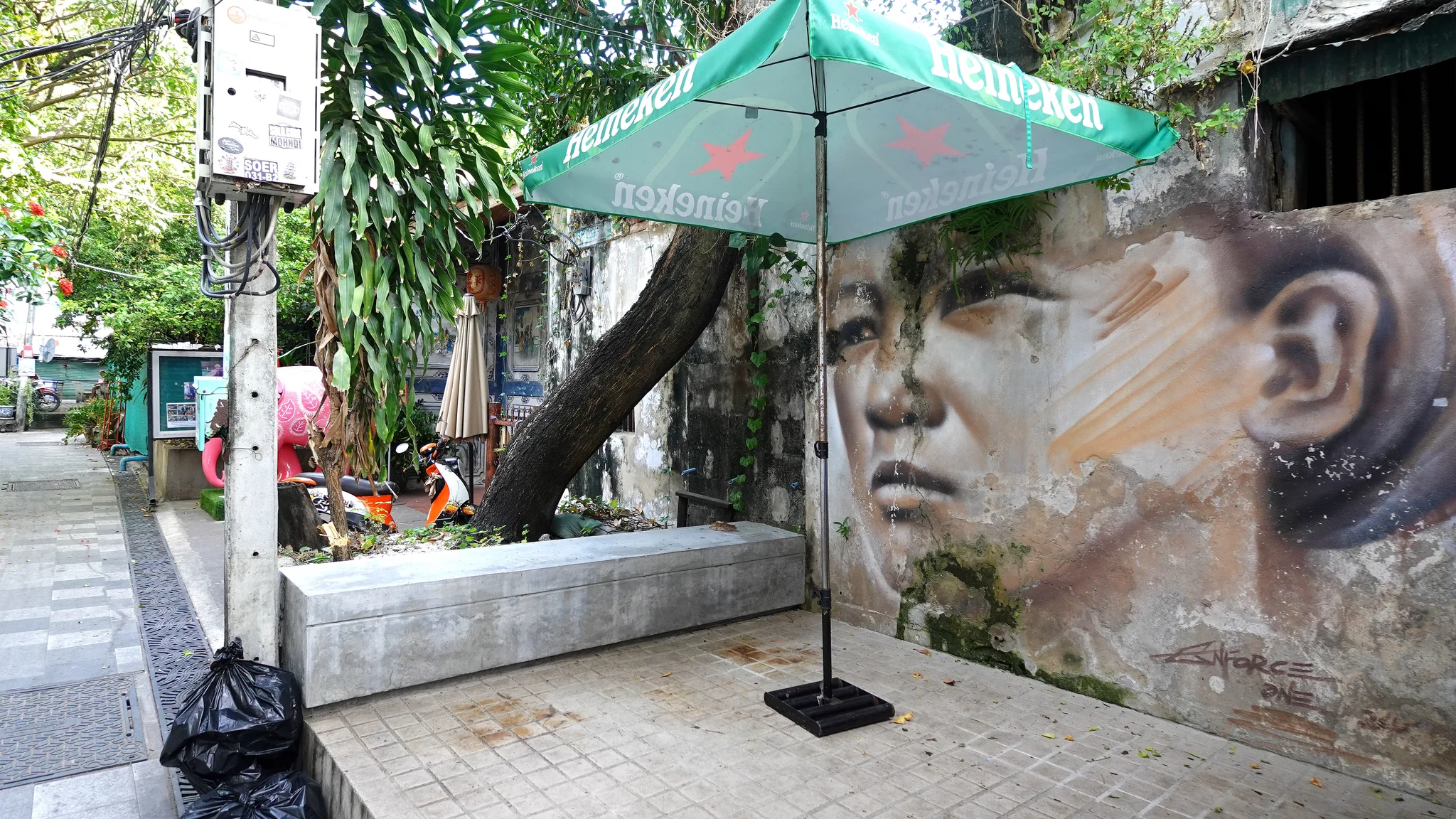
On a rendered wall, weathered and marked with moss, near So Heng Tai House, a mural depicts a large human face; in the foreground, a tree rises from a concrete planter edged with a bench, beside a parasol.© Eric Monteil