
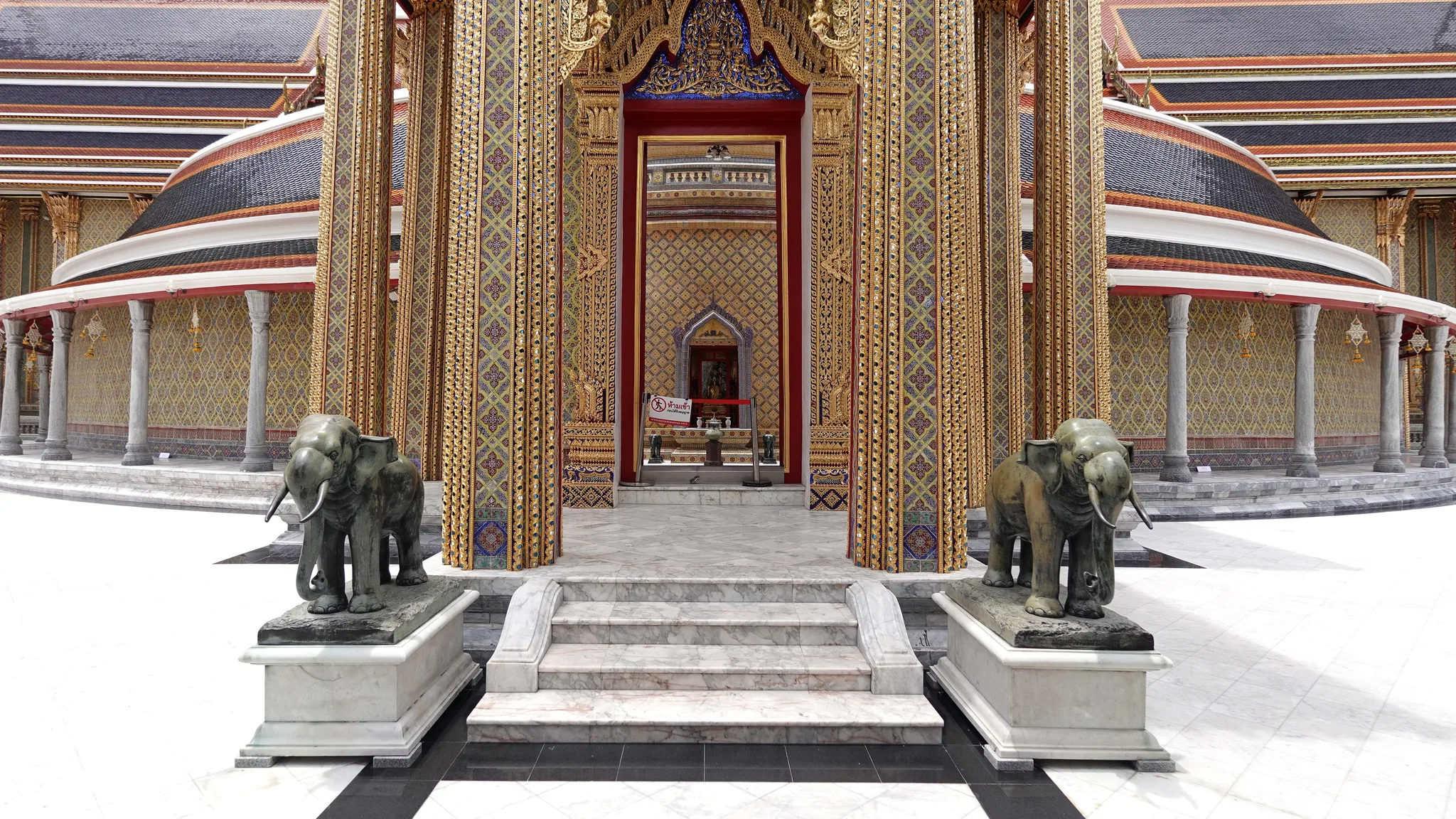
 At Wat Ratchabophit, a marble stairway flanked by two bronze elephants leads to a doorway with pillars faced in ceramic tiles; on either side extends the circular colonnaded gallery with its tiered roofs.© Eric Monteil
Buddhist temple
Wat Ratchabophit
Founded in 1869 by Chulalongkorn in the heart of Bangkok, Wat Ratchabophit is at once the temple of two reigns, a site of memory for the Chakri dynasty and the residence of several Supreme Patriarchs.
Heritage family · Buddhism, religions and spiritualities
- Destination
- Bangkok (Phra Nakhon)
- Heritage Family
- Buddhism, religions and spiritualities
- Typology
- Buddhist temple
- Visit
- Available tours →
Wat Ratchabophit is a royal Buddhist monastery in Bangkok, founded by King Chulalongkorn to serve as the temple of his reign. It holds a singular place in the religious and dynastic life of the country: the temple of two sovereigns, it houses the ashes of several members of the royal family and has been the residence of three Supreme Patriarchs, among them the present head of the Thai monastic community. Built from 1869 onwards near the Grand Palace, restored in the twentieth century and again recently, it gathers around a central chedi encircled by a circular gallery an ordination hall and a hall of worship with Thai façades and Gothic-inspired interiors.
Key facts
- Destination
- Phra Nakhon
- Heritage Family
- Buddhism, religions and spiritualities
- Typology
- Buddhist temple
- Places
- Khlong Khu Mueang Doem
- Periods
- People
- Bhumibol Adulyadej
- Krom Luang Chinnawonsiriwat
- Phra Ong Chao Pradit Worakan
- Rama V
- Prajadhipok (Rama VII)
- Somdet Phra Ariyavongsagatanana (Amborn Ambaro)
- Communities
- Monastic community
- Events
- Dépôt des cendres de Bhumibol (2017)
- Foundation (1869)
- Royal funeral of King Bhumibol Adulyadej
- Restauration sous Prajadhipok
- Restauration générale pour son 150e anniversaire
- Heritage
- —
- Glossary
- Wat
- Royal temple
- Sangha
- Phra Ong Chao
- Ubosot
- Ordination
- Keywords
- —
- Date
- —
- Collections
- —
Practical info
Practical information about this site is taken from its Google Maps page. We advise you to check it before visiting.
- Address
- 2 Thanon Fueang Nakhon, แขวง วัดราชบพิธ Khet Phra Nakhon, Krung Thep Maha Nakhon 10200
A temple for the reign of Chulalongkorn
A name chosen by the king
The monastery’s full name, Wat Ratchabophit Sathitmahasimaram Ratchaworawihan, was given by King Chulalongkorn, the fifth sovereign of the Chakri dynasty, known as Rama V. It reads in two parts. “Ratchabophit” means “built by the king” and declares at the outset the royal origin of the foundation. The complement “Sathitmahasimaram” denotes a monastery “where there is a great sīmā”, the sīmā being the ritual boundary that marks out the sacred space in which monks perform their communal acts; the name thus alludes to the large boundary stones, known as sema, that mark this perimeter. The final term, “Ratchaworawihan”, denotes the type of royal temple to which the foundation belongs.1
The name is therefore no mere honorific title. It combines in a single formula the person of the king and a ritual arrangement peculiar to the site, one that sets Wat Ratchabophit apart from other monasteries in the capital. The temple is today a first-class royal temple, the highest rank in the hierarchy of monasteries under the patronage of the Crown, and it gives its name to the administrative subdistrict of Wat Ratchabophit, in Phra Nakhon district.11
The temple of a reign
In founding this monastery, Chulalongkorn followed an ancient royal custom whereby the sovereign endows himself with a temple attached to his reign. Wat Ratchabophit belongs to the Dhammayuttika Nikāya, or Dhammayut, order, one of the branches of the Thai Sangha, that is, the community of monks; the line of its abbots bears witness to this.9
The choice of site matters as much as the gesture. The monastery stands on the bank of the Khlong Khu Mueang Doem, not far from Wat Pho and the Grand Palace. Chulalongkorn thus placed his temple at the very heart of the capital.8
A site already inhabited
Before the temple, the site was not empty. To the south stood the houses of officials and residents. To the east, the descendants of a dignitary, Phraya Singhathep, owned a meeting place where people gathered to make merit and listen to sermons; they offered it to the king as a royal sala, that is, a pavilion for communal use. The king then had these buildings demolished to build the monastery.1
Building, consecrating, settling
The works of the king’s craftsmen
Work began in 1869. It was placed under the direction of a prince of the royal family, Phra Ong Chao Pradit Worakan, who at the time headed the Chang Sip Mu, the royal “ten corps of craftsmen”.9
This organisation also sheds light on the character of the monument. The royal workshops of the late 1860s were working for a young sovereign receptive to forms from Europe, and Wat Ratchabophit bears the mark of this encounter, visible in its interiors as in the decoration of its doors.
The completion of the works
The works were completed in 1870.11
The history of the construction was set down in writing as early as the beginning of the twentieth century by one of the temple’s abbots, Prince Krom Luang Chinnawonsiriwat, then Supreme Patriarch, who published the account in 1923 in the official bulletin of the monastic community.4
First monks, first image
A monastery cannot exist without a community. The first monks of Wat Ratchabophit came from Wat Somanat Wihan, another monastery in the capital, and settled in the new temple. With them, a statue of the Buddha named Phra Phuttha Nirantarai was installed in the ubosot, the ordination hall where the community’s principal acts take place. The presence of this consecrated image and the arrival of the monks turned the royal building site into a place of religious life.11
The first abbot, Prince Krajang, known by his monastic title of Phra Arunnibhagunakorn, led the temple from its foundation in 1869 until 1901.8
Reading the monastic complex
Three zones and a centred plan
Wat Ratchabophit is organised into three distinct zones. The Buddha zone, or buddhawat, brings together the buildings of worship. The monks’ zone, or sangkhawat, houses the cells and the spaces of monastic life. Finally, to the west of the enclosure lies the royal cemetery.7
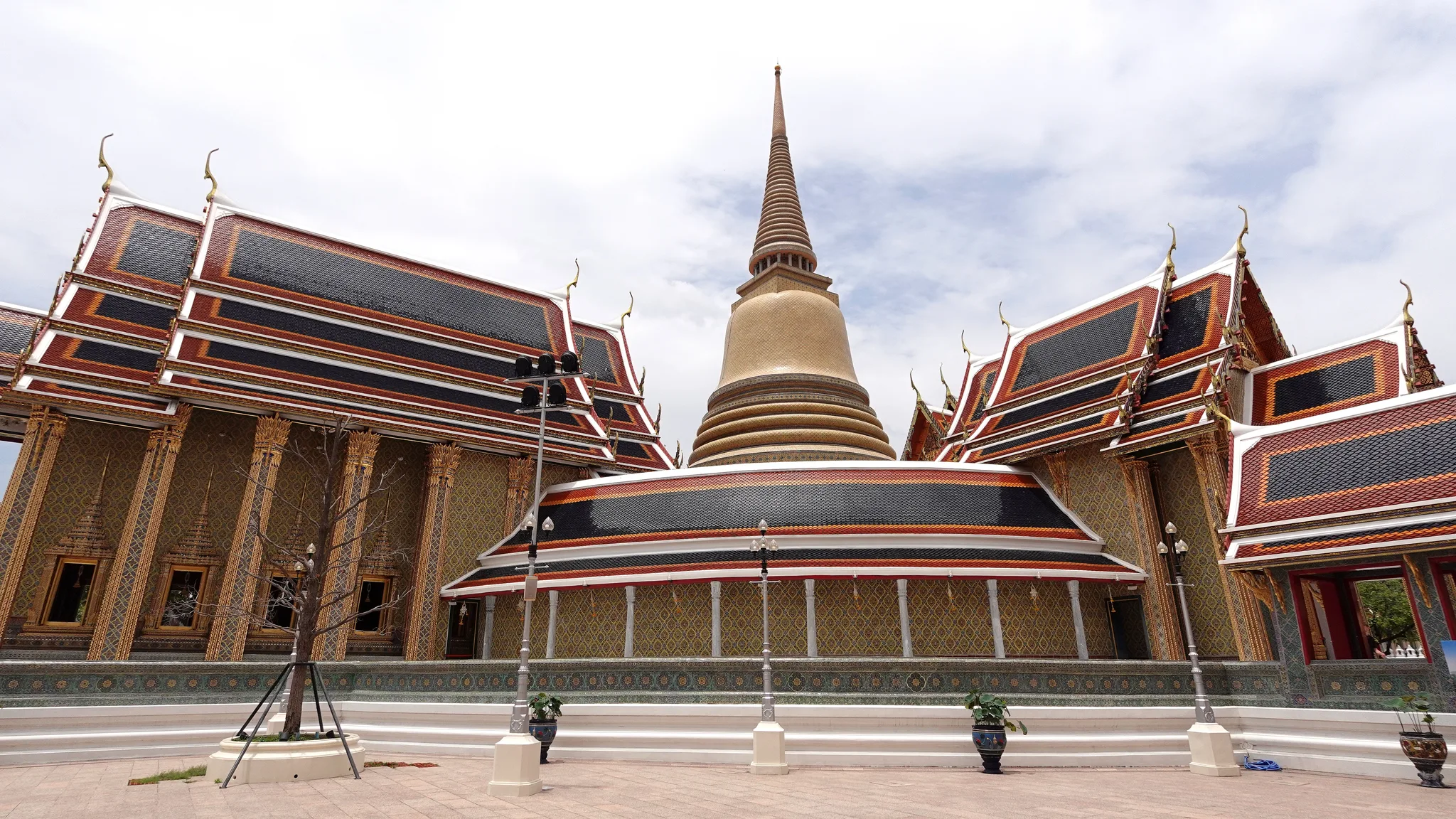
It is in the Buddha zone that the temple stands out. At its centre rises a chedi, a bell-shaped reliquary monument, encircled by a circular gallery. On either side, the ubosot and the wihan, the hall of worship and preaching, face each other. This unusual plan places the reliquary at the heart of the composition and arranges the two principal halls around it.18
The chedi and its gallery
The central chedi rests on a platform and takes the form of a bell. A circular gallery surrounds it. The monument is clad in a five-colour porcelain mosaic, in the spirit of the ceramics known as benjarong.19
This ceramic decoration links Wat Ratchabophit to a decorative tradition well established in the royal temples of Bangkok, while giving it an identity of its own. It makes the chedi the most visible element of the complex, the one first seen on entering the Buddha zone.
Thai façades, European interiors
The ubosot and the wihan display the same contrast. Outside, they adopt the forms of Thai architecture. Inside, by contrast, they draw on European architecture, and above all on the Gothic style, to the point that the ubosot has been compared to an Italian Gothic chapel. Passing from façade to hall thus takes the visitor from one vocabulary to the other.7
The doors and windows extend this dialogue. Those of the ubosot are inlaid with mother-of-pearl and depict the insignia of royal orders, the honorific decorations bestowed by the Crown. Those of the wihan repeat the same motif of insignia, but in wood, without inlay.7
The great sīmā
The ritual arrangement that gave the temple its name has practical consequences for monastic life. In many monasteries, the community’s acts, such as ordinations, take place in the ubosot, whose space is tightly bounded by the sīmā. At Wat Ratchabophit, the great sīmā encloses a wider perimeter, and monastic acts may be performed there outside the ordination hall alone. They remain valid under the Vinaya, the code of monastic discipline, provided that the community approves them unanimously. The temple’s name therefore designates a real feature of its religious functioning, not an ornament.9
A site of memory for the dynasty
The temple of Prajadhipok
Half a century after its foundation, Wat Ratchabophit changed status. In the mid-1920s, Prajadhipok, the seventh sovereign of the dynasty under the name Rama VII, took charge of the temple’s upkeep and had a major restoration carried out. He treated it as his own reign temple. The monastery founded by Chulalongkorn thus became the temple of two reigns.3
This choice bound the temple lastingly to the memory of the king. Prajadhipok’s ashes rest beneath the base of the principal Buddha image in the ubosot. The very place of ordinations, the ritual heart of the community, thus became the tomb of a sovereign, giving the ubosot a dual function, religious and commemorative.18
The royal cemetery
To the west of the enclosure, the royal cemetery, or Susan Luang, brings together monuments dedicated to members of the royal family, chiefly to Chulalongkorn’s close family. It contains some thirty monuments, numbered in Thai numerals at their base.14
Four large white buildings dominate the ensemble. Each is dedicated to one of the four principal consorts of Rama V and also holds the ashes of their descendants: the Sunanthanusawari, dedicated to Queen Sunanda Kumariratana, the Sukhumala Narimitra, the Rangsi Vadhana and the Saovabha Pratisthana. The Rangsi Vadhana also houses other members of the royal family. The cemetery is no fossilised relic: ashes were still being interred there in 2012 and 2017, making it a burial place still in use by the dynasty.14
The ashes of Bhumibol
The dynastic link has recently been renewed. After the cremation of King Bhumibol Adulyadej (1927–2016), the ninth sovereign of the dynasty under the name Rama IX, part of his ashes was deposited at Wat Ratchabophit in late October 2017. The temple is one of the two monasteries, together with Wat Bowonniwet, to receive his remains. Since 7 November 2017, the public has been able to come and pay their respects.23
This deposit extends a role the temple had held since the reign of Prajadhipok: that of a place where the dynasty entrusts the memory of its sovereigns to a monastic community. For the faithful who come to pray there, Wat Ratchabophit is now associated with three kings: its founder, the sovereign who made it his reign temple, and Bhumibol.
The residence of the Supreme Patriarchs
A prince at the head of the Sangha
Wat Ratchabophit does not owe its importance to the monarchy alone. It also occupies a prominent place in the history of the Thai Sangha, several of whose heads it has housed. The Supreme Patriarch, or sangharaja, is the head of the country’s monastic community. Prince Bhujong Jombunud, known by his title of Krom Luang Chinnawonsiriwat, the eleventh Supreme Patriarch of the Bangkok period, led the temple from 1921 to 1937. It was he who, in 1923, set down in writing the history of its construction.16
His figure sums up the dual nature of the monastery. A member of the royal family and head of the monastic community, he governed both the temple founded by the king and the Sangha as a whole, at the very moment when Prajadhipok was making Wat Ratchabophit his reign temple.
A lineage from master to disciple
Half a century later, the temple was led by another Supreme Patriarch, Vasana Vāsano, the eighteenth of the line, who was its abbot in the 1970s and 1980s. Amborn Ambaro was ordained as a monk at Wat Ratchabophit, with Vasana Vāsano as his preceptor.13
Amborn Ambaro has lived at the monastery since 1948. He became its abbot in 2008, received the following year the title of Somdet, one of the highest ranks in the monastic hierarchy, and then became Supreme Patriarch in 2017 under the name Somdet Phra Ariyavongsagatanana. His path, from ordination to leadership of the Sangha, has unfolded within the same temple. Together with Krom Luang Chinnawonsiriwat and Vasana Vāsano, he makes Wat Ratchabophit the historic residence of three great monks.15
Wat Ratchabophit today
Restoring a living monastery
Recent restorations have notably concerned the monks’ zone. Between 2010 and 2012, the Crown Property Bureau, the body that manages the monarchy’s assets, had the kuti, the monks’ cells, of the outer and central rows of the inner section restored. In 2013 came the preaching hall, or sala kan parian, and the pavilion known as the “100-Year Sala”. Work then continued on the roofs of the Tamnak Arun and of the cells in the outer section.3
A general restoration lasting some four years was completed in time for the hundred-and-fiftieth anniversary of the foundation. It restored the temple to its splendour. The fact that these campaigns focused first on the cells and the communal halls is a reminder that what is being restored here is an inhabited monastery, not a monument emptied of its occupants.6
The seat of the head of the Sangha
Wat Ratchabophit remains an active monastery of the Dhammayut order. Because its abbot is the reigning Supreme Patriarch, it is today, in effect, the residence of the head of the Thai monastic community. The monks live there and perform their communal acts within the perimeter of the great sīmā.15
At the same time, the temple welcomes visitors who come to honour the ashes of Bhumibol and to see a complex whose architecture and decoration have now been restored. Monastery, reign temple, dynastic necropolis and seat of the head of the Sangha, it holds together these functions accumulated over a century and a half of history.
Understanding
Wat Ratchabophit is first and foremost a monastery: a community of monks of the Dhammayut order, established since 1869 in the heart of Bangkok, who live there and perform their rites within the perimeter of a great sacred boundary. Yet this monastery is also, by the will of two kings, a reign temple, and it has become over time a place where the Chakri dynasty entrusts the memory of its dead, from Prajadhipok to the consorts of Chulalongkorn and to Bhumibol. Finally, it is the home of several heads of the Sangha, including the one who leads it today. This layering is what makes it singular. Since 2017, the deposit of the ashes of Rama IX has drawn a new public, come to pay tribute to the memory of a king, while recent restorations have returned the buildings and the monks’ cells to their former brilliance. The temple thus sustains both a daily religious life and the function of a national memorial. Should Wat Ratchabophit remain above all the home of a monastic community, or become first and foremost a site of memory for the monarchy?
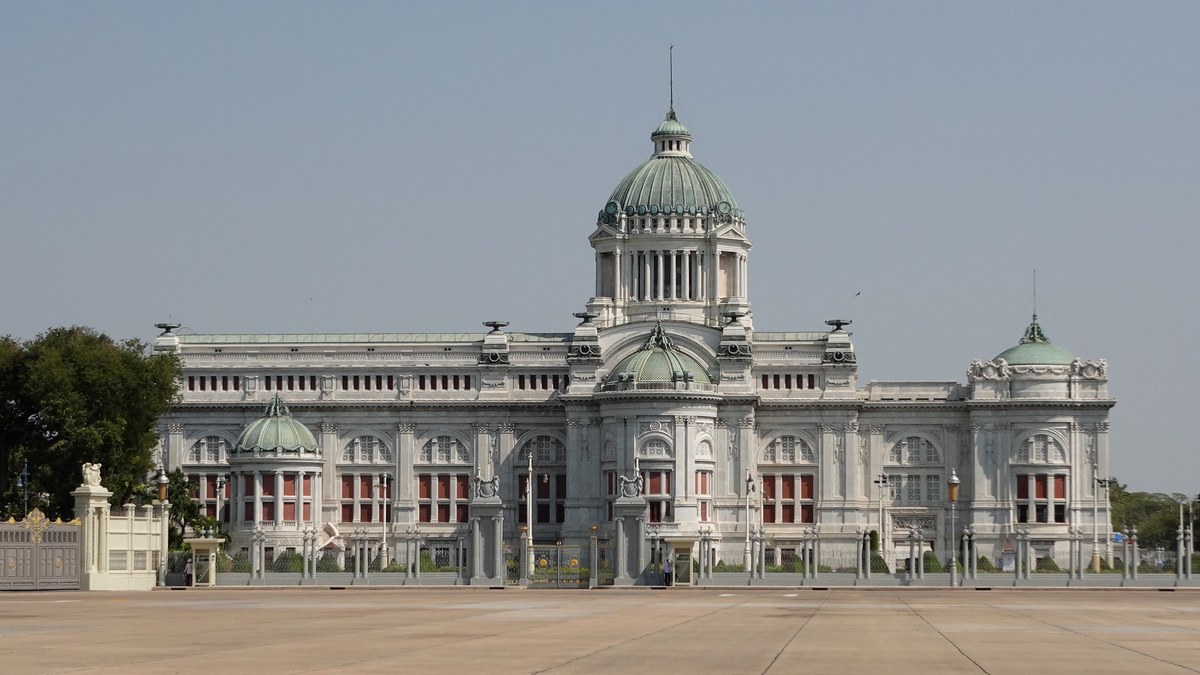
Rattanakosin, from the royal citadel of 1782 to the historic districts that shaped contemporary Bangkok.
- Wat
- Buddhist monastic complex that brings together, within a single enclosure, several religious buildings, monks’ quarters and ancillary buildings; the word does not refer to a single building.
- Royal temple
- In Thailand, a Buddhist temple founded, restored or patronised by the king or the royal family, and graded according to an official hierarchy of ranks and categories.
- Sangha
- The body of monks who reside in a monastery and live there according to religious discipline; in Buddhism it is called the sangha.
- Phra Ong Chao
- Princely rank of the Thai royal family, higher than that of Mom Chao.
- Ubosot
- Consecrated ordination hall of a wat: the ritually central building, marked out by sacred boundary stones, where monastic ordinations take place.
- Ordination
- Ceremony by which a layperson is admitted as a novice or as a monk into the Buddhist community.
- Chedi
- A bell-shaped reliquary monument, the Thai version of the Indian stupa.
- Supreme Patriarch
- Head of the Buddhist monastic community of Thailand, appointed by the king.
- Kuti
- Cell or dwelling of a Buddhist monk within the precinct of a monastery.
- Sala kan parian
- Pavilion of a Thai Buddhist monastery intended for the study of texts.
- Khlong
- Canal or waterway, natural or man-made, which long played a major role in transport, irrigation and the organisation of settlements and territories in Thailand.
- Reliquary
- A container intended to hold and protect one or more relics.
- Ratchaworawihan
- A rank title in the official classification of Thailand's royal temples, placed between Ratchaworamahawihan and Worawihan.
- Sīmā
- A ritual boundary delimiting the consecrated space in which monks perform their communal acts, such as ordinations; it is marked by boundary stones known as sema.
- Reign temple
- A monastery that a Thai sovereign founds or takes under his patronage to associate it with his reign, following an ancient royal custom; it is both a pious work and an assertion of power.
- Sala
- A pavilion for communal use, often open-sided, where people gather, rest or listen to sermons, particularly within monastery grounds.
- Vinaya
- The Buddhist code of monastic discipline, which sets out the rules of life for monks and the conditions under which the community's acts are valid.
- Somdet
- A title conferred on monks of one of the highest ranks in the Thai monastic hierarchy.
Primary sources
Studies
- 3รักษ์วัดรักษ์ไทย : ความงามอันวิจิตร วัดราชบพิธสถิตมหาสีมาราม วัดประจำ 2 รัชกาล แห่งราชจักรีวงศ์, MGR Online (Manager) ↗
- 4‘วัดราชบพิธสถิตมหาสีมาราม’ (chronique), Matichon ↗
- 5Where royal souls reside (Bangkok Post, 21 décembre 2017, via SEAArch), Bangkok Post / SEAArch, 2017 ↗
- 6Resplendent renovation, Bangkok Post ↗
- 7Wat Ratchabophit: the historical home of three top Thai monks, The Nation Thailand ↗
Reference works
- 8Contributeurs Wikipédia, Wat Ratchabophit, Wikipedia (en) ↗
- 9วัดราชบพิธสถิตมหาสีมาราม (base Rattanakosin), Bibliothèque de l'université Silpakorn ↗
- 10Contributeurs Wikipédia, Wat Ratchabophit subdistrict, Wikipedia (en) ↗
- 11วัดราชบพิธสถิตมหาสีมาราม ราชวรวิหาร - กรุงเทพมหานคร, Dhammathai ↗
- 12วัดราชบพิธ (page voyage), MThai ↗
- 13ประวัติวัดราชบพิธสถิตมหาสีมาราม ราชวรวิหาร - วัด ๙ รัชกาล, Google Sites (wadrachkal) ↗
- 14Contributeurs Wikipédia, Royal Cemetery at Wat Ratchabophit, Wikipedia (en) ↗
- 15Contributeurs Wikipédia, Ariyavongsagatanana (Amborn Ambaro), Wikipedia (en) ↗
- 16Contributeurs Wikipédia, Supreme Patriarch of Thailand, Wikipedia (en) ↗
- 17Contributeurs Wikipédia, Sangha Supreme Council, Wikipedia (en) ↗
- 18Wat Ratchabophit: the temple of the top 3 Thai monks, Discovering Bangkok ↗
- 19Wat Ratchabophit Sathitmahasimaram, Home and Travel ↗
- 20Wat Rachabophit, Bangkok, Thaiwebsites.com ↗
- 21Wat Ratchabophit, Tourist Bangkok ↗
- 22Thai Royal Burial Sites, Unofficial Royalty ↗
- 23Death and funeral of Bhumibol Adulyadej, Wikipedia ↗
Contemporary views
Wat Ratchabophit today
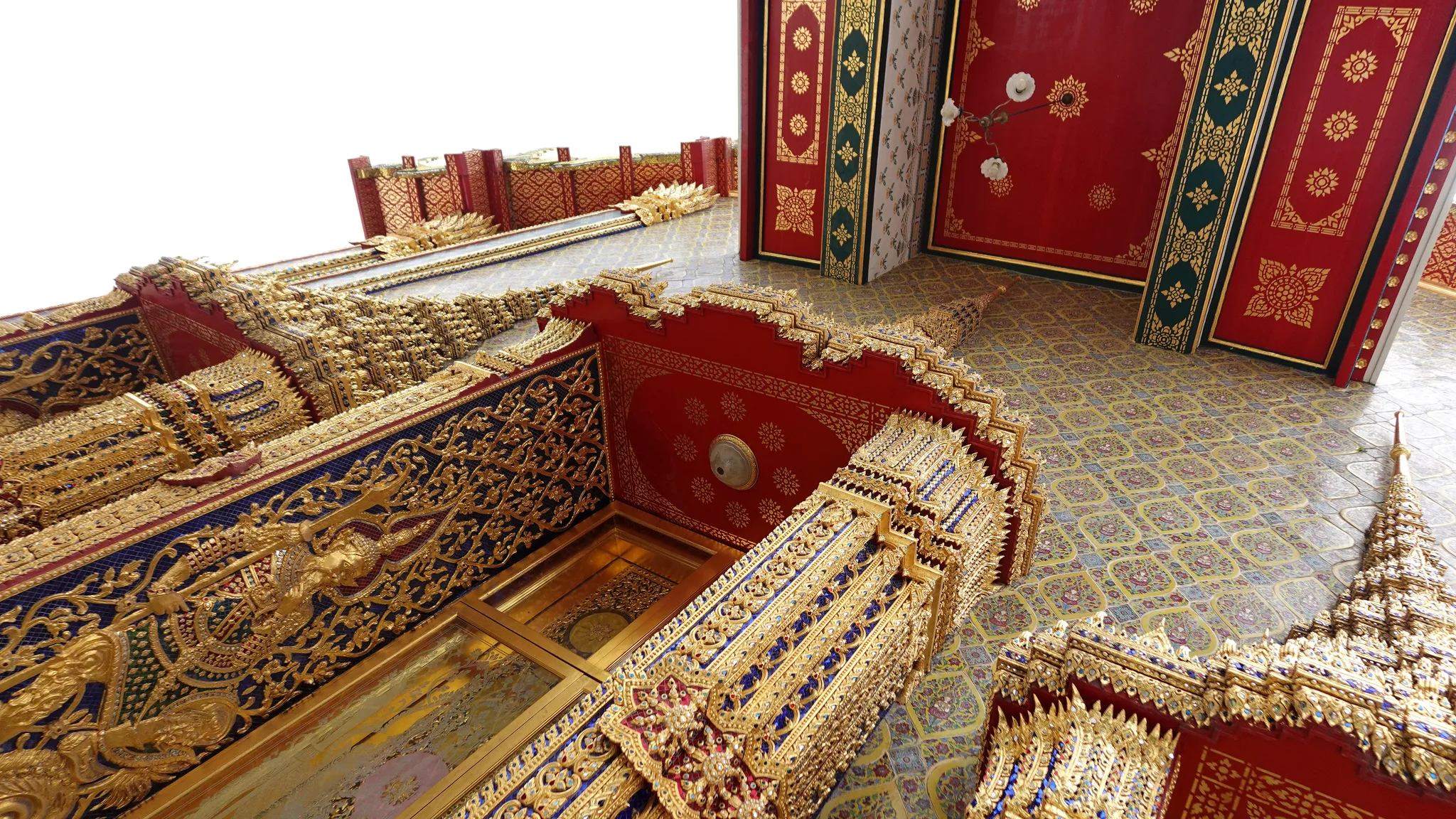
Low-angle view of a façade at Wat Ratchabophit: the wall, clad in ceramic tiles with floral patterns, carries gilded window frames crowned with spires and inlaid with blue glass, alongside red and gold lacquered door panels.© Eric Monteil 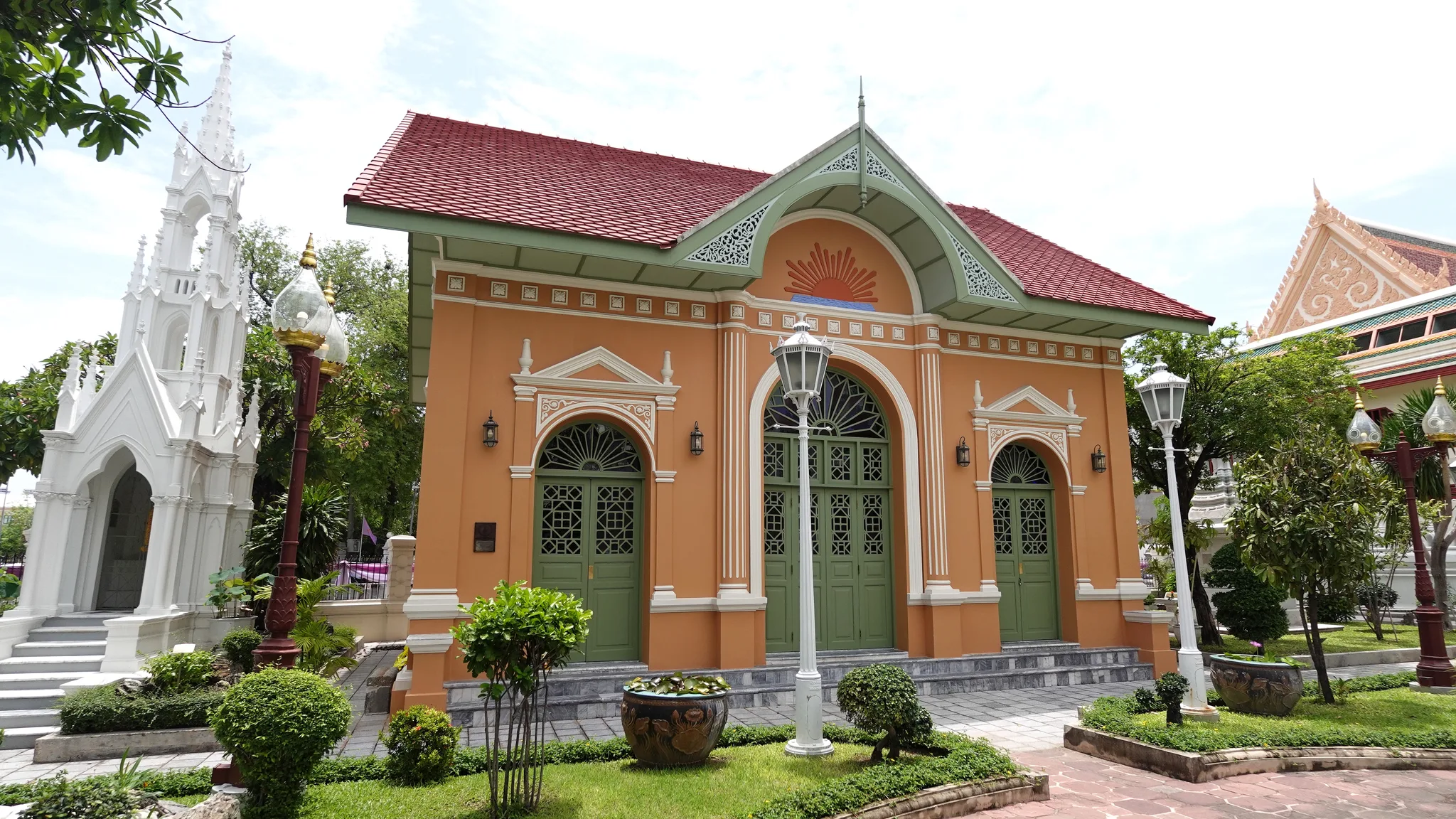
At Wat Ratchabophit, a Western-style pavilion with orange walls, white arches and green latticed doors stands beside a white Neo-Gothic structure and an ornate Thai roof, amid a well-kept garden.© Eric Monteil
Architecture and decoration
Explore the heritage
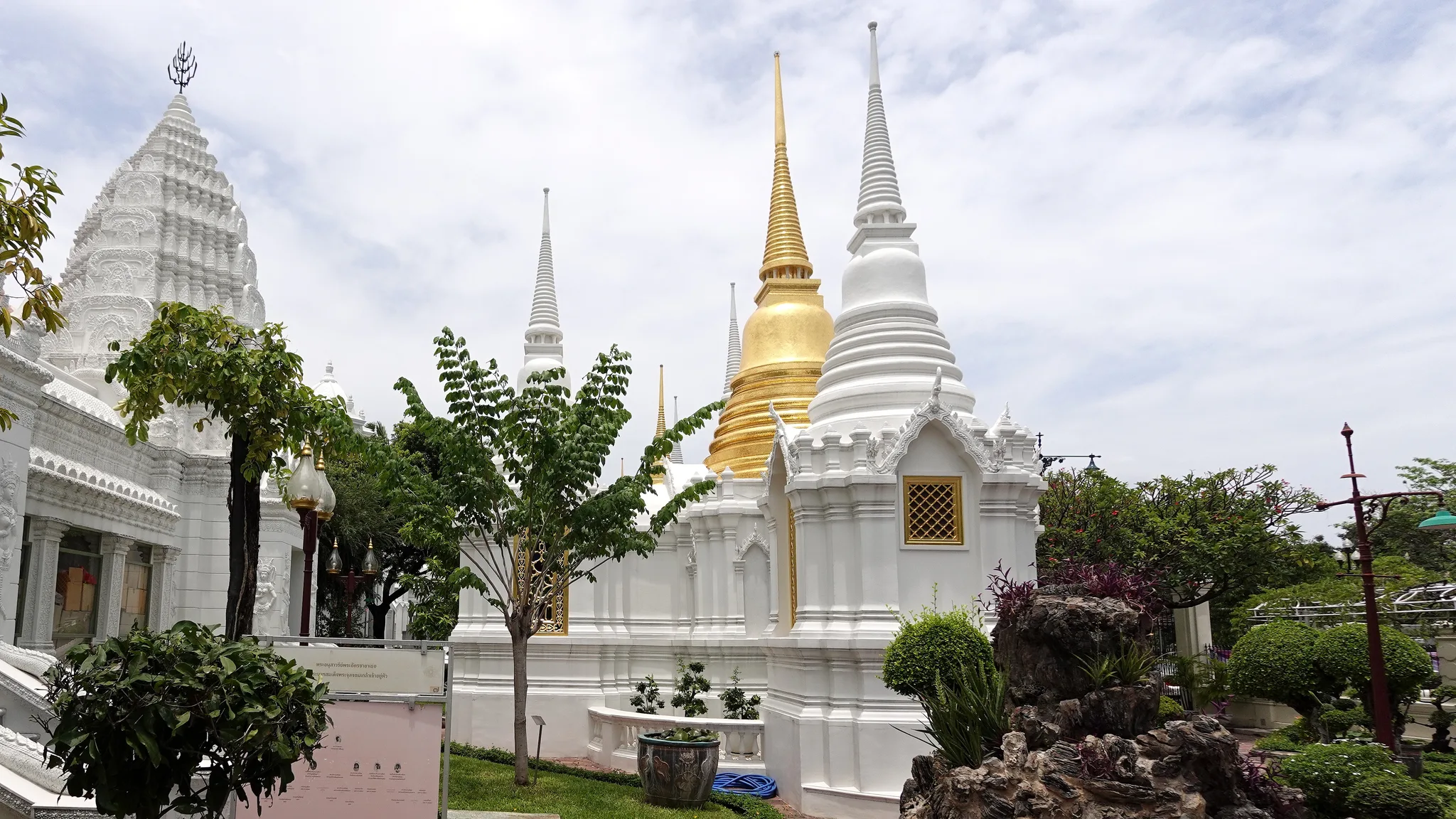
At Wat Ratchabophit, white chedis with slender spires, one with a gilded dome and spire, stand beside a white monument crowned by a carved prang-shaped tower, amid trees, clipped shrubs and a rockery.© Eric Monteil 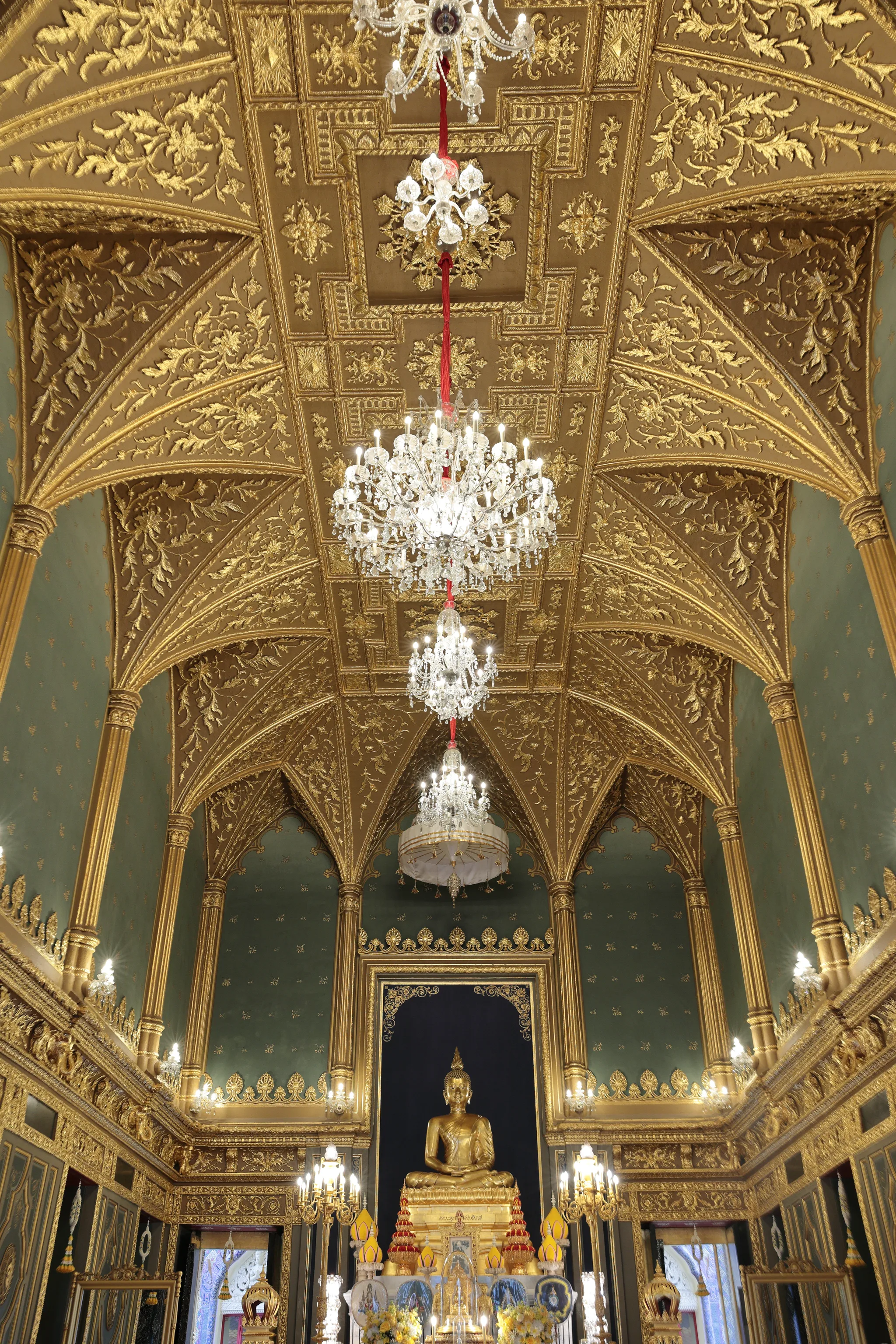
In the ubosot of Wat Ratchabophit, ribbed vaults covered in gilded scrollwork and crystal chandeliers rise above green walls scattered with motifs, leading to the seated gilded Buddha on its altar adorned with offerings.Mastertongapollo — Wikimedia Commons, CC BY-SA 4.0
Archive
Memory of time passing
Historical images preserve the visual memory of places and of the ways they have changed.
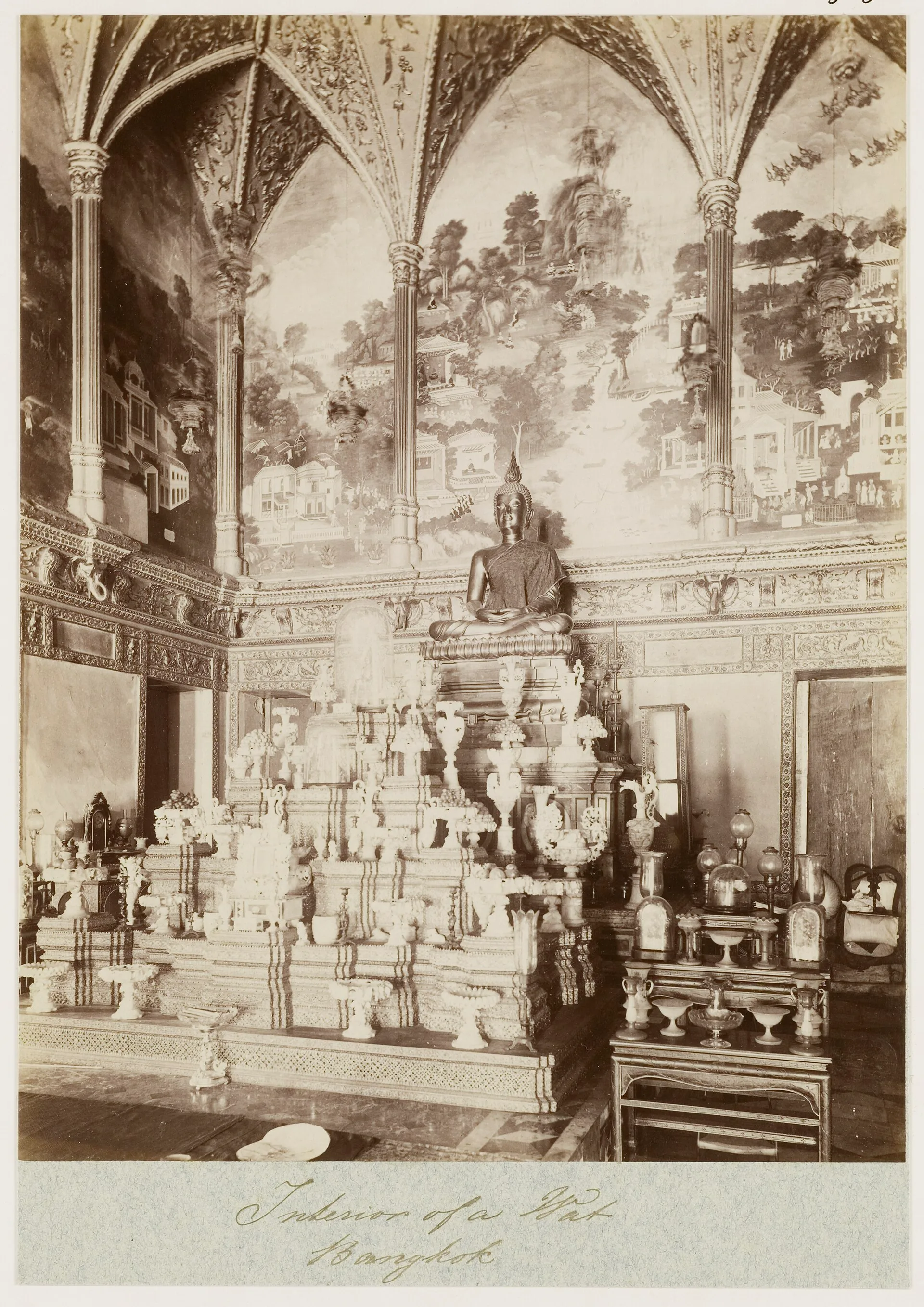
Old photograph of the interior of Wat Ratchabophit: a seated Buddha presides over a tiered altar covered with vases, bowls and lamps, before mural paintings of landscapes and pavilions, beneath vaults with carved ribs.Lambert & Co., G.R. / Singapore — Wikimedia Commons, domaine public 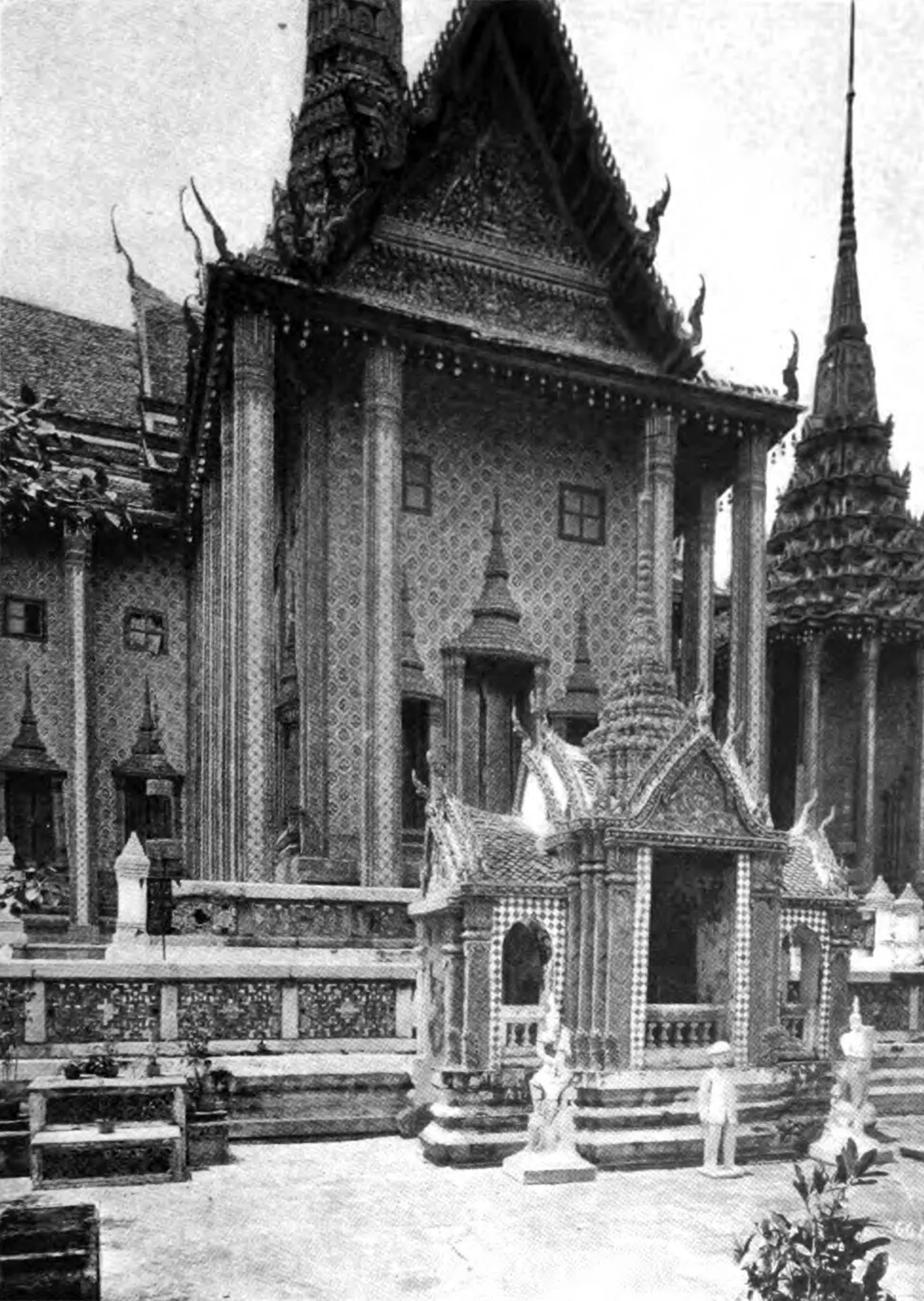
Early photograph of Wat Ratchabophit: a building with a carved pediment and walls covered in repeating patterned decoration, lined with columns, with a small ornate pavilion and statues in the foreground and a slender spire on the right.G. P. Putnam's Sons — Wikimedia Commons, domaine public 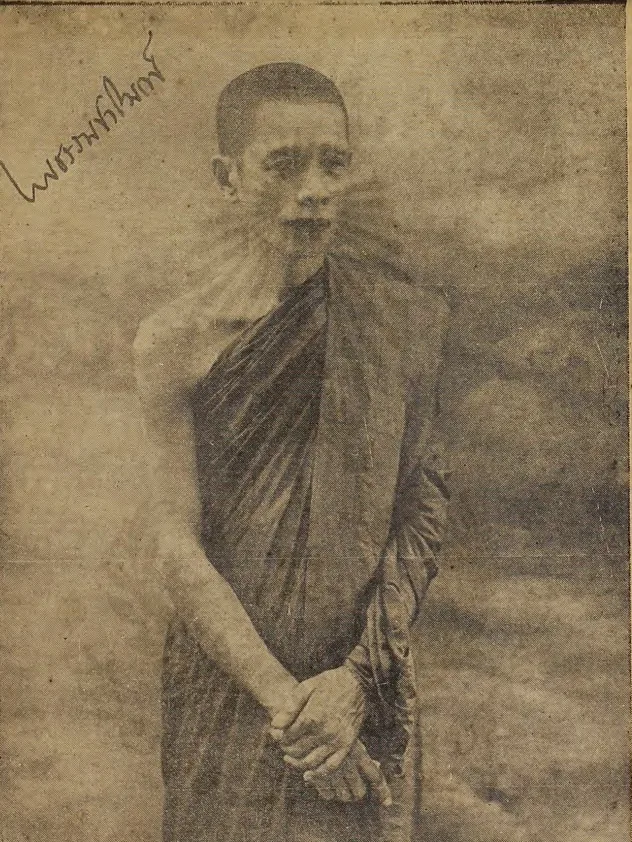
Old printed portrait of a shaven-headed Buddhist monk, his robe draped over the left shoulder, the right shoulder bare, hands clasped against a cloudy backdrop; a handwritten Thai inscription at top left. Document linked to Wat Ratchabophit.Auteur inconnu — Wikimedia Commons, domaine public