
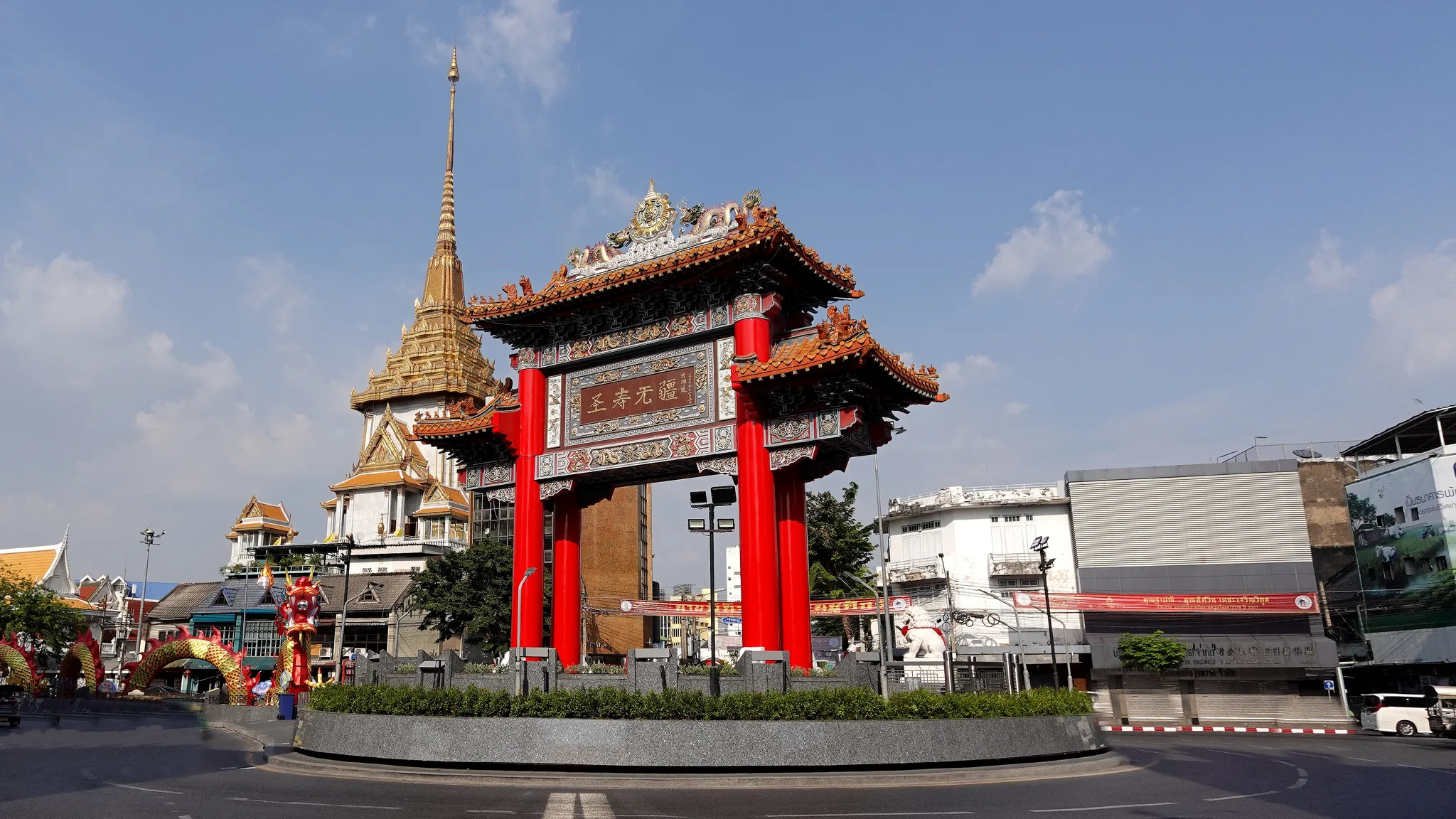
 In Samphanthawong District, a gate with red pillars and glazed-tile roofs, bearing an inscription in Chinese characters, stands on a roundabout; behind it rises a white building crowned with a gilded spire.© Eric Monteil
- Destination
- Bangkok (Samphanthawong)
- Heritage Family
- Cities, territories and cultural landscapes
- Typology
- Neighbourhood & district
- Visit
- Available tours →
Samphanthawong District is Bangkok’s Chinatown, a district on the east bank of the Chao Phraya River and the smallest in the country by area. It is among the oldest quarters of the city and has remained, since its foundation, one of its great centres of trade. Its history begins in 1782, when the Chinese community was moved outside the walls of the new capital. Overtaken by the city, then reshaped by the great new thoroughfares cut at the end of the 19th century, it preserves temples older than Bangkok, Sampheng Lane, Yaowarat Road and a Chinese culture that is still very much alive.5
Key facts
- Destination
- Bangkok
- Heritage Family
- Cities, territories and cultural landscapes
- Typology
- Neighbourhood & district
- Places
- Chao Phraya River
- People
- Bhumibol Adulyadej
- Prince Samphanthawong (Chui)
- Rama Ier
- Rama V
- Taksin
- Communities
- Teochew Chinese community of Bangkok
- Events
- Construction of Yaowarat Road
- Création des districts (amphoe) de la ville intérieure de Bangkok (1915)
- Founding of Bangkok (1782)
- Siamese revolution of 1932
- Relocation of the Teochew merchants to Sampheng (1782)
- Transfert du Bouddha d’or au Wat Traimit
- Heritage
- —
- Glossary
- Teochew
- San
- Soi
- Wat
- Shophouse
- Amphoe
- Keywords
- —
- Date
- —
- Collections
- —
Practical info
Practical information about this site is taken from its Google Maps page. We advise you to check it before visiting.
- Address
- Samphanthawong, Bangkok
A quarter born with the capital
The relocation of 1782
In 1782, following a coup d’état, Chao Phraya Chakri seized power and reigned as Rama I. He founded a new capital on the east bank of the Chao Phraya River. A Teochew community was then living on the land chosen for the future Grand Palace. The new king had it moved to Sampheng, an area lying outside the walls of the city under construction. This relocation gave rise to Bangkok’s Chinese quarter, which thus took shape at the same time as the capital itself.10
The reasons for this decision remain difficult to establish. One explanation links it to the political loyalties of the day: the relocation was probably connected with Teochew support for Taksin, whereas the new sovereign had ties with the Hokkien. This reading remains a hypothesis. It nonetheless reminds us that the place of the Chinese in the city was, from the outset, a matter of choice by the royal authorities, and not simply a spontaneous grouping.10
Sampheng Lane
A small road linked the new Chinese settlement to the walled city. It became Sampheng Lane, the first street of Chinatown from its foundation, and it remained its main axis until Yaowarat Road was cut through a century later. Now called Soi Wanit 1, it is still a narrow, pedestrian street given over to wholesale trade. The name of Sampheng has survived these changes: it still designates the lane.10
An enclave overtaken by the city
Set apart at first, the quarter did not remain so for long. By around 1785 the western end of Sampheng was already almost surrounded by the city, and by around 1850 the area was fully integrated into the inner city. Within a few decades, the Chinese quarter thus passed from the periphery to the centre of Bangkok, as the capital spread around it.2
Several names are used for it. ‘Chinatown’ is merely a nickname; the name Yaowarat, that of the thoroughfare cut at the end of the 19th century, is commonly used for the quarter as a whole, while Sampheng refers to its oldest layer. The administrative name, Samphanthawong, comes from a temple, as we shall see below.5
The age of the great thoroughfares
Density, fires and new roads
In 1864, the construction of Charoen Krung Road facilitated import-export activity and the development of wharves and warehouses along the river.10
In the second half of the century, Sampheng became a very dense area of makeshift buildings. Fires were frequent there. These repeated destructions cleared the way for new roads, laid out on the orders of King Chulalongkorn (Rama V).10
Yaowarat, the dragon road
Yaowarat Road, the main thoroughfare of Chinatown, dates from this period. At the end of 1891, Chulalongkorn ordered the creation of numerous roads, this one among them. Accounts differ as to its construction: one places it between 1891 and 1900, another dates it to 1892.11
Just over one and a half kilometres long, the road crosses the district and ends in the neighbouring district of Phra Nakhon. It was first called ‘Yuppharat’, before taking the name ‘Yaowarat’, meaning ‘young king’, in honour of a prince. According to one tradition, its winding course evokes the body of a dragon, which is said to be auspicious for business. Along this thoroughfare and the streets that accompany it — Charoen Krung, Mangkon, Song Sawat, Ratchawong or Chakkrawat — some houses still retain an original structure dating from the reign of Chulalongkorn.11
Song Wat, the river road
Song Wat Road, too, was born of a disaster. Chulalongkorn had it built after a great fire in Sampheng: a first section was completed in 1892, and a second, extending it to Charoen Krung, in 1907. Over some 1.2 kilometres, it runs alongside the Chao Phraya River for almost its entire length and provides access to river transport, with alleys linking it to the wharves.14
One tradition relates that the king himself traced the route in pencil on the map, and that the name Song Wat would mean ‘drawn by the king’.14
Temples older than Bangkok
From Wat Ko to Wat Samphanthawong
Several of the district’s temples existed before the founding of the capital, in the era of the Ayutthaya kingdom that preceded Bangkok. The most important for the history of the quarter was then called Wat Ko, the ‘island temple’, because it was surrounded by canals. These canals were later filled in to create or widen roads; the one that separated it from Wat Pathum Khongkha is now lined with shophouses.1
The temple was restored under the direction of Prince Samphanthawong (Chui), a nephew of Rama I. During the reign of Rama IV, it received the name Wat Samphanthawongsaram Worawihan, in tribute to this prince. It belongs to the Thammayut order. The district in turn took its name from the temple, which stood near the first district office: the name of Samphanthawong District thus goes back, through the monastery, to a member of the royal family.9
A monastery at the heart of the Chinese economy
The temple did not stand aloof from the commercial life around it. Wat Samphanthawong had shophouses built, which it rented out to Chinese traders. The Chia Tai company began in this way, renting one of them to sell vegetable seeds.4
The strong Chinese presence around the temple also attracted American missionaries, who rented a plot of land near Wat Ko to set up a dispensary. The Buddhist monastery, the Chinese shop and the Christian mission thus stood side by side in the same neighbourhood.4
The Golden Buddha of Wat Traimit
Wat Traimit Witthayaram Worawihan, in the sub-district of Talat Noi, was formerly called Wat Sam Chin Tai, the ‘southern temple of the three Chinese’. It was a temple of little importance when, in 1935, it received the Golden Buddha. This solid gold statue is depicted in the Maravijaya posture.16
Under Rama III, the statue, still covered in stucco, served as the principal image of Wat Chotanaram, or Wat Phraya Krai. It was cast in gold using the lost-wax technique, with a thickness of gold of one to one and a half centimetres. Some link it to a ‘gold Buddha image’ mentioned on a stele in central Sukhothai; this connection remains an interpretation.15
Other sanctuaries by the river
On the north-western edge of the district, near the river, Wat Chakkrawat Rachawat Woramahawihan likewise dates from the Ayutthaya period, when it was called Wat Sam Pluem. A local legend attaches to it a one-eyed crocodile that a monk is said to have captured and kept in a pond at the temple until it died of natural causes. Wat Pathum Khongkha, another old temple, was restored under Rama I and then took the name Wat Sampheng.12
Wat Mangkon Kamalawat, a Chinese temple often associated with Chinatown, actually lies just beyond the boundaries of the district, in that of Pom Prap Sattru Phai. The gap between the quarter as lived and the administrative district can thus be read even in its places of worship.5
A district shaped by the state
From amphoe to khet
The present administrative division is the result of several reforms. On 15 October 1915, the reorganisation of inner Bangkok into twenty-five districts, then called amphoe, created among others those of Samphanthawong and Chakkrawat. In 1931, during the reign of Rama VII, the economic crisis made savings necessary: Chakkrawat and Sampheng were merged with Samphanthawong.5
In the early 1970s, the district acquired the status of khet, a district of the capital; accounts differ as to the date: 21 December 1971, 1972, or 1973 with the creation of the Bangkok Metropolitan Administration. It is divided into three khwaeng, or sub-districts: Samphanthawong, its central part, Chakkrawat to the north-west, and Talat Noi. At less than one and a half square kilometres, it is the smallest district in the country, bordered by Pom Prap Sattru Phai, Bang Rak, Phra Nakhon and, on the far bank of the river, Khlong San. This small area contrasts with its role, since its origins, as a densely populated business quarter.5
The quarter in political history
The quarter features in the events of 24 June 1932. On that day, the naval faction of the Khana Ratsadon (People’s Party) mobilised some five hundred armed sailors towards the Royal Plaza. To justify this troop movement, it put forward as a pretext the suppression of a Chinese uprising at Wat Samphanthawong.9
On 3 June 1946, King Rama VIII and his brother, Prince Bhumibol, walked through Yaowarat and Sampheng. This visit is depicted on the reverse of the 20-baht notes of Series 15.11
Trade and Chinese culture
Gold and ritual goods
The quarter has been a centre of Chinese trade since the early days of Bangkok. Yaowarat Road is known for its gold shops: around forty line the main thoroughfare and more than a hundred are spread throughout the quarter, hence its nickname of ‘Golden Road’. It is also known for culinary specialities such as swiftlet’s nest and shark fin soup, dishes that are now controversial.13
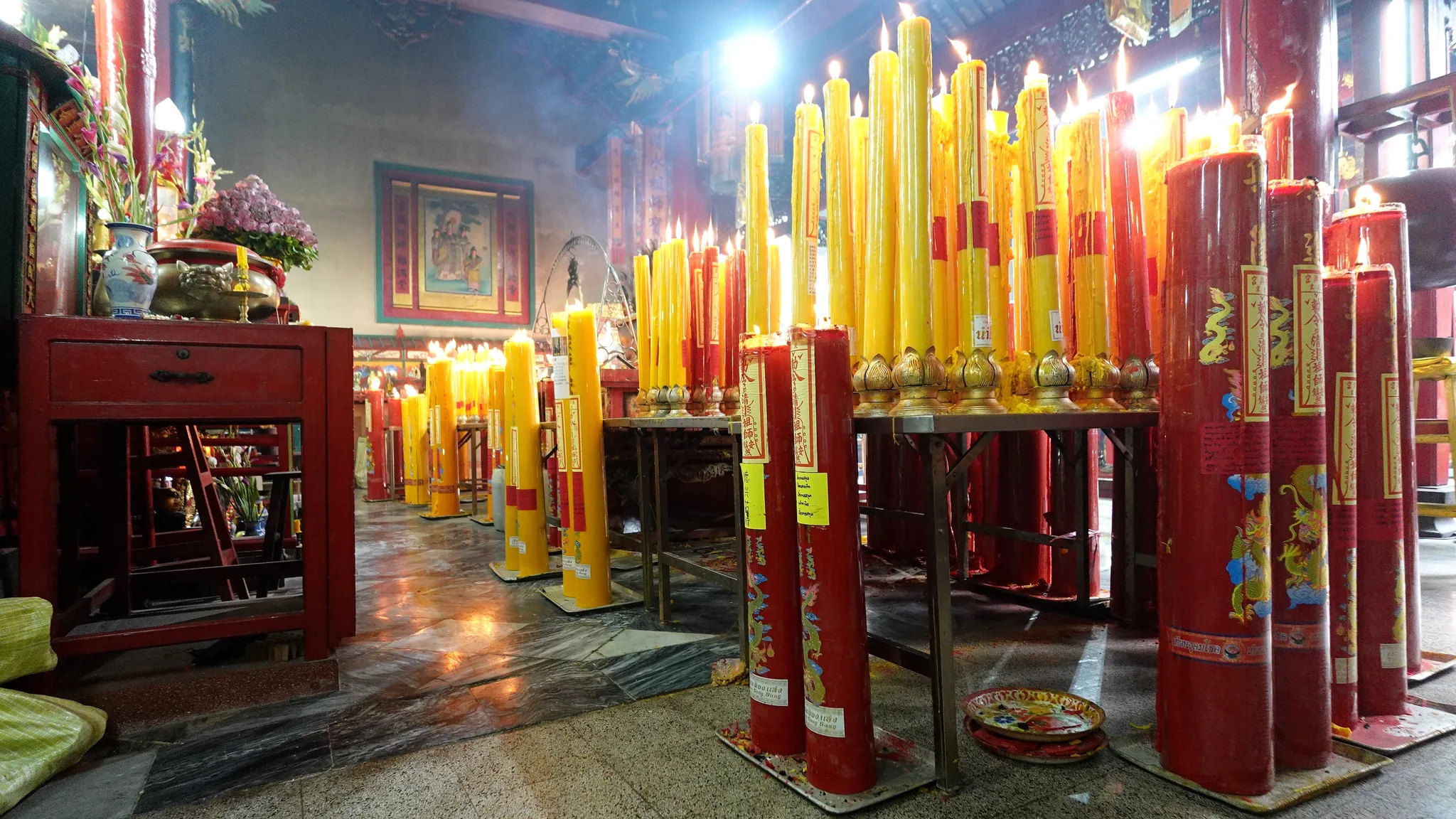
Another part of this trade serves ritual needs. The Charoen Chai community, on Soi Charoen Krung 23, is home to the largest and oldest market in Thailand for joss paper and Chinese offering objects. It is also the last source of traditional items for Chinese weddings.10
A long-troubled reputation
At the end of the 19th century, the quarter had a negative image. Sampheng was associated with gambling houses, opium dens and brothels, and the expression ‘Sampeng woman’ was still used as a pejorative epithet for a prostitute. The British resident H. W. Smyth, a European observer of Siam at that time, described the quarter in disparaging terms.2
This reputation reminds us that today’s Chinatown, associated with trade and gastronomy, long bore a quite different image.
A Chinese culture sustained
The Chinese population has gradually assimilated into Thai society, but the quarter has retained its Chinese culture in its cuisine, crafts and religion.10
Chinese New Year is its most visible moment, with large celebrations on Yaowarat Road. The land around Yaowarat has long been among the most expensive in Bangkok and in the country; property there is limited and largely owned by great families.11
Samphanthawong District today
A hub of trade and gastronomy
Samphanthawong District remains one of the country’s main hubs of trade and gastronomy, with Yaowarat Road still at its heart. Shops and stalls are concentrated on Yaowarat, Sampheng Lane and Charoen Krung, especially in the evenings and at weekends. The life of the quarter can still be read in the overlapping of its layers: the wholesale trade of Sampheng, the gold shops of Yaowarat, the alleys of Song Wat turned towards the river.11
New landmarks, new debates
Two recent structures mark the landscape. In 1999, a Chinatown gate was erected at Odeon Circle, the former roundabout marking the start of Yaowarat Road, for the 72nd birthday of King Bhumibol, by then Rama IX. On 14 February 2010, a large building was inaugurated at Wat Traimit to house the Golden Buddha.5
In the 2010s, the future of Chinatown was once again debated in connection with a building project. These discussions extend a history of transformations imposed by the city: from the relocation of 1782 to Chulalongkorn’s new thoroughfares, the quarter has constantly been redrawn by the needs of the capital around it.10
Understanding
Samphanthawong District was born of a royal decision: that of placing the Chinese merchants outside the city being founded. Since then, its history has been bound up with that of Bangkok. The capital caught up with it, rebuilt it after the fires, cut great streets through it and divided it into districts, without ever erasing what sets it apart: temples older than the city, unbroken Chinese trade, markets for offerings and jewellery, shared festivals. Its value lies less in any single monument than in this continuity of practices within a constantly transformed urban fabric. Today the quarter lives above all from its trade and its cuisine, and the question of its future was debated once again in the 2010s. Land there is scarce and expensive, and the Chinese population has merged into Thai society. Will Bangkok’s Chinatown remain the home of a community and its practices, or will it become chiefly the backdrop for a Chinese memory offered up to visitors?
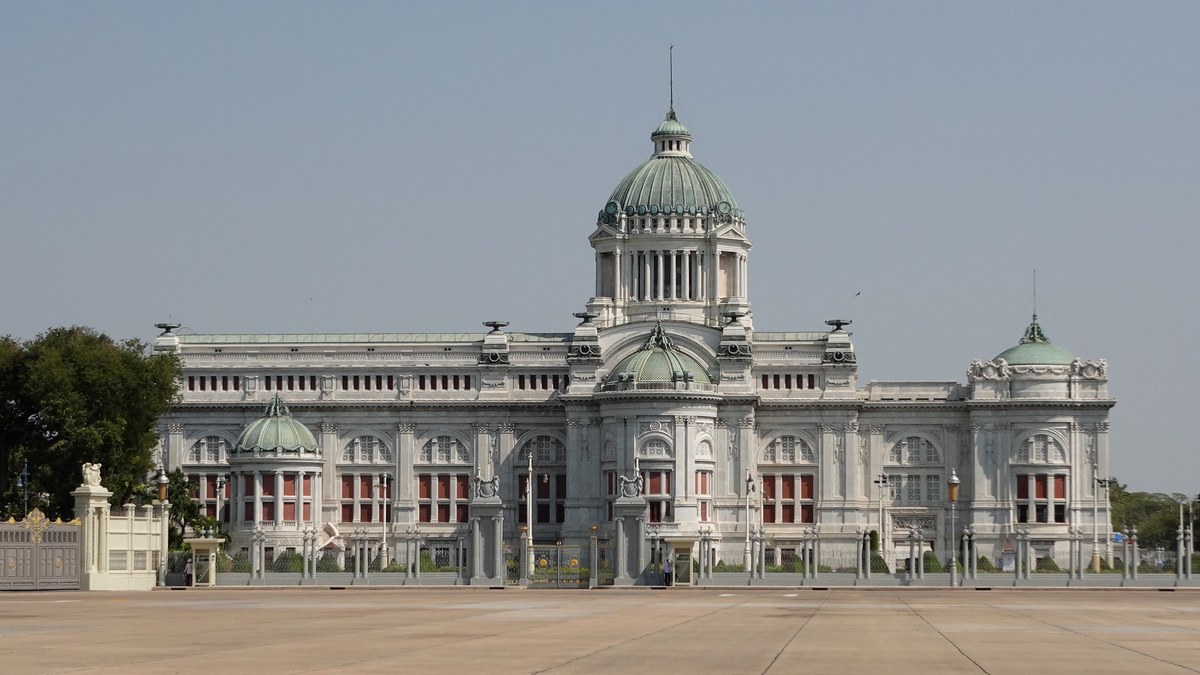
Rattanakosin, from the royal citadel of 1782 to the historic districts that shaped contemporary Bangkok.
- Teochew
- Chinese dialect group originating from the Chaozhou area, in eastern Guangdong, southern China. It forms the largest component of the Chinese community in Thailand.
- San
- In Thailand, a small shrine where worship is offered to a deity, a spirit or a protective figure.
- Soi
- Thai word for a lane or side street branching off a main road; soi are often numbered after the main street from which they branch.
- Wat
- Buddhist monastic complex that brings together, within a single enclosure, several religious buildings, monks’ quarters and ancillary buildings; the word does not refer to a single building.
- Shophouse
- A narrow, deep urban house built in a row, whose ground floor serves as a shop and upper floor as living quarters, typical of the trading towns of South-East Asia.
- Amphoe
- District, the tier of Thai territorial administration between the province and the subdistrict (tambon); in Bangkok it is replaced by the khet.
- Buddha image
- In Thai Buddhism, a devotional representation of the Buddha, most often a statue, venerated as an object of worship.
- Principal image
- In a Thai Buddhist monastery, the most important statue of the Buddha, around which worship is organised; it is generally installed in the monastery’s main building.
- Khet
- Thai name for the administrative districts of Bangkok, equivalent to the districts of the provinces; each khet is subdivided into khwaeng, or sub-districts.
- Khwaeng
- An administrative subdivision of Bangkok, ranking below the district (khet), the urban equivalent of the tambon in the provinces.
- Khlong
- Canal or waterway, natural or man-made, which long played a major role in transport, irrigation and the organisation of settlements and territories in Thailand.
- Worawihan
- Title borne by certain royal temples in Thailand, indicating their rank in the hierarchy of royal monasteries.
- Maravijaya
- Posture of the seated Buddha, the right hand touching the ground to call the earth to witness his victory over Mara.
- Mara
- In Buddhism, the demon of illusion and desire who tried to prevent the Buddha from attaining Enlightenment.
- Woramahawihan
- Title borne by certain royal temples in Thailand, indicating a high rank in the hierarchy of royal monasteries.
- Hokkien
- Chinese group originating from the south of Fujian province, many of whose members emigrated to Southeast Asia, notably as merchants.
- Thammayut
- Reformed Thai Buddhist monastic order, founded in the 19th century by the future King Rama IV, which advocates strict observance of monastic discipline.
- Joss paper
- Offering paper, often decorated with patterns or metallic leaf, burnt in Chinese rites for the deceased and the deities.
Studies
Reference works
- 5Contributeurs Wikipédia, Samphanthawong district, Wikipedia ↗
- 6Contributeurs Wikipédia, เขตสัมพันธวงศ์, Wikipedia (th) ↗
- 7Contributeurs Wikipédia, Samphanthawong subdistrict, Wikipedia (en) ↗
- 8Contributeurs Wikipédia, Chakkrawat, Wikipedia (en) ↗
- 9Contributeurs Wikipédia, Wat Samphanthawongsaram, Wikipedia (en) ↗
- 10Contributeurs Wikipédia, Chinatown, Bangkok, Wikipedia ↗
- 11Contributeurs Wikipédia, Yaowarat Road, Wikipedia ↗
- 12Contributeurs Wikipédia, Wat Chakkrawat, Wikipedia (en) ↗
- 13Yaowarat: Lives on the Dragon Road, Arc of Memory, Faculty of Arts, Chulalongkorn University ↗
- 14Contributeurs Wikipédia, Song Wat Road, Wikipedia ↗
- 15Contributeurs Wikipédia, Golden Buddha (statue), Wikipedia (en) ↗
- 16Contributeurs Wikipédia, Wat Traimit, Wikipedia (en) ↗
Further reading
Contemporary views
Samphanthawong District today
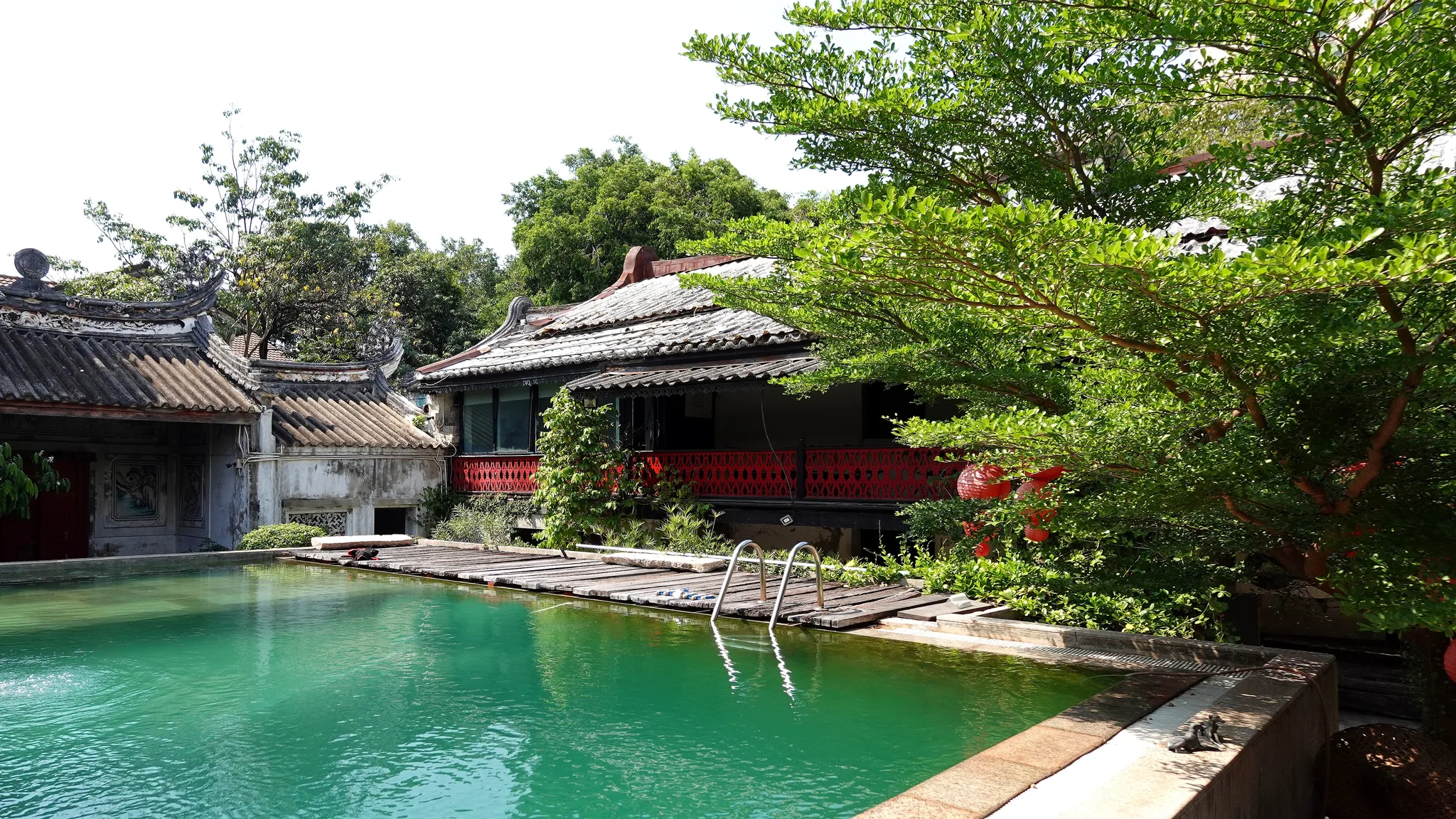
In Samphanthawong District, a green-water pool fills a courtyard lined with Chinese-style buildings with upturned tiled roof ridges and a house with a red balustrade, beneath trees hung with red lanterns.© Eric Monteil 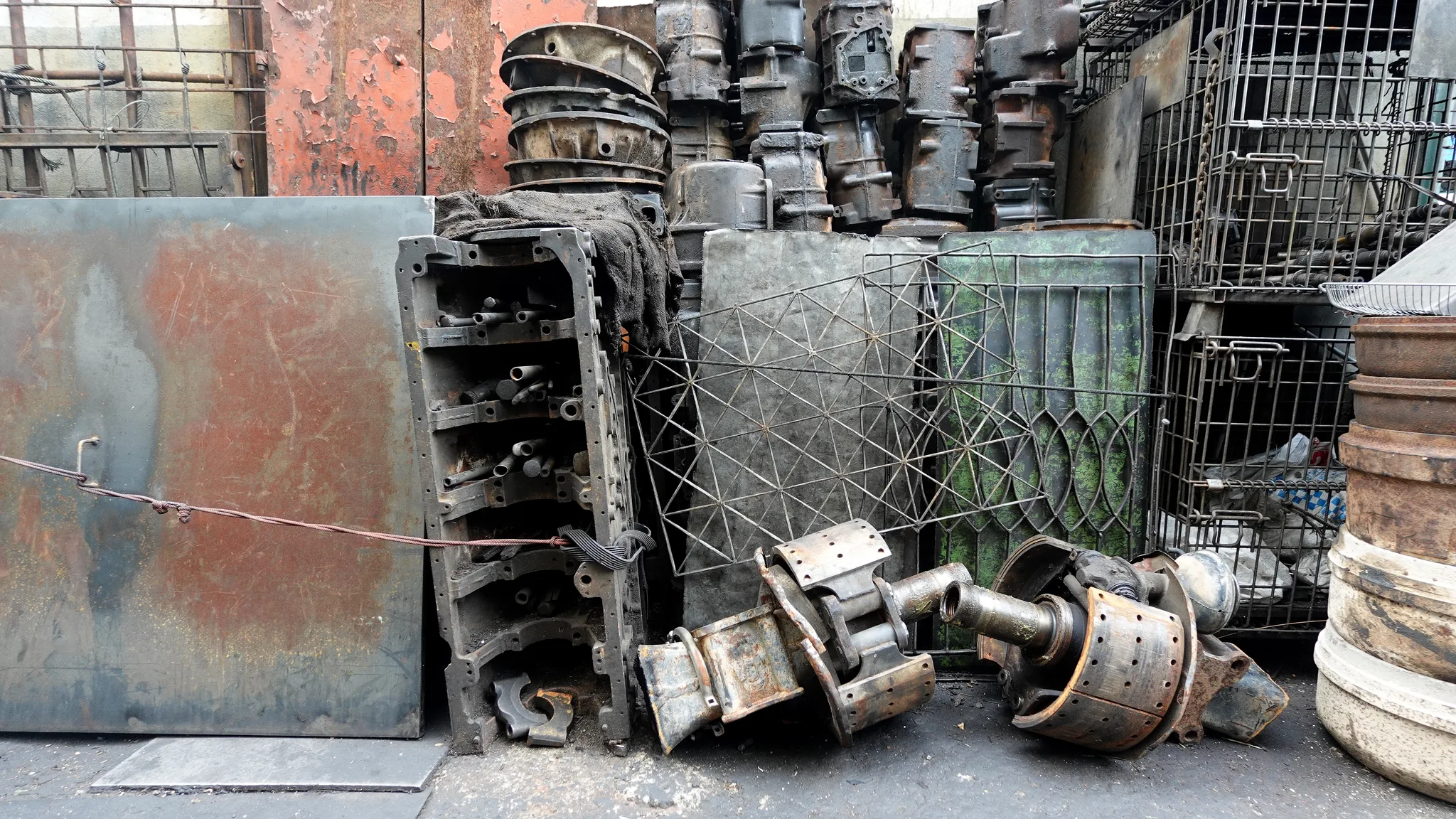
In Samphanthawong District, an engine block, stacked gearbox casings, brake drums and rusted grilles are lined up against metal sheets, reflecting an activity of salvaging mechanical parts.© Eric Monteil
Architecture and decoration
Explore the heritage
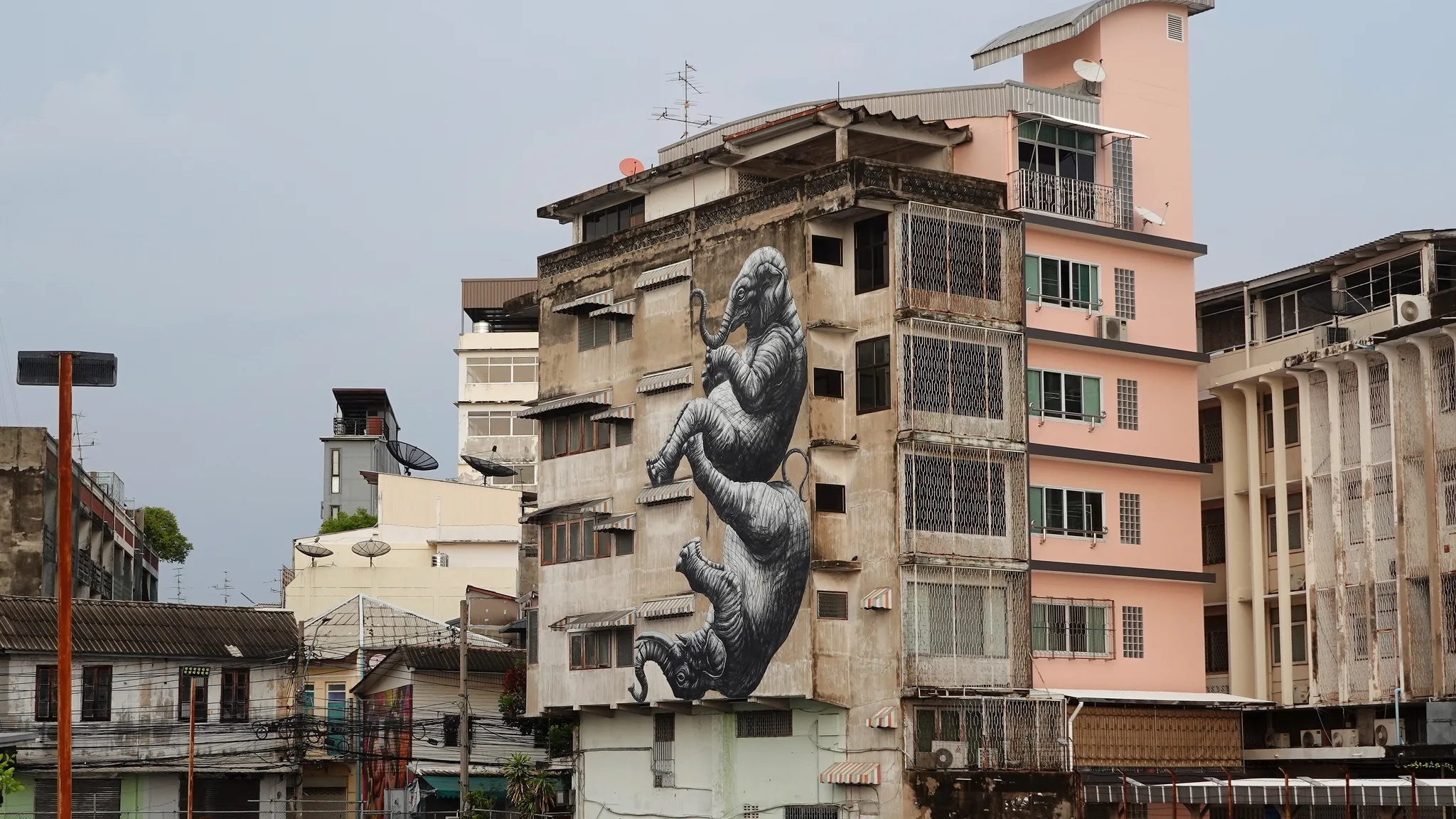
On the façade of a weathered concrete building in Samphanthawong District, a monochrome mural depicts two elephants, one upside down, amid grilled windows, awnings, aerials and satellite dishes.© Eric Monteil 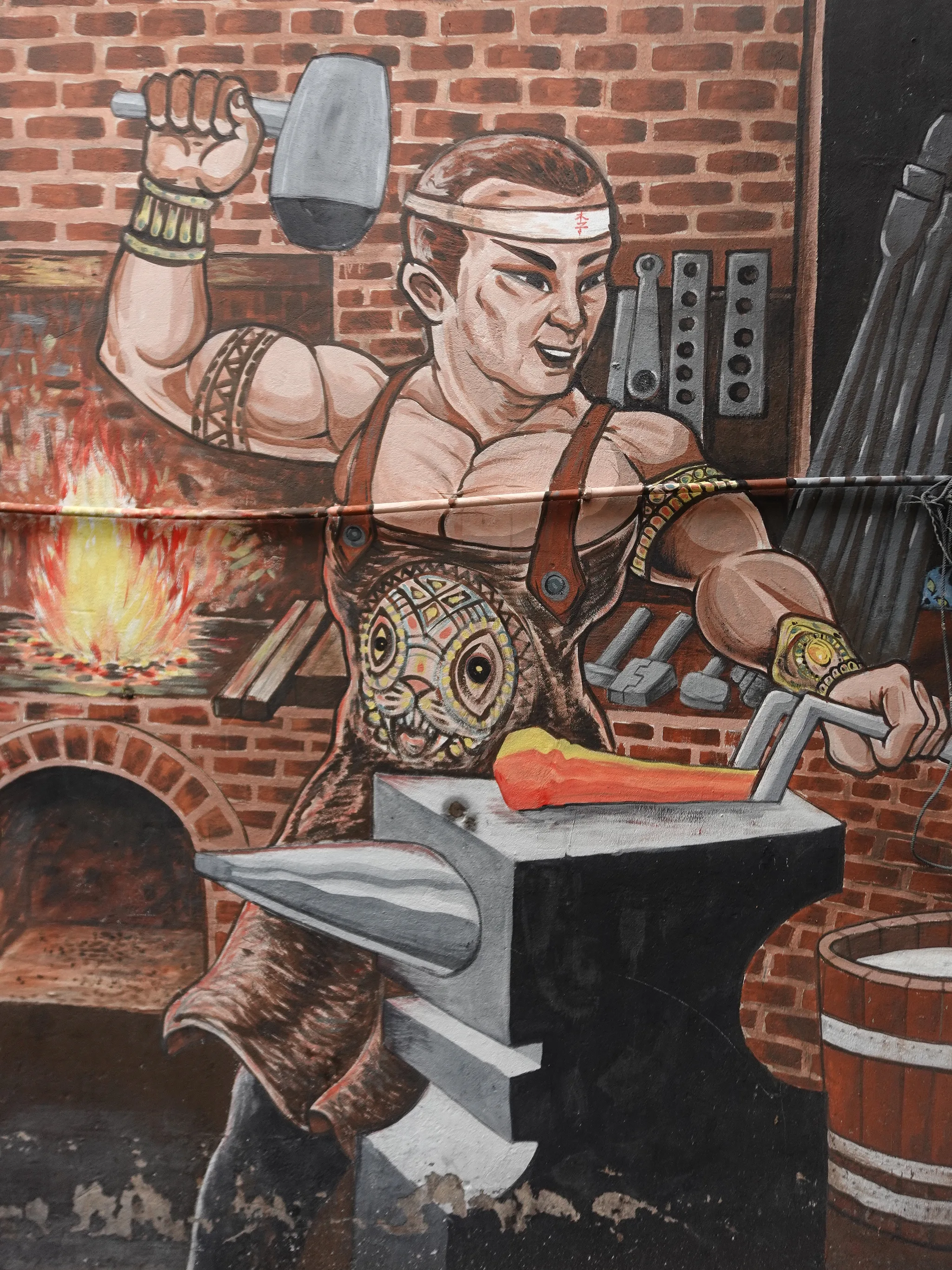
Mural in Samphanthawong District depicting a blacksmith with raised hammer, holding glowing metal on the anvil with tongs, in front of a brick hearth, hanging tools and a wooden bucket.© Eric Monteil
Archive
Memory of time passing
Historical images preserve the visual memory of places and of the ways they have changed.
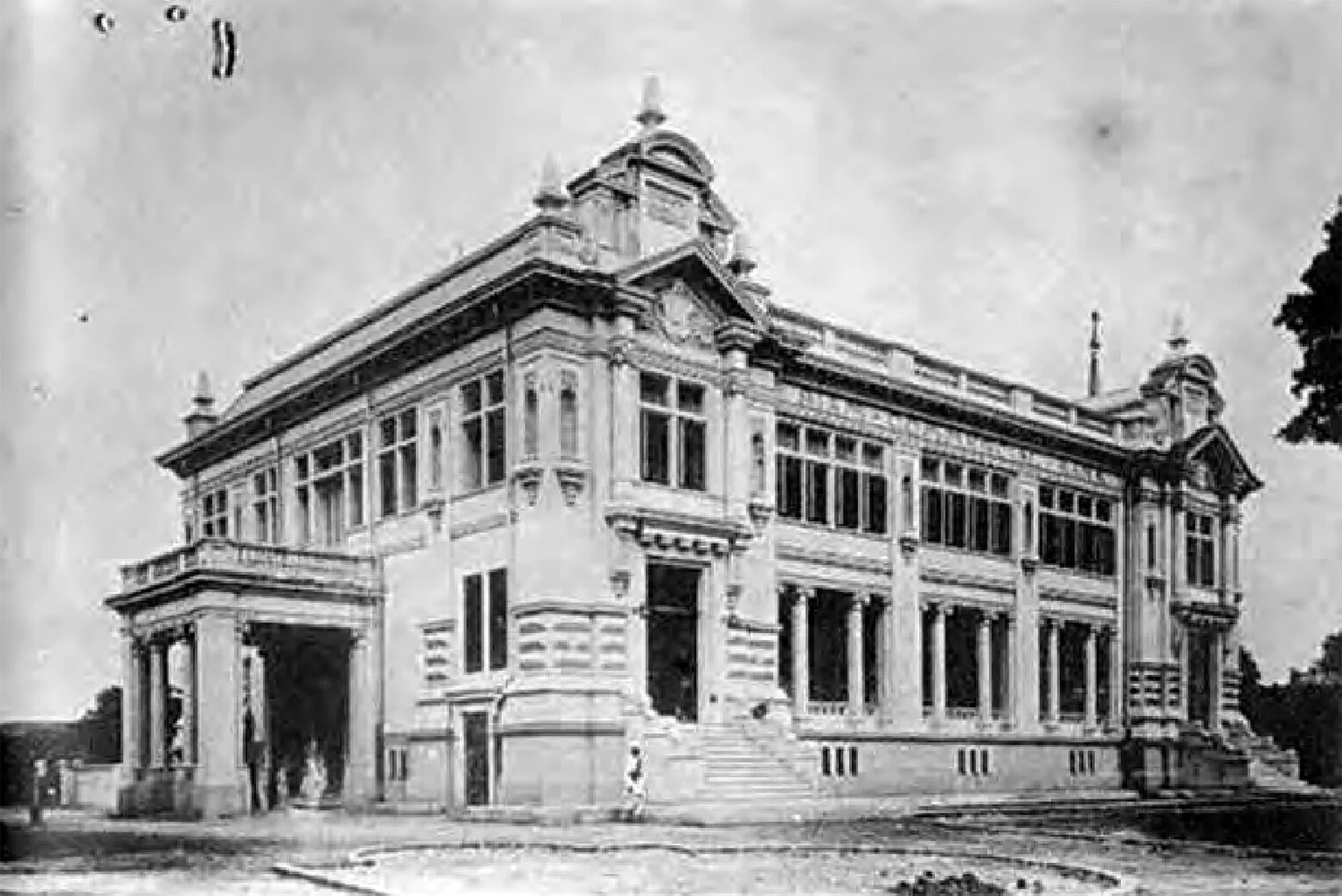
In the Samphanthawong District, an old photograph of a Siam Commercial Bank building: façades with pilasters and columns, corner lanterns, an attic balustrade, a side porch and a central access staircase.Auteur inconnu — Wikimedia Commons, domaine public 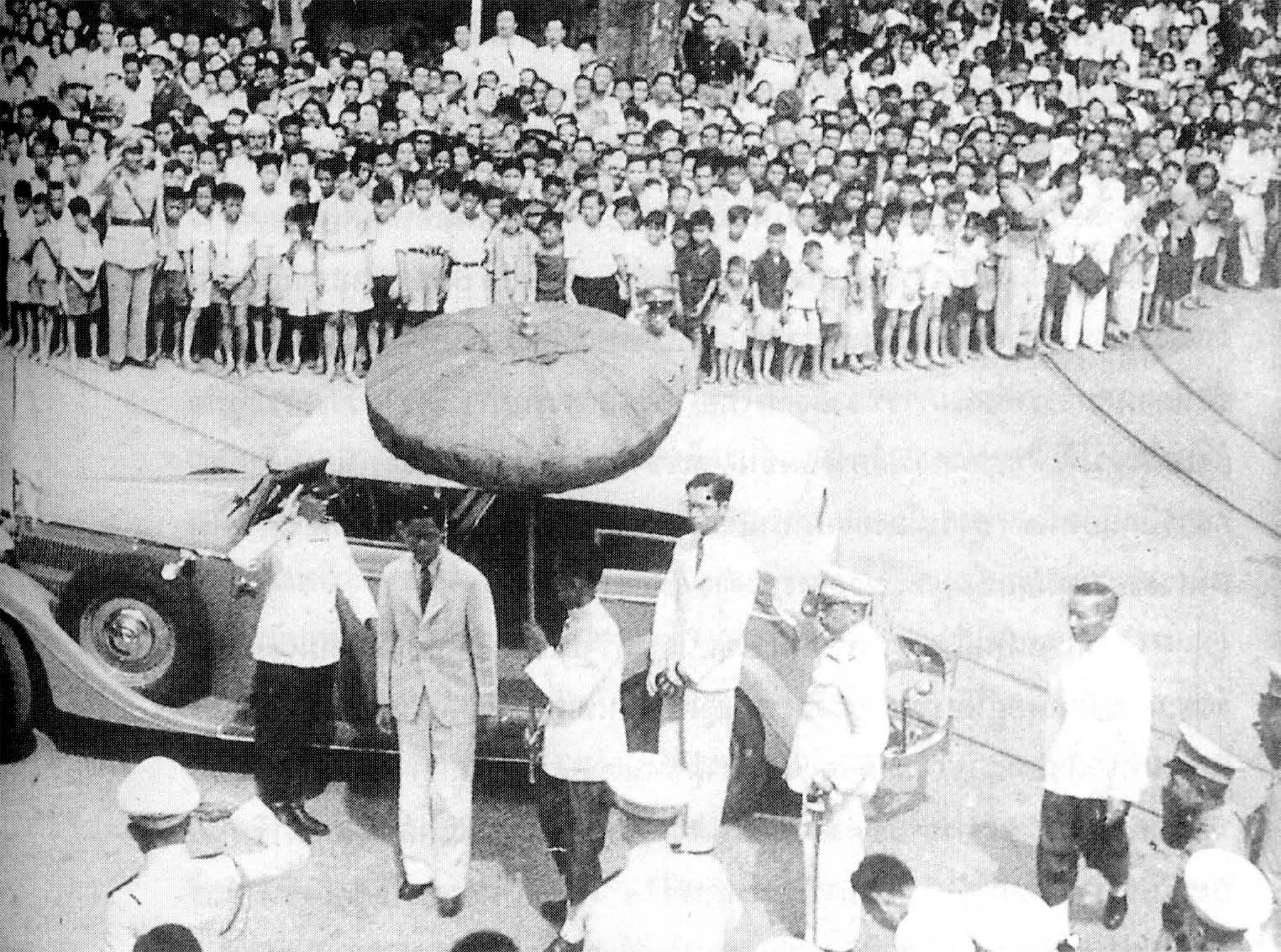
In a street in Samphanthawong District, a dense crowd, with children in the front row, surrounds a motor car beside which a man in a light suit stands beneath a large parasol, flanked by officers in white uniform who salute.Auteur inconnu — Wikimedia Commons, domaine public 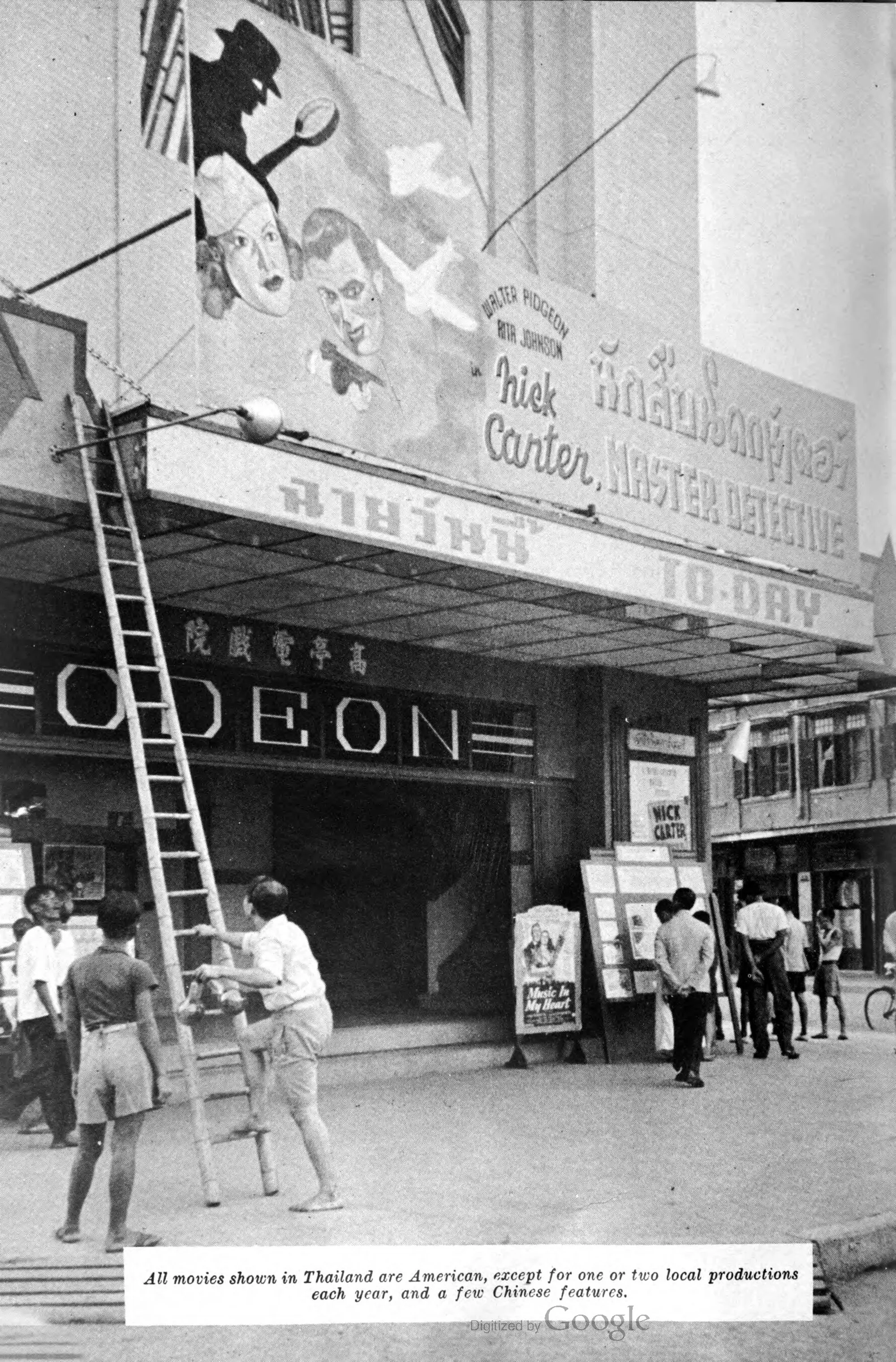
Entrance of the Odeon cinema, Samphanthawong District: a painted billboard advertises ‘Nick Carter, Master Detective’ in English and Thai, beneath a sign in Chinese characters; passers-by watch a man on a ladder.Mutual Security Agency — Wikimedia Commons, domaine public 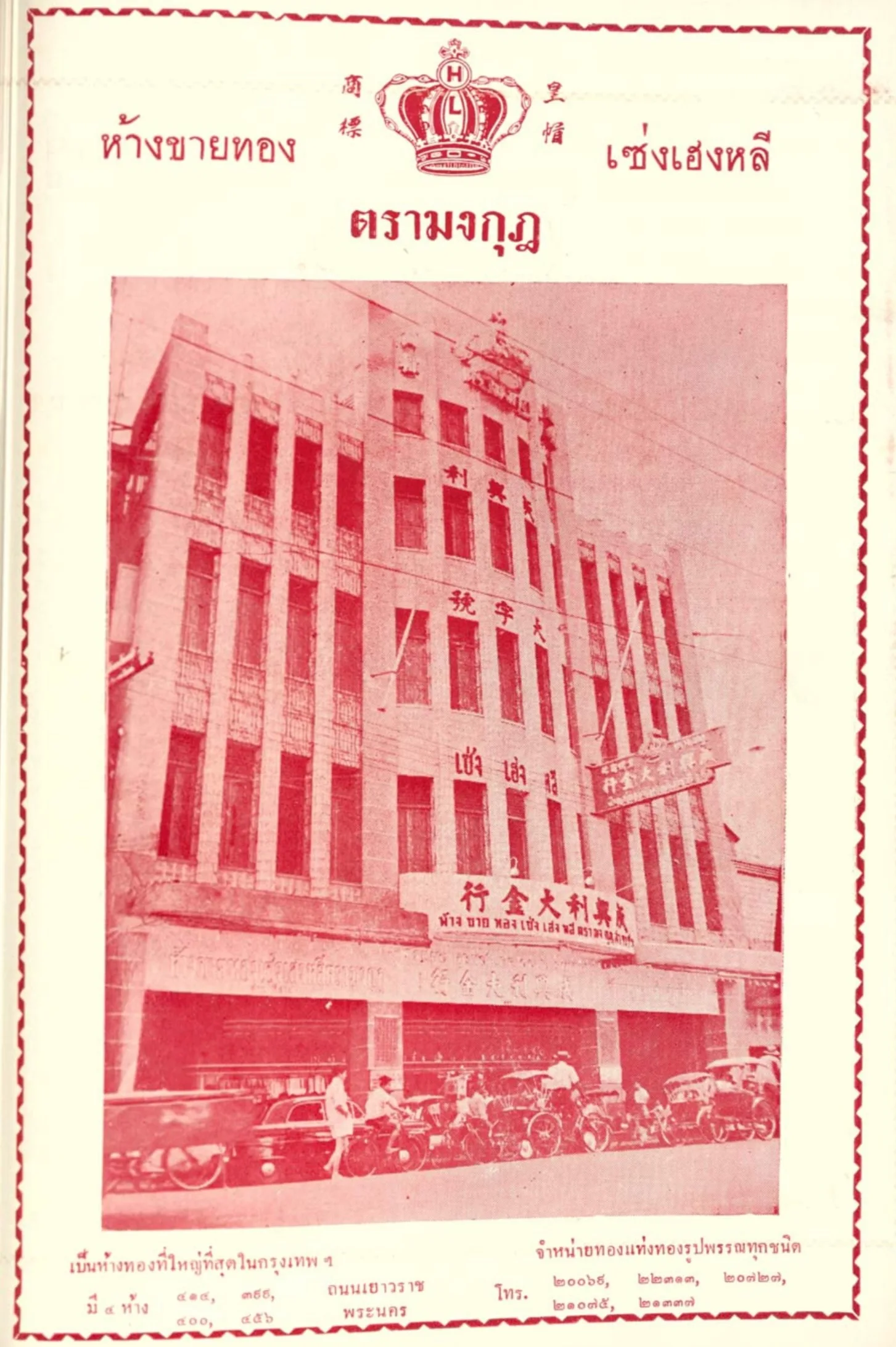
Advertising page for the Seng Heng Li gold shop, with its crown emblem, Samphanthawong District: a building with Thai and Chinese signs on Yaowarat Road, with cycle rickshaws, bicycles and a car before the shopfronts.Auteur inconnu — Wikimedia Commons, domaine public